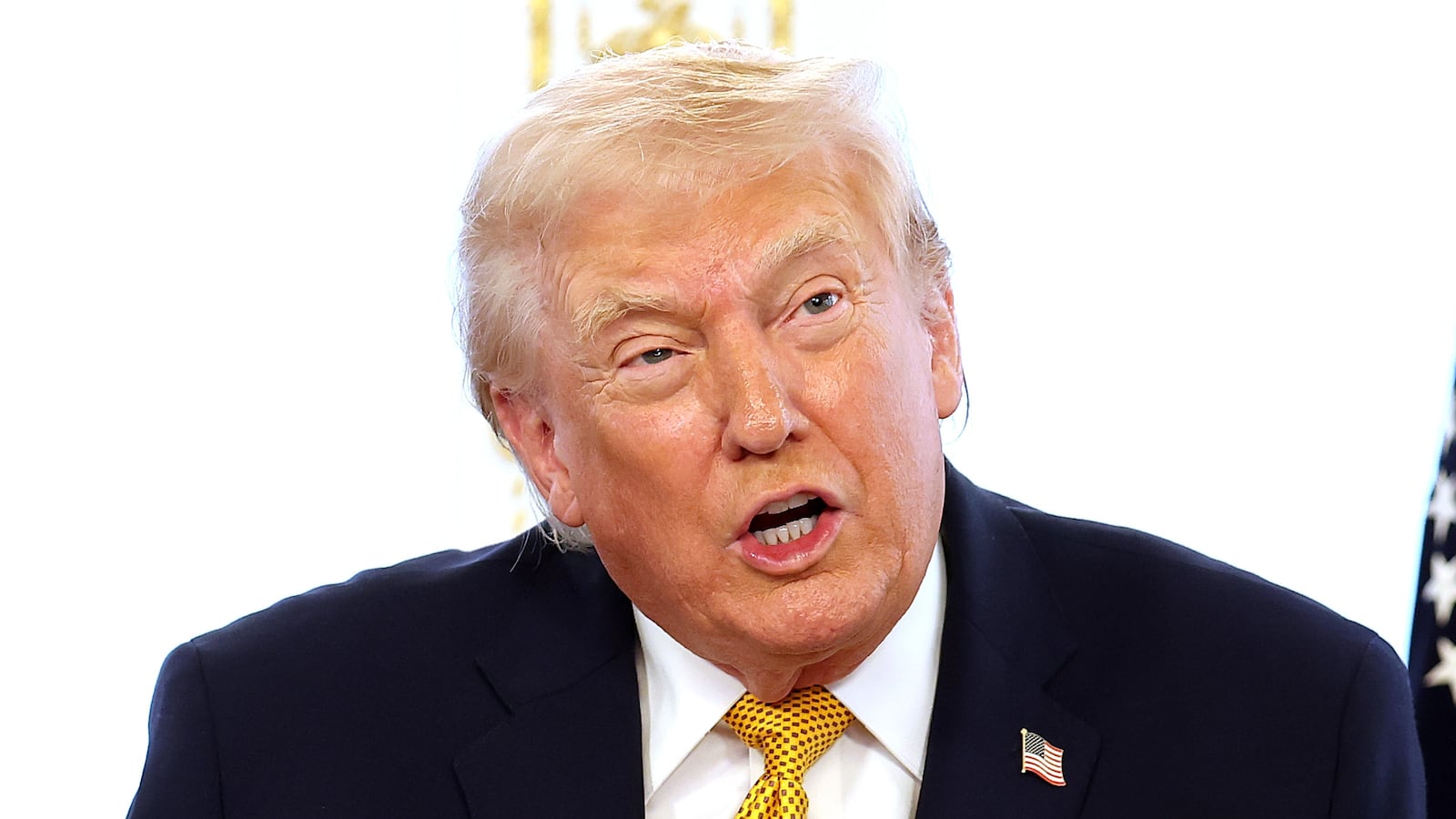
President Donald Trump is turning Mar-a-Lago into a holiday summit venue as he hosts two wartime leaders for back-to-back talks over his fragile peace agenda.
Trump, 79, has spent his second term casting himself as a “peace president,” promising on the campaign trail that on “day one” he would end Russia’s war on Ukraine, flying to Tel Aviv in October to gloat about “Everlasting Peace” after his Gaza ceasefire, and bragging repeatedly that he has already solved eight conflicts around the globe.
With his push to end the world’s two biggest wars under severe strain, and FIFA having invented a new “Peace Prize” to make Trump feel better for having been snubbed for the Nobel Peace Prize, the U.S. president will be hoping 2026 brings more success —and will end 2025 hosting Ukrainian President Volodymyr Zelensky and Israeli Prime Minister Benjamin Netanyahu on consecutive days at his Palm Beach resort.
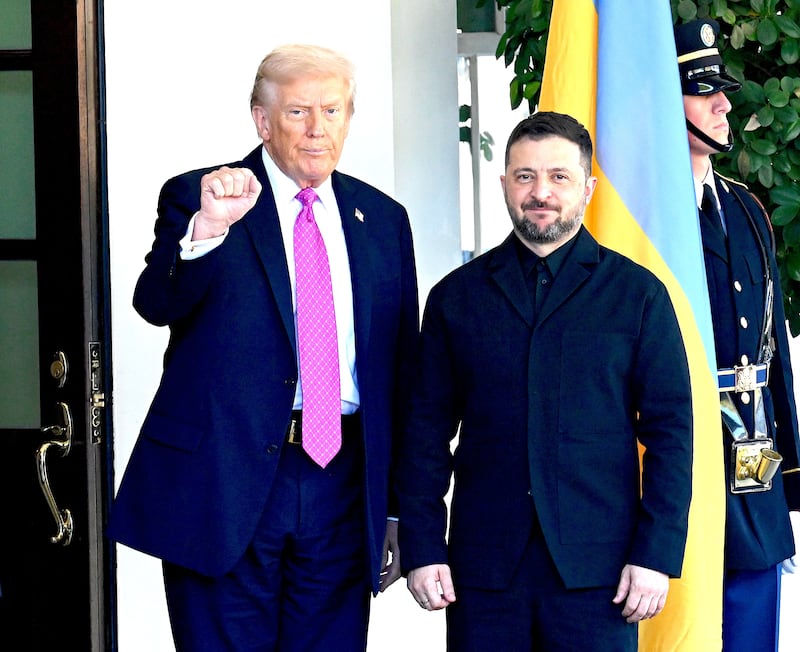
Zelensky, 47, is expected to meet Trump on Sunday to discuss the White House peace blueprint for ending the war with Russia, Ukrainian officials told Axios. Zelensky had been informed that Trump would meet him only once a deal was close, and Kyiv allies now see the invitation as a sign that negotiations have entered a critical phase.
The following day, on Monday, Netanyahu, 76, is due to follow Zelensky to Trump’s Florida home for talks on the U.S. president’s sprawling Gaza proposal, which includes a 20-point peace plan, a new Palestinian technocratic government, and an international stabilization force on the ground.
According to Axios, Trump’s team hopes to lock in Netanyahu’s support before potentially unveiling the “Board of Peace” and its high representative at the World Economic Forum in Davos in January.
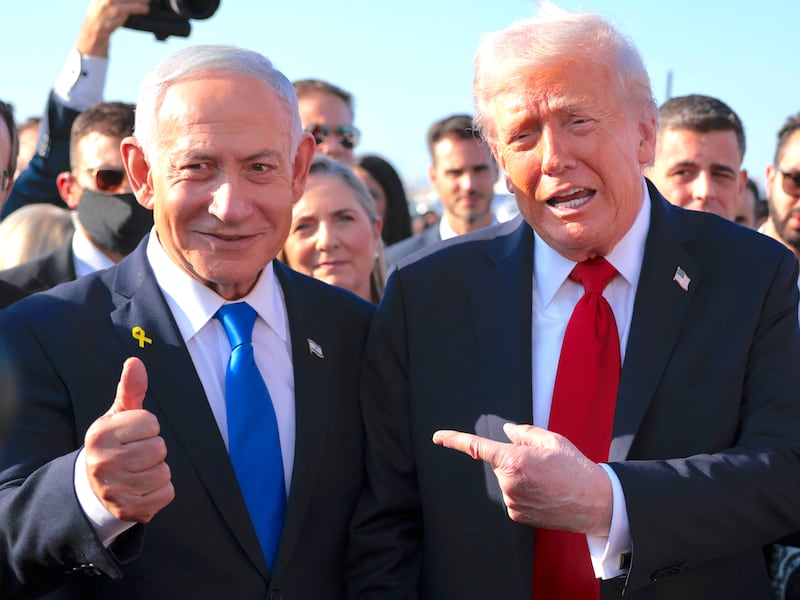
The Middle East meeting highlights a widening split between Trump’s envoys and Netanyahu over what comes next. Special envoy Steve Witkoff, 68, and Trump senior adviser and son-in-law Jared Kushner, 44, have spent weeks huddling with officials from Egypt, Qatar, and Turkey on phase two of the deal.
It would envision Hamas handing over heavy weapons and Israel pull back its forces as a vetted Palestinian government assumes control in Gaza.
Netanyahu has pushed back, according to Axios. In a meeting with Sen. Lindsey Graham in Jerusalem, he is said to have voiced skepticism about Witkoff and Kushner’s demilitarization ideas, the structure of the technocratic cabinet, the makeup of the stabilization force, and the prominent roles proposed for Qatar and Turkey, the outlet reported.
One senior Israeli official told Axios the upcoming Trump meeting boils down to “a one-man audience” in which the prime minister will try to pull Trump away from his own negotiators.
Trump’s inner circle is already fracturing over how to handle Netanyahu. Vice President JD Vance, 41, and Secretary of State Marco Rubio, 54, have joined Kushner, Witkoff, and White House chief of staff Susie Wiles in fuming at Israeli moves that Washington sees as undermining the ceasefire, including targeted killings of Hamas commanders that also slaughtered civilians.
“It’s JD, Marco, Jared, Steve, Susie. He has lost them. The only one he has left is the president,” a White House official told Axios of Netanyahu. One Israeli official told the site: “The question is whether Trump will side with him or with his top advisers.”
The infighting comes on top of questions around Witkoff and Kushner’s roles. Trump has increasingly leaned on Kushner to backstop Witkoff, a longtime real estate pal with no prior government experience, amid concerns inside MAGA world that the envoy has struggled to close deals.
In one November incident that did little to alleviate concern about Witkoff, the envoy was caught on a leaked call coaching Vladimir Putin’s top aide on how to flatter Trump and outlining Ukrainian territorial concessions, triggering bipartisan outrage in Washington.
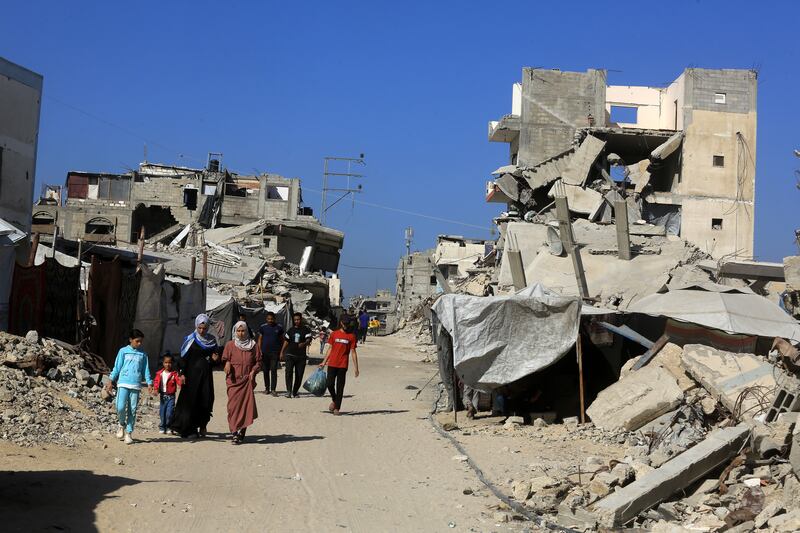
Kushner and Witkoff’s “Project Sunrise” redevelopment proposal for Gaza envisions a $112.1 billion high-tech city on the ruins of the enclave, with Washington providing close to $60 billion in grants and guarantees.

Critics say the scheme risks blurring the line between Trump’s peace machinery and Kushner’s private investment vehicle Affinity Partners, which has already raised billions from Gulf sovereign wealth funds.

Axios’ reporting suggests that commercial-heavy vision is now also beginning to clash with Netanyahu’s security-first demands. White House officials told the outlet they see “buyer’s remorse” in Jerusalem over the 20-point plan Netanyahu signed up to. They have also grumbled that Israeli commanders sometimes look “trigger-happy” in Gaza even as Washington begs them to avoid civilian casualties and protect the fragile ceasefire.
Conversely, Zelensky has started to sound more upbeat about the shape of the Trump-brokered deal, saying on the Telegram app, according to Reuters, that he had a “really good conversation” with Witkoff on Christmas Day.
He added that negotiators have now nailed down a 20-point framework he can live with, after junking an earlier 28-point draft that Ukraine and many NATO allies criticized as far too favorable to Moscow.
The new package lets Ukraine keep an 800,000-strong army, promises NATO-style security guarantees from the U.S. and Europe, dangles EU membership on a fixed timetable, and sketches an $800 billion reconstruction and development push, while putting the whole agreement under a Trump-chaired Peace Council that can snap back sanctions if Russia cheats.

The most radioactive issues—including control of the remaining Ukrainian-held parts of Donetsk, ideas for a demilitarized and internationally monitored zone in the east, and rival U.S. and Ukrainian proposals over who runs the Zaporizhzhia nuclear plant—are being parked for leader-level talks with Trump.
The Daily Beast has contacted the White House, the Office of the President of Ukraine, and the Israeli Prime Minister’s Office for comment.