“Very, very senior” officials in the Trump administration have had secret meetings with far-right Canadian separatists trying to shake the foundations of the country.
The covert meetings between high-ranking U.S. officials and the Alberta Prosperity Project come as a widening rift appears between Canadian leadership and the White House. Canadian Prime Minister Mark Carney used a speech in Davos, Switzerland, last week to call out President Trump for creating a “rupture” in the existing world order.

This has created fertile ground for the clandestine meetings, with the separatists trying to capitalize on the friction. People familiar with the talks have told the Financial Times that the group from the oil-rich province where Carney grew up have met U.S. State Department officials in Washington, D.C. three times in the last nine months.
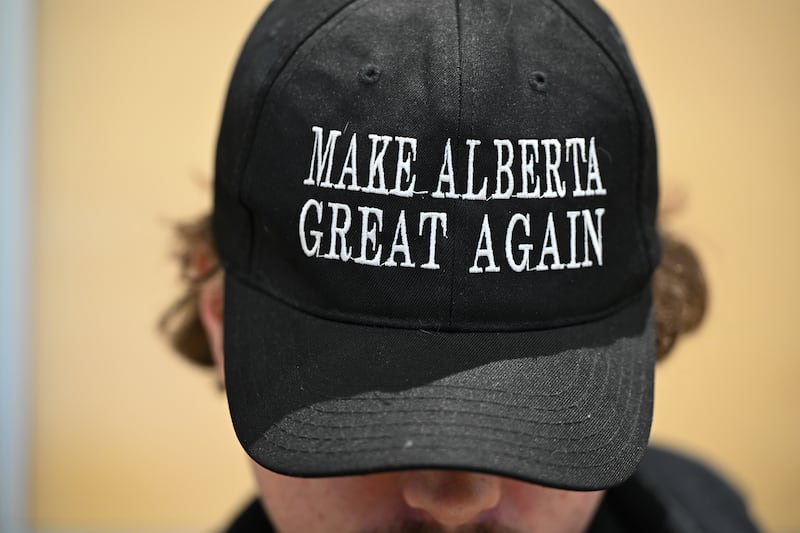
“The U.S. is extremely enthusiastic about a free and independent Alberta,” the body’s legal counsel, Jeff Rath, told the FT. He attended the meetings.
“We’re meeting very, very senior people leaving our meetings to go directly to the Oval Office,” he claimed.
Sources told the publication that the group wants another meeting in February where they plan to request a $500 billion credit facility to help prop up the province financially if an independence referendum passes. A referendum has not yet been called.

A State Department spokesperson admitted the meetings took place but said “no commitments were made.” A White House official said that “no such support, or any other commitments, was conveyed.”
A person familiar with Treasury Secretary Scott Bessent’s thinking told the FT that he and his team are not aware of any credit request, nor do they intend to engage with one if it is forthcoming.
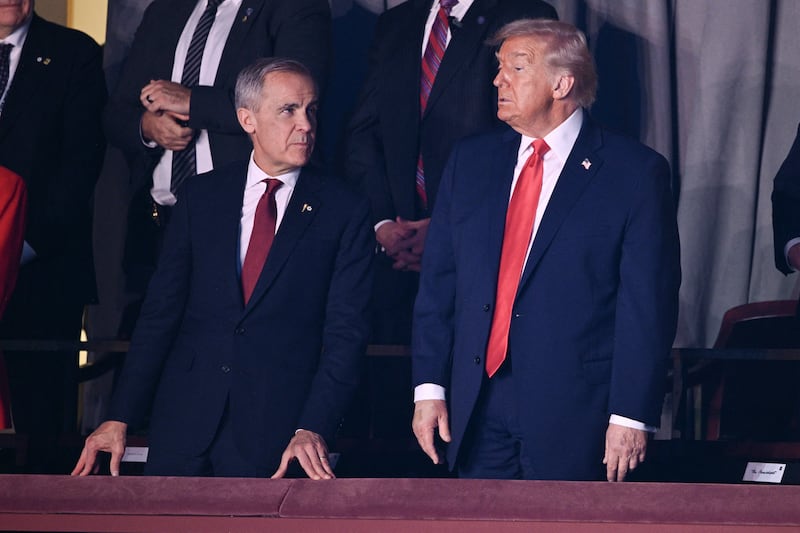
A spokesperson from a conservative think-tank in Calgary said the U.S. officials are merely trying to further destabilize Canada. Carlo Dade, from the Canada West Foundation, described the separatist leaders as “attention seekers.”
He added: “The Americans are more than happy to continue to play Canadians off each other.”
News of the meetings comes after Bessent appeared to try to stoke the flames of a rift in an interview with right-wing streaming channel Real America’s Voice.

“Alberta’s a natural partner for the U.S. They have great resources. The Albertans are very independent people,” Bessent said. “Rumor is they may have a referendum on whether they want to stay in Canada or not.”
Bessent made the comment after complaining that Alberta has a “wealth of natural resources,” but it’s not allowed to build a pipeline to the Pacific Ocean.
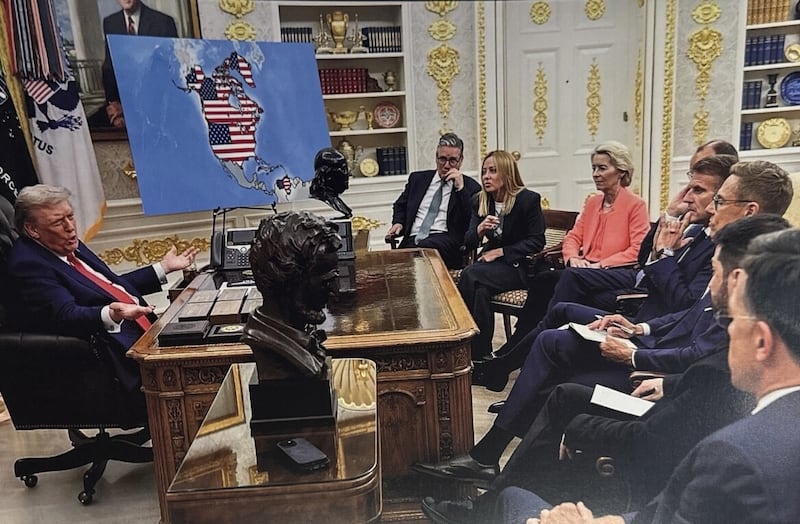
Earlier this month, Trump shared a Truth Social post that showed an AI-generated image with a map on it that had Canada, Greenland, and Venezuela draped in an American flag.
Polling conducted last week, however, suggests that more Albertans are happy being part of Canada than not. The Ipsos polling found that approximately seven in 10 residents would vote for their province to stay with Canada.
Undeterred, the Alberta Prosperity Project is trying to conjure up 177,000 signatures to bring an independence petition to the legislature before May.

“The overwhelming majority of Albertans are not interested in becoming a U.S. state,” said a spokesperson for Alberta’s premier Danielle Smith.
Gil McGowan, president of the Alberta Federation of Labour, said Canada is the victim of “foreign interference.”
“It doesn’t feel organic, we are being targeted by the MAGA crowd,” he said.
After Quebec tried to ditch Canada for a second time, in 1995, the country’s Supreme Court said a province does not have a unilateral legal right to secede from the federation.
Any attempt to do so would require a constitutional amendment and cannot be done outside constitutional processes. If a province held a referendum with a clear majority voting to leave, the federal government and the rest of the provinces would have a legal duty to negotiate the terms of potential separation under the Clarity Act.
The federal Parliament passed the Clarity Act in 2000 to implement the Supreme Court’s guidance on how a province might secede from Canada. However, the outcome would still depend on negotiated constitutional change rather than a unilateral break.