
Donald Trump bought more than $1 million in Dell Technologies stock weeks before the tech giant secured a $9.7 billion Pentagon contract, triggering warnings from ethics watchdogs.
The Defense Department announced Wednesday that Dell Federal Systems, the company’s government-focused unit, had secured a five-year contract to oversee purchases of Microsoft software, services, and licenses across the military, intelligence community, and the U.S. Coast Guard.
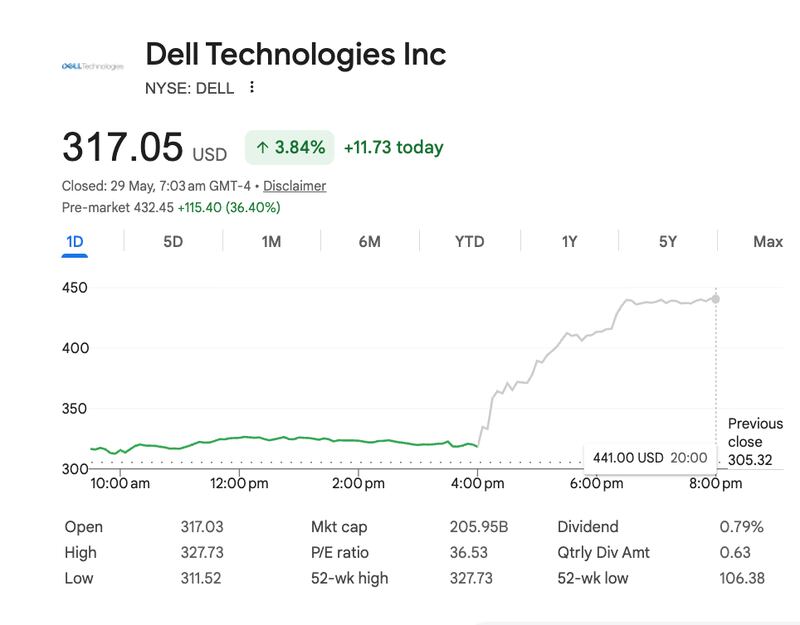
Dell shares surged nearly 40 percent in after-hours trading on Thursday after details of the deal were announced.
The contract was awarded after Trump’s investment portfolio purchased between $1 million and $5 million worth of Dell stock on Feb. 10, according to financial disclosures. The filings also showed additional smaller Dell purchases in March.
The timing of the Pentagon contract has raised eyebrows, given that Trump, 79, has repeatedly publicly praised the U.S. tech company at events. Nine days after Trump purchased more than $1 million in Dell stock, he told a crowd in Georgia to “go out and buy a Dell computer,” as the company makes “phenomenal products.”
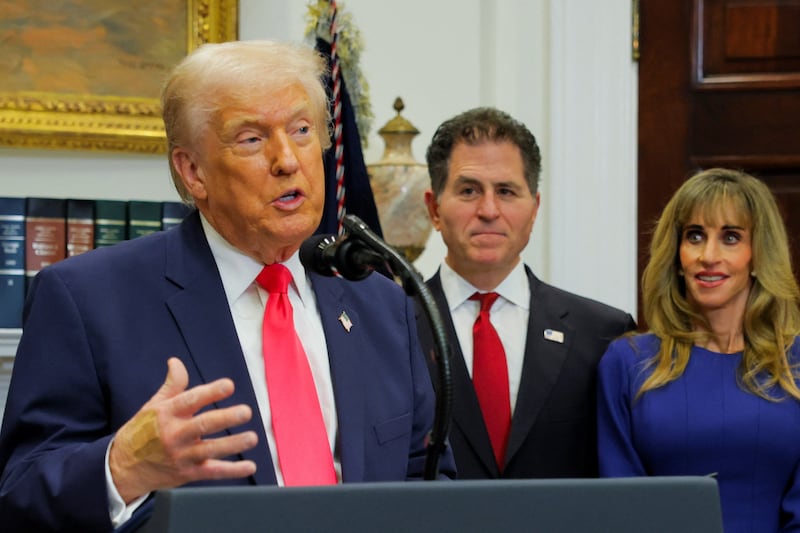
Trump’s relationship with the Dell family has also drawn scrutiny. In December, Dell CEO Michael Dell and his wife pledged billions to fund the so-called “Trump Accounts” of 25 million American kids.
“This absolutely does ring alarm bells with regard to conflicts of interest,” Greg Williams, director of the Center for Defense Information at the nonprofit Project on Government Oversight, told The Washington Post.
Presidents are exempt from federal conflict-of-interest laws that prohibit government employees from taking official actions that could benefit their personal finances.

Margaret Dylus-Yukins, senior legal counsel for ethics at the Campaign Legal Center and a former Office of Government Ethics lawyer, told the Post that “the ethics norm has been for presidents to historically avoid even the appearance of self-enrichment.”
“The fact that President Trump promoted a company owned by his friend that he also invests in does, indeed, create an appearance of a conflict of interest, though it does not constitute an actual ethics violation under the current rules,” Dylus-Yukins added.
When contacted for comment, White House spokesman Kush Desai told the Daily Beast that “Michael and Susan Dell are two of many entrepreneurs and philanthropists who have answered President Trump’s call to action to invest in the next generation of Americans through Trump Accounts.”
“President Trump’s only interest is doing what’s best for the American people, and his effusive praise for the Dells is rooted only in their patriotic contribution of over $6 billion to the Trump Accounts of 25 million working-class American children,” the spokesman added.
Trump’s family and his administration have brushed off insider trading accusations.
Earlier this month, the Trump Organization said in a statement that the president’s investments are placed by outside brokerage firms and that the accounts are overseen by independent third-party investment managers.
White House spokeswoman Anna Kelly said in a statement last week that Trump’s assets were in a trust managed by his children and that “the president only acts in the best interests of the American public.”
“There are no conflicts of interest,” Kelly added.
The president’s 42-year-old son, Eric Trump, said last week that “President Trump’s investment holdings are maintained exclusively in fully discretionary accounts managed by independent third-party financial institutions.”
“These institutions have sole and exclusive authority over all investment decisions, including asset allocation, trading, rebalancing, and portfolio management,” he said on X.
The Daily Beast has contacted the Pentagon for comment.