President Donald Trump has spent weeks telling the courts that his new White House ballroom is a top-secret national security matter.
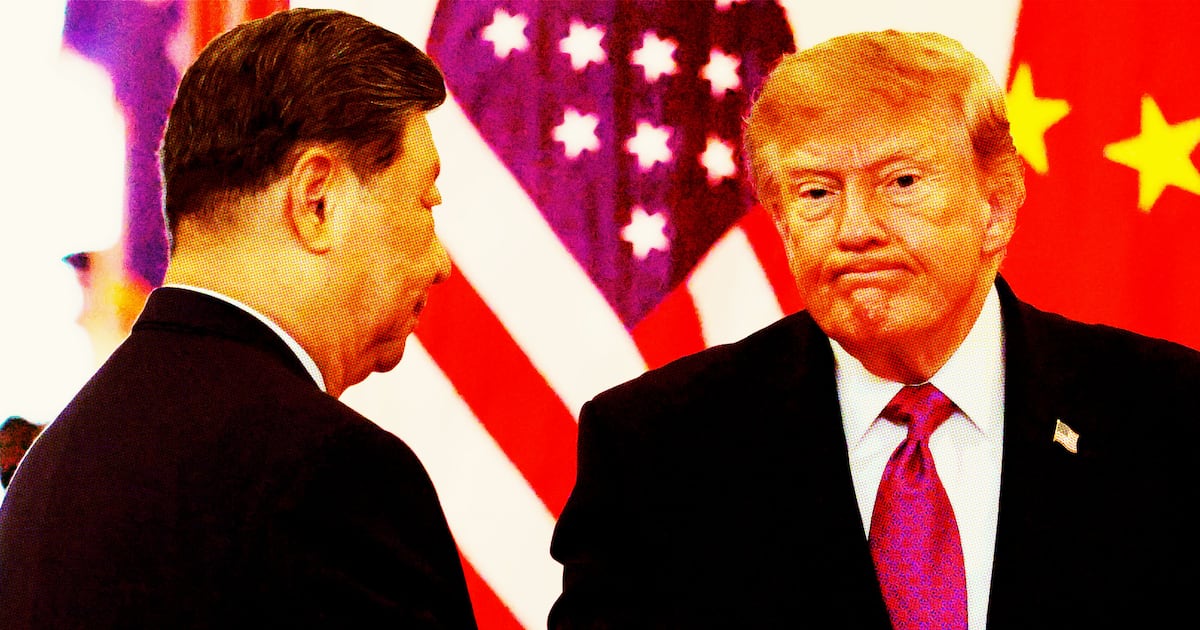
On Thursday night, he invited the communist leader of China—America’s most significant counterintelligence threat—to come take a look.
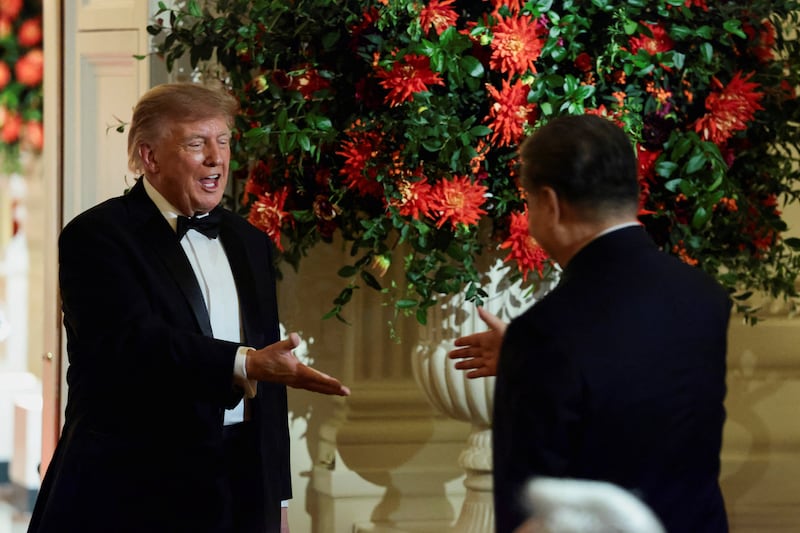
Veering off script during his lavish state dinner for Chinese President Xi Jinping, Trump invited guests to visit his “clean and sparkling” ballroom construction site after their meal—a three-course feast that had been curated by first lady Melania Trump.
“If I could go off script... as special treat in honor of President Xi and Madame Peng, I’d like to invite everyone in the room to visit through that beautiful curtain in the back door,” the 80-year-old president said.
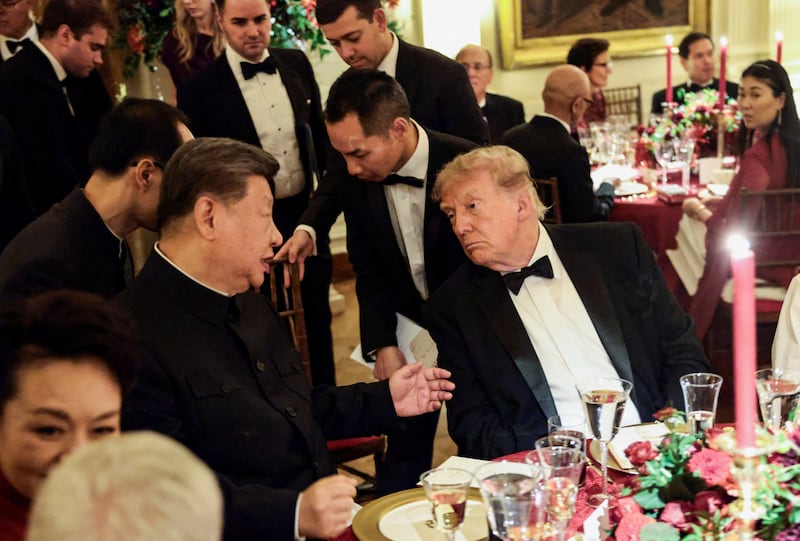
“It’s all lit up and looks beautiful. It’s one year away from completion—the new ballroom that you’ve heard about, and you will see something that I think you will really love.”
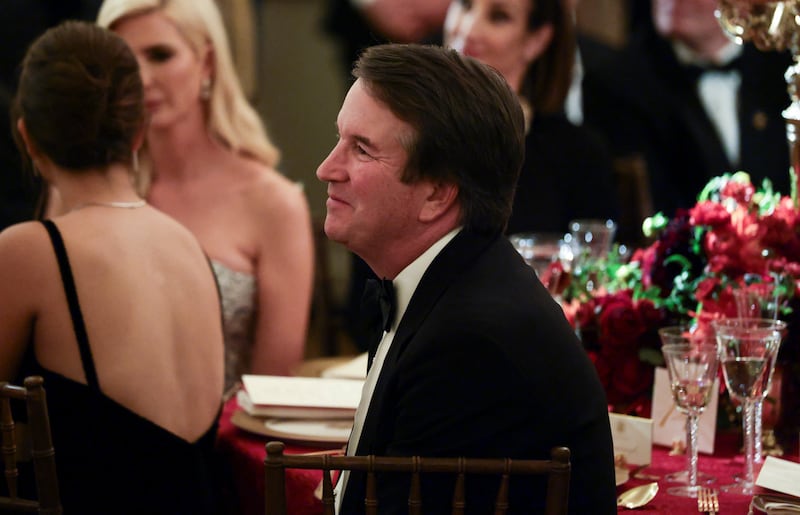
Among the dinner guests were three conservative Supreme Court justices, who were split over whether to halt the controversial construction. Chief Justice John Roberts, who attended with his wife, voted to stop the building work, saying it was “likely unlawful.” But he was outvoted by the conservative majority, including Justice Amy Coney Barrett and Justice Brett Kavanaugh, who were also in attendance.
The wild invitation came weeks after the administration made national security a central argument in its fight to keep building the controversial ballroom, after preservationists sued.
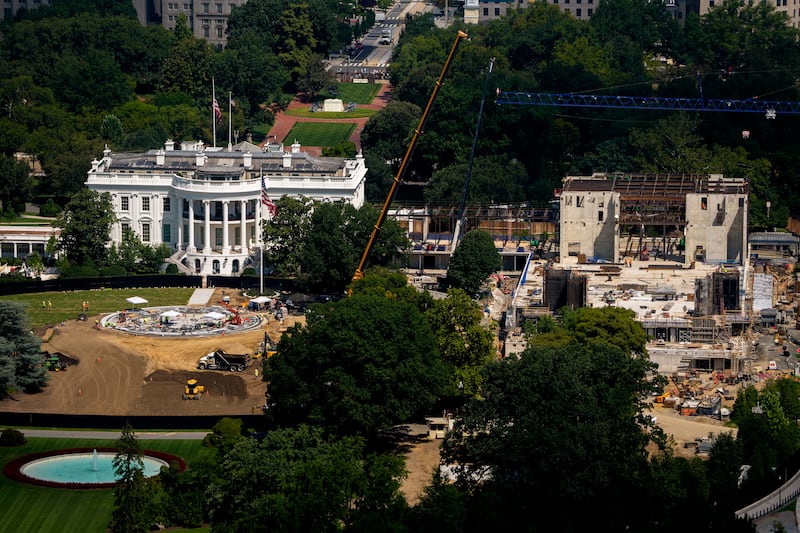
Since announcing the ballroom last year, the project has morphed from a new event space to an “integrated military complex,” featuring an underground bunker and bomb shelters, a military hospital, research facilities, and top secret meeting rooms.
To that end, Trump’s invitation to tour the project immediately raised eyebrows, given that, according to the FBI, China poses the most significant counterintelligence threat to the U.S. through state-backed hacking, infrastructure penetration, and the surveillance of overseas dissidents.
The dinner had already proved contentious with Republican allies and Trump’s MAGA base, particularly as the president had spent years warning Americans that China was ripping them off, stealing their jobs and threatening U.S. power.

“China is our most consequential geopolitical competitor, and we cannot afford to ignore the CCP’s ambitions to reorganize global order at the expense of the United States,” said North Carolina Republican Tedd Budd.
“I understand Trump has to be diplomatic, but Xi’s a despicable person that is killing us with fentanyl, building a military to try to defeat us,” added Sen. Rick Scott of Florida.
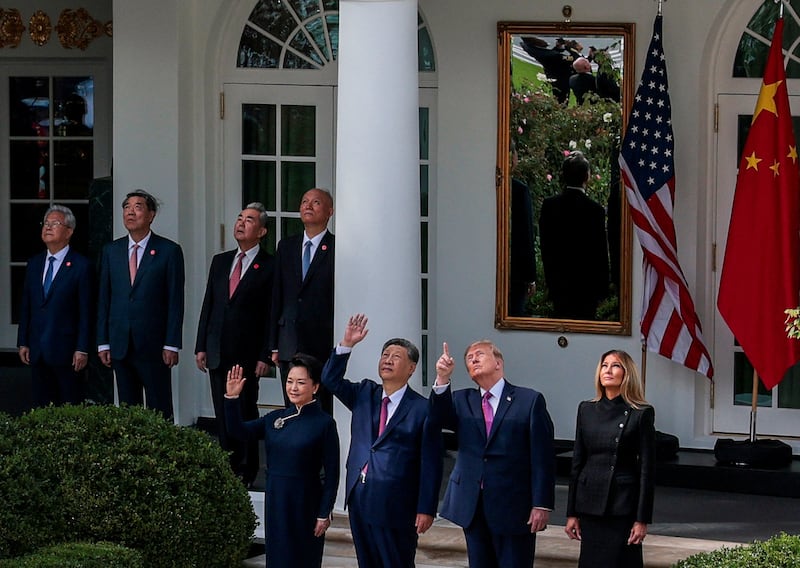
Trump, however, struck a much different tone this week, rolling out the red carpet to welcome Xi, first at Joint Base Andrews on Wednesday, followed by a ceremony on the South Lawn on Thursday, featuring military pageantry, the Army Old Guard Fife and Drum Corps and a military flyover.
He then hosted Xi for talks before the pair appeared together for a military review and later returned to the White House for the state dinner.
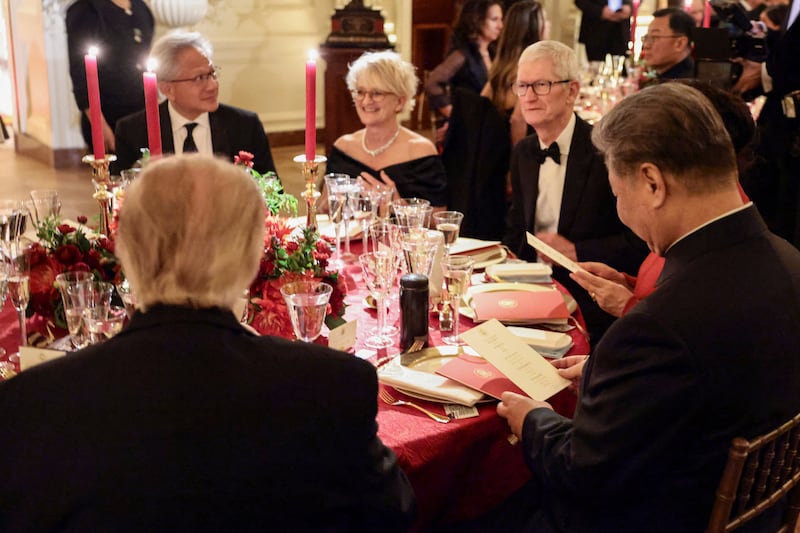
The dinner itself was held in the East Room, with a guest list that looked less like a traditional diplomatic event than a gathering of America’s technology and corporate elites.
High-profile attendees included Amazon founder Jeff Bezos, Elon Musk, OpenAI’s Sam Altman, Nvidia’s Jensen Huang, Google CEO Sundar Pichai, Dell’s Michael Dell, Citigroup CEO Jane Fraser and Apple’s Tim Cook.
Altman was seen signing autographs as he arrived, while Huang—better known for his trademark black leather jacket—opted for a tuxedo.

The menu also offered its own diplomatic choreography. Guests began with yellow squash velouté, wild mushroom fricassée, crispy pancetta and scallion oil, followed by sesame-crusted sea bass with baby bok choy and roasted eggplant.
Dessert was vanilla crémeux, sour cherry confit, walnut frangipane and White House honey ice cream.
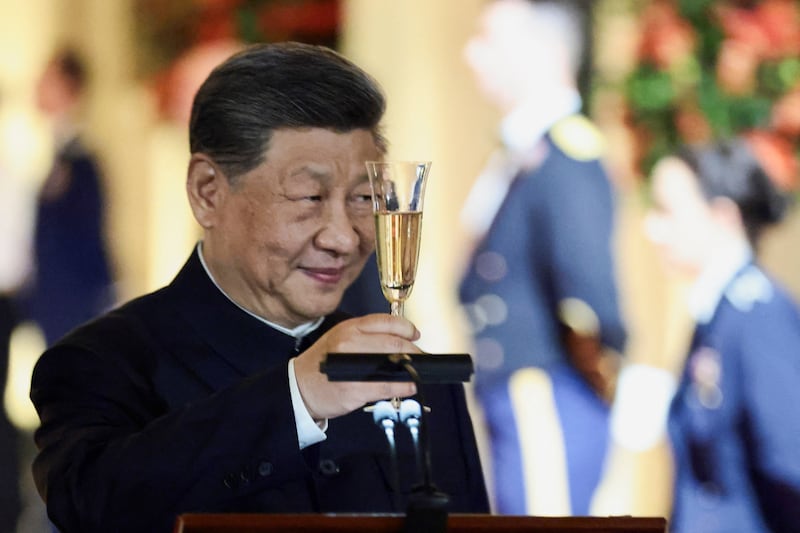
The opening toast used Schramsberg Blanc de Noir, the same American sparkling wine associated with Richard Nixon’s 1972 “Toast to Peace” with Chinese Premier Zhou Enlai.
But amid all the symbolism, Xi’s own message was notably less sentimental than Trump’s.

“China and the United States must act as responsible major countries, meet the expectations of our peoples, keep pace with the trend of our times and explore a new approach for major countries to get along with each other,” he said.
Earlier in the day, as the U.S. president lavished praise on his Chinese counterpart, Xi delivered a power move and a warning for the U.S. to stay in its lane.
“The Thucydides trap can be overcome,” he said, referencing the historical theory that tensions between a rising power and an established one can spiral into war.
He also called for the two countries to “coexist in peace” and for U.S. competition to be “kept within bounds.”