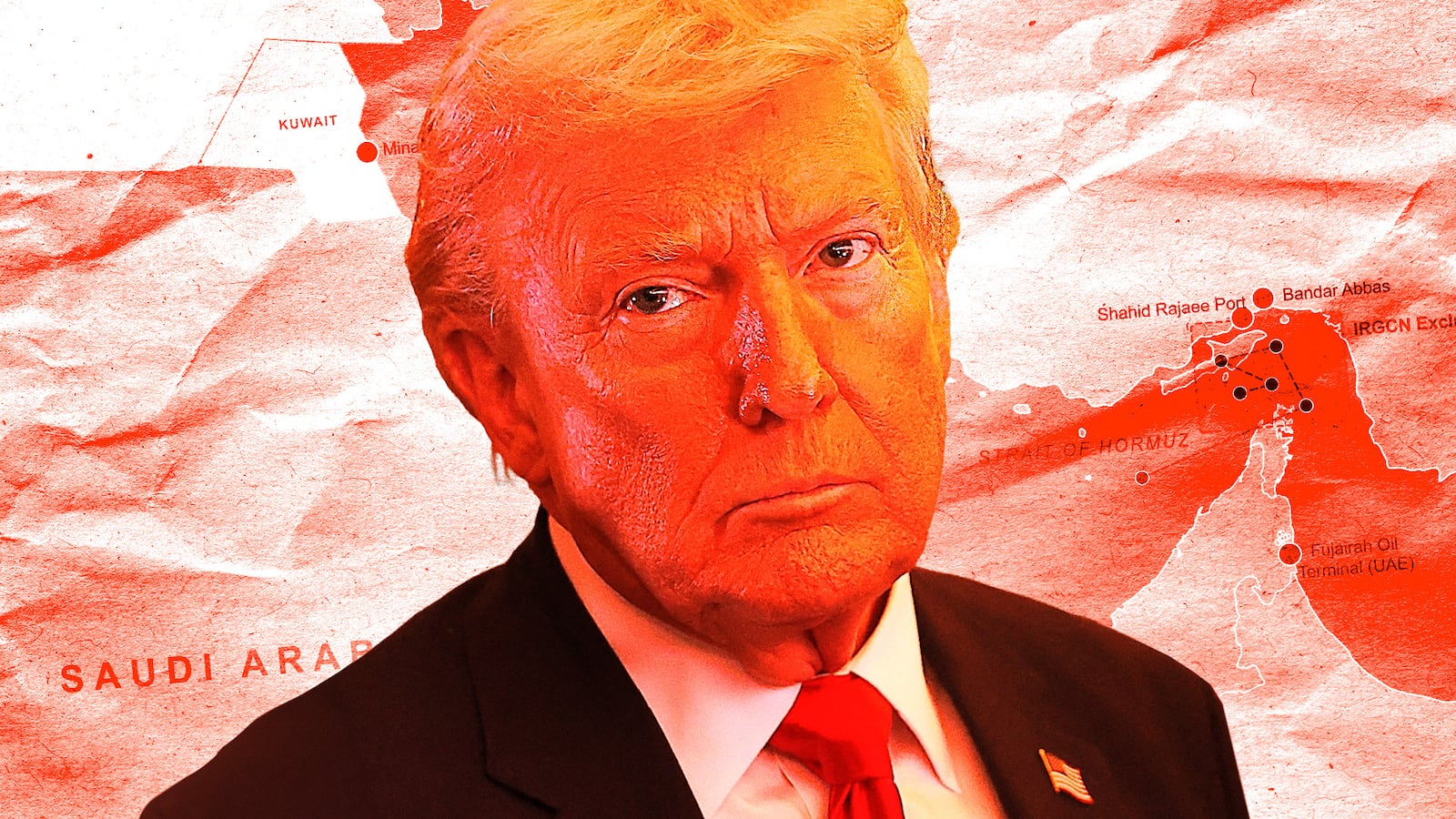
President Donald Trump, convinced that Iran would quickly bend to any U.S. pressure, repeatedly ignored his general’s warnings about Iran crippling a crucial oil shipping lane.
Gen. Dan Caine, the chairman of the Joint Chiefs of Staff, repeatedly warned Trump that Iran would likely disrupt the Strait of Hormuz in response to a U.S. attack, according to a new report in the Wall Street Journal.
In several briefings, Caine warned the president that Iran would send missiles and drones to the area.
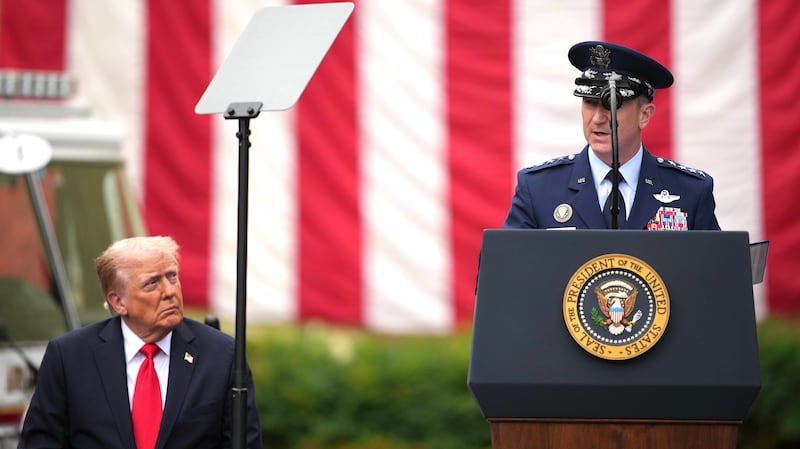
Sources told the Journal that Trump acknowledged the risks but moved forward with his deadly war anyway.
Trump, 79, told his administration that he thought Iran would capitulate to the U.S. before it closed the Strait, adding that even if the Strait was threatened, the U.S. military could handle it.
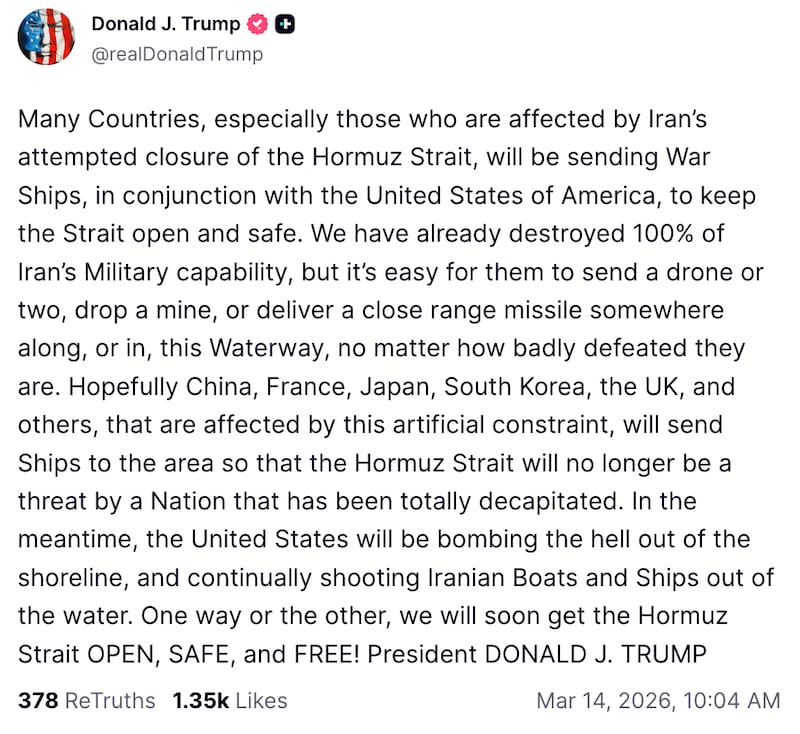
On Saturday, Trump said several countries would be sending vessels to counter Iran’s in the strait.
“Many Countries, especially those who are affected by Iran’s attempted closure of the Hormuz Strait, will be sending War Ships, in conjunction with the United States of America, to keep the Strait open and safe,” he said in a post to his Truth Social platform," he posted.
Trump also said he hopes several countries, including U.S. allies, were being negatively impacted by his war enough to send their own military might to the effort.
“Hopefully China, France, Japan, South Korea, the UK, and others, that are affected by this artificial constraint, will send Ships to the area so that the Hormuz Strait will no longer be a threat by a Nation that has been totally decapitated,” he said, before threatening. “In the meantime, the United States will be bombing the hell out of the shoreline, and continually shooting Iranian Boats and Ships out of the water.”
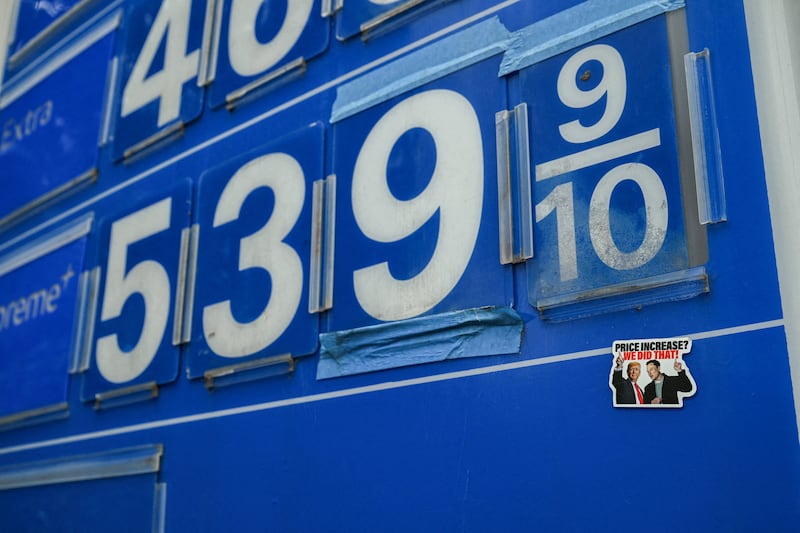
As Trump’s war with Iran enters its third week, the Strait of Hormuz has become Tehran’s strongest point of leverage in its fight. Iranian tankers have blocked and struck cargo ships, causing a steep increase in oil prices.
Before Trump went forward with the operation, he and his advisors talked about using the U.S. Navy to keep the strait open, according to The Journal.
Trump understood the risks of the war, but moved forward on the basis that he felt Iran posed a national security risk to the U.S.
At least 13 U.S. troops have died in Trump’s war, and more than 1,300 Iranians have been killed. This includes 175 Iranian schoolgirls in what appears to have been an attack on the school by U.S. forces.
Trump’s critics have said they believe the president lacked planning as it relates to the Strait of Hormuz.
“They had no plan to address the crisis in the strait,” Connecticut Democratic Sen. Chris Murphy (D., Conn.), who joined a classified briefing Tuesday with administration officials on the operation, said.

“The fact that these guys didn’t have a plan ahead of time, and a week into the war still didn’t have a plan, was pretty shocking,” he added.
With the strait closed, the Pentagon is growing concerned that U.S. ships escorting cargo ships through the waterway would be targets, unless the U.S. can destroy Iranian vessels. In his briefings with Trump, Caine expressed confidence that the U.S. was capable of this.
The Journal reported that some of Trump’s advisors outside of the White House are looking for him to find a way out of the war, but he has no intention of doing so.
The president has given varying timelines as to when his war could end. He originally said strikes on Iran could last another four to five weeks, but walked that back a few days later and said the U.S. had already been victorious, while indicating he would still continue with strikes.
“We’ve already won in many ways, but we haven’t won enough,” he declared on Monday.
On Friday, Trump said he would pull out of the war when he feels it “in his bones.”