President Donald Trump’s brash social media rhetoric towards Iran has split his aides into two camps, according to a report.
White House insiders have told Bloomberg that a schism has emerged, with one group worried about the damage his threats could cause, whilst the other sees value in them.

U.S. officials in favor of Trump’s playbook told Bloomberg that Iran’s ability to export has been decimated and that this means the clock is ticking for the regime to cave under financial pressure. This camp believes Trump should continue to heap more pressure on Tehran with his vitriolic posts.
Trump appears to agree. “You know who’s under time pressure? They are, because if they don’t get their oil moving, their whole oil infrastructure is going to explode,” he told reporters in the Oval Office.
However, another group of aides thinks the time for an off-ramp is now. Officials said that it is not just Iran that is taking a financial hit. The price of munitions, troops, and damage to military assets is costing the U.S. $2 billion daily, according to Professor Linda Bilmes, public policy expert at the Harvard Kennedy School. She estimates that the war could end up costing the U.S. $1 trillion.
These aides see the cost of war as potentially fatal for the party at the midterm elections in November. Americans are already contending with higher fuel prices because of the conflict.
Earlier this week, CNN published a similar report after speaking to officials. It said that some Trump officials privately acknowledged that his public commentary has been “detrimental to talks.”
“The Iranians didn’t appreciate POTUS negotiating through social media and making it appear as if they had signed off on issues they hadn’t yet agreed to, and ones that aren’t popular with their people back home,” one insider said after Trump claimed Tehran had conceded on provisions that hadn’t been finalized.
Tehran, too, is perturbed by the posting. Bloomberg cites “two U.S. officials familiar with the matter” who have complained that the verbose social media activity has affected talks mediated by Pakistan.
On Thursday, Trump said he has ordered the U.S. military to “shoot and kill” the occupants of small Iranian vessels that deploy mines to affect Strait of Hormuz traffic.
In some of his more inflammatory posts, the president has threatened to “blow up the rest of their country” and send it “back to the Stone Ages.” This rhetoric is designed to humiliate the regime, but it decreases the likelihood of negotiators inking a deal, according to an Iranian official and an Arab diplomat.
Indeed, the current impasse afflicting a lasting peace deal is down to his Truth Social tirades, officials said. The president isn’t concerned by the regime’s feelings, a White House insider told Bloomberg. They even said that his April 7 threat to eradicate “A whole civilization” helped broker a truce by scaring Iran. That ceasefire has now expired, however, and trust between the two nations looks to be at a low ebb.
Iran’s lead negotiator and Parliament Speaker Mohammad Bagher Ghalibaf said the posts are nothing but “media warfare and the engineering of public opinion.”
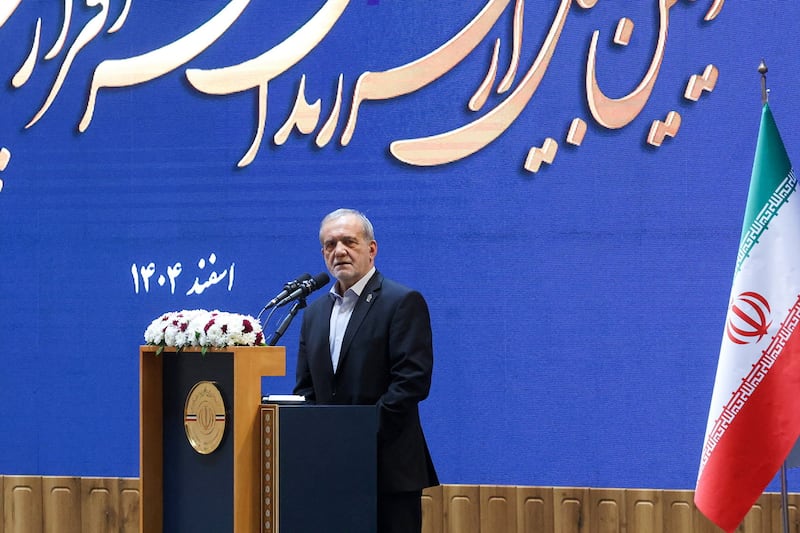
On Wednesday, Iran’s President Masoud Pezeshkian specifically stated that the U.S. blockade on the Strait of Hormuz and the wild public threats “are [the] main obstacles to genuine negotiations.”
“President Trump isn’t trying to coddle Iran and protect their feelings,” a White House official told the Daily Beast. “He is serious about negotiating a deal that will ensure the long-term national security of America and our troops in the region by removing the threat posed by a nuclear Iran. This President is the most transparent in American history, and he will always express his views candidly. President Trump listens to a host of opinions on any given issue, but he is always the final decision maker.”
“The President’s national security team is completely unified behind ensuring that Iran can never possess a nuclear weapon,” they continued.