President Donald Trump’s war in Iran is descending into farce as the fragile ceasefire unravels in real time.
In a major headache for the president, Tehran is refusing to commit to further peace talks, threatening military retaliation, and accusing Washington of “banditry and piracy” as the two-week truce edges toward its Wednesday expiration.
The latest flashpoint came after the U.S. Navy fired on and seized an Iranian-flagged cargo ship in the Gulf of Oman attempting to breach the American blockade of Iran’s ports.

Trump said the crew was given “fair warning to stop” but “refused to listen, so our Navy ship stopped them right in their tracks by blowing a hole in the engine room.”
Iran’s military called it a “violation of the ceasefire” and said it would retaliate. Iranian media subsequently reported drone attacks on U.S. ships, though no damage has been confirmed.
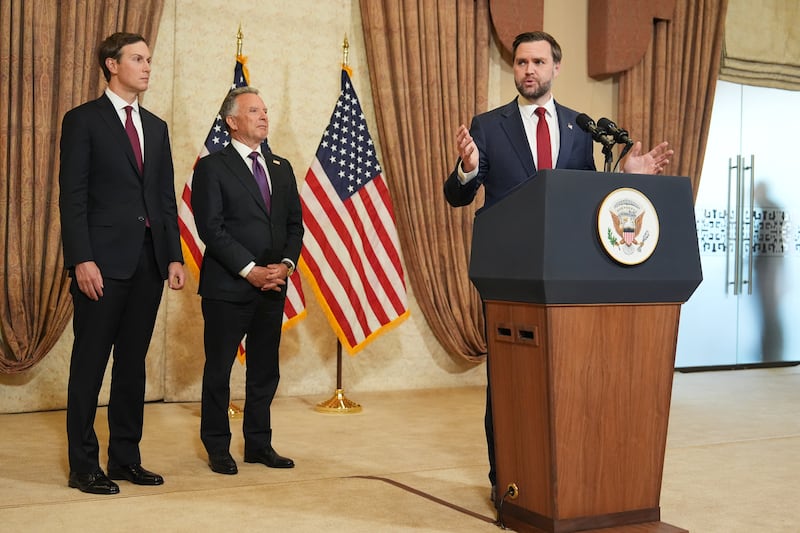
Tehran then delivered another blow to prospects for peace. “As of now, we have no plans for the next round of negotiation, and no decision has been made in this regard,” Iranian spokesman Esmail Baghaei said, according to AFP—even as Vice President JD Vance headed a U.S. delegation to Pakistan to thrash out terms for a more permanent peace.
Baghaei added that Iran “does not believe in deadlines or ultimatums” and that removing its nuclear stockpile was never on the table—one of the key sticking points when talks in Pakistan ended without agreement on April 12.
Later on Monday, he added that Iran is “certainly not optimistic” about negotiations with the U.S.

The whiplash has been dizzying. Announcements on Friday that the Strait of Hormuz was open—issued separately by both Trump and Iran—briefly suggested progress. But by Saturday, it was that familiar sinking feeling for Trump as Iran accused the U.S. of operating a “so-called blockade” and warned that “the status of the Strait of Hormuz will remain under intense control and in its previous state” until American interference with Iranian shipping ends.
Markets reacted swiftly. Brent crude jumped five percent to $95.29 a barrel, reversing Friday’s falls and Europe’s major indexes dropped across the board.
“Hopes for an imminent resumption of trade, especially energy shipments, have evaporated,” Susannah Streeter, chief investment strategist at Wealth Club, told the BBC. Before the war, around one-fifth of the world’s oil and natural gas supplies passed through the strait.
Trump, writing on Sunday morning, was characteristically measured. “We’re offering a very fair and reasonable DEAL and I hope they take it,” he posted on Truth Social. “If they don’t, the United States is going to knock out every single Power Plant and every single Bridge, in Iran! NO MORE MR NICE GUY!”
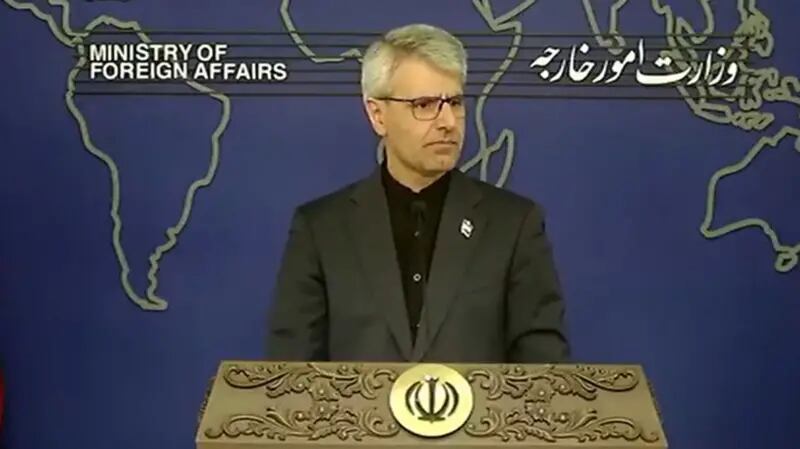
Iran responded on Monday. “While claiming diplomacy and readiness for negotiations, the U.S. is carrying out behaviors that do not in any way indicate seriousness in pursuing a diplomatic process,” Baghaei said.
The ceasefire expires on Wednesday, with growing concern about the war’s timeline. Trump initially claimed he could end the war “in two or three days.” That quickly became “four to five weeks,” which then grew to six. The war has now entered its eighth week.
Jon Hoffman from the Cato Institute thinks Iran could be ready to dig in. “Tehran believes it is creating a new status quo between it and Washington. Tehran likely feels it has not inflicted a sufficient level of pain to keep this [war] from happening again and will therefore want real concessions and guarantees from the United States during negotiations. Absent that, they’ll return to war, since this is a war of attrition, they are better suited to win. All they have to do to win is survive,” he told Politico.
On Truth Social on Sunday night, Trump was busy trying to convince everybody that voters back him on Iran. He shared dodgy polling to justify his points, but the reality was much more worrying for the president.
Respected pollsters found that just 33 percent of people approved of the president’s handling of the war, according to NBC News. Quinnipiac University’s national poll, which was released on Wednesday, also found that support was in the minority. It reported that 53 percent of voters oppose the war entirely. Just 40 percent of registered American voters support U.S. military action against Iran.
The outlook is so bleak that Susie Wiles, Trump’s White House chief of staff, has summoned dozens of top GOP operatives to attend an urgent closed-door summit in D.C. on Monday.
The news, reported by Politico’s Playbook newsletter, comes as officials sweat over what Trump’s war, and its economic impact, could do to the Republican Party’s chances during the midterm elections.
The White House has been contacted for comment.