WikiLeaks' Julian Assange Slams Canongate Publishers Over Unauthorized Biography
The WikiLeaks founder and his publishers offer competing versions of events surrounding the release of his unauthorized autobiography.
SUZANNE PLUNKETT / FILE / Landov
Julian Assange has an unhappy knack for making enemies. In recent months, the founder of the whistle-blowing WikiLeaks website has fallen out with his onetime collaborators at The Guardian and with his lawyers. That’s not to mention the host of public figures angered by the WikiLeaks revelations.
Now it’s his publisher’s turn. In a scathing 1,800-word statement issued early Thursday morning, Assange condemned the decision of Edinburgh-based Canongate to release a first-draft version of his ghostwritten autobiography without his approval, after a long wrangle over the book’s contents and completion.
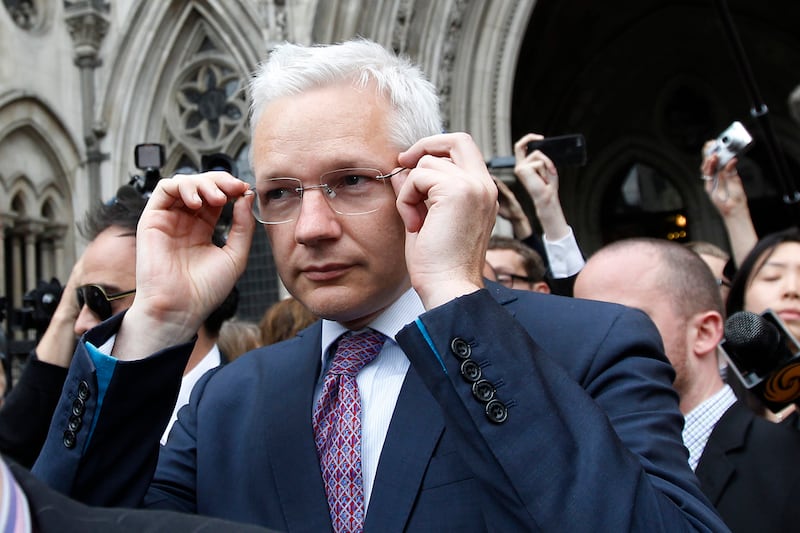
Forthright as ever, the 40-year-old Australian blames the book’s release on simple greed. “The events surrounding [the book’s] unauthorised publication by Canongate are not about freedom of information—they are about old-fashioned opportunism and duplicity—screwing people over to make a buck.”
As usual, Assange’s list of grievances is long. Canongate, he says, has acted “in breach of contract, in breach of confidence, in breach of my creative rights and in breach of personal assurances.” As for its contents, the book was meant to be “about my life’s struggle for justice through access to knowledge. It has turned into something else.”
According to Assange, he agreed to write the book—published under the title Julian Assange: The Unauthorised Version—in late 2010 in an attempt to raise funds for his own defense against rape charges in Sweden and to contribute toward the operating costs of WikiLeaks. It was to be “part memoir, part manifesto.”
Get the best of The Beast delivered right to your inbox
By clicking “SUBSCRIBE” you agree to our Terms of Use and Privacy Policy.
But this summer, Assange—who is on bail in Britain—says he attempted to renegotiate the contract and set a new deadline. Because of his legal struggles, he says, he was not in a position to dedicate "my full attention to a book that would narrate my personal and my life’s work.”
What’s more, Assange claims that he was unable to repay an advance he’d received from Canongate because the money had been allegedly signed over, against his wishes, to lawyers who are fighting his case against extradition to Sweden. Assange says he is currently in dispute with the law firm over what he considers excessive fees.
Despite Assange’s objections, Canongate had nevertheless pressed ahead with publication of a draft that was no more than “a manuscript in progress,” due to be “heavily modified.” It had been shown to the publisher by a researcher working for the ghostwriter, novelist Andrew O’Hagan, as an “act of generosity and for viewing purposes only.”
An outraged Assange asserts that neither he nor O’Hagan was given an opportunity to check or correct the text before its eventual publication. “Tomorrow, I will have to buy ‘my autobiography’ in order to learn the extent of the errors and inaccuracies of the content of the book, but the damage is done.”
Canongate tells another and very different story. According to editorial director Nick Davies, speaking in a BBC interview today, Assange was given every opportunity to complete the book. This summer, Davies said, Assange had been given more control over the book’s contents, the ghostwriter had been dropped, and the deadline for delivery was extended.
So what went wrong? Davies suggests Assange had come to feel that the book as envisaged was "too personal" and he was “uncomfortable with some of the material.” In effect, he had withdrawn his cooperation. “He has never actually handed back a single edit, rewrite, or extra material.”
Davies was unapologetic about the decision to publish. “Every word in the book that we are publishing has come out of Julian’s mouth. These are his memories, his recollections, his stories, freely given during over 50 hours of interviews with his ghostwriter,” he said. In fact, “Julian should embrace this book.” Judging from Assange’s past battles, that’s extremely unlikely.
See more of our coverage in your search results.

Got a tip? Send it to The Daily Beast here.
Register below to read this article for free or subscribe
to unlock unlimited access to The Daily Beast.
Monthly
$1
First month then $5.99/month
Annual
$35
First year then $59.99/year
Premium
$79
First year then $119.99/year
*Substack access provided by the next business day, using your subscription email. Choosing the Premium plan constitutes your permission to share your subscription email with Substack and your agreement to Substack’s Privacy Policy.
Already have an account? Sign In
Looks like you already have a subscription!
You're all set!
Thanks for subscribing.