Women in the World: Newsweek Covers
In a special report from March 1960, NEWSWEEK investigated the changing lives of educated women in America. In this weekly feature, we dig into the NEWSWEEK archives to see how times have changed—or in some cases, haven't.
By Sarah Ball / Newsweek
From real-life riveting Rosies to Gloria Steinem’s faded blue sunglasses, NEWSWEEK has splashed mighty icons of women’s history on its cover throughout the magazine’s 77 years. We opened our archives for the best of those images, and passages of the stories behind them. The words speak to different desires and different political movements, but a single theme unites them. As Radcliffe student Faye Levine, quoted in a 1966 NEWSWEEK piece, affectingly issued, “You have opened the door of Shangri-La to us; do not be surprised when we stick our foot in it. The old world of our silent, contented acquiescence is gone forever.”
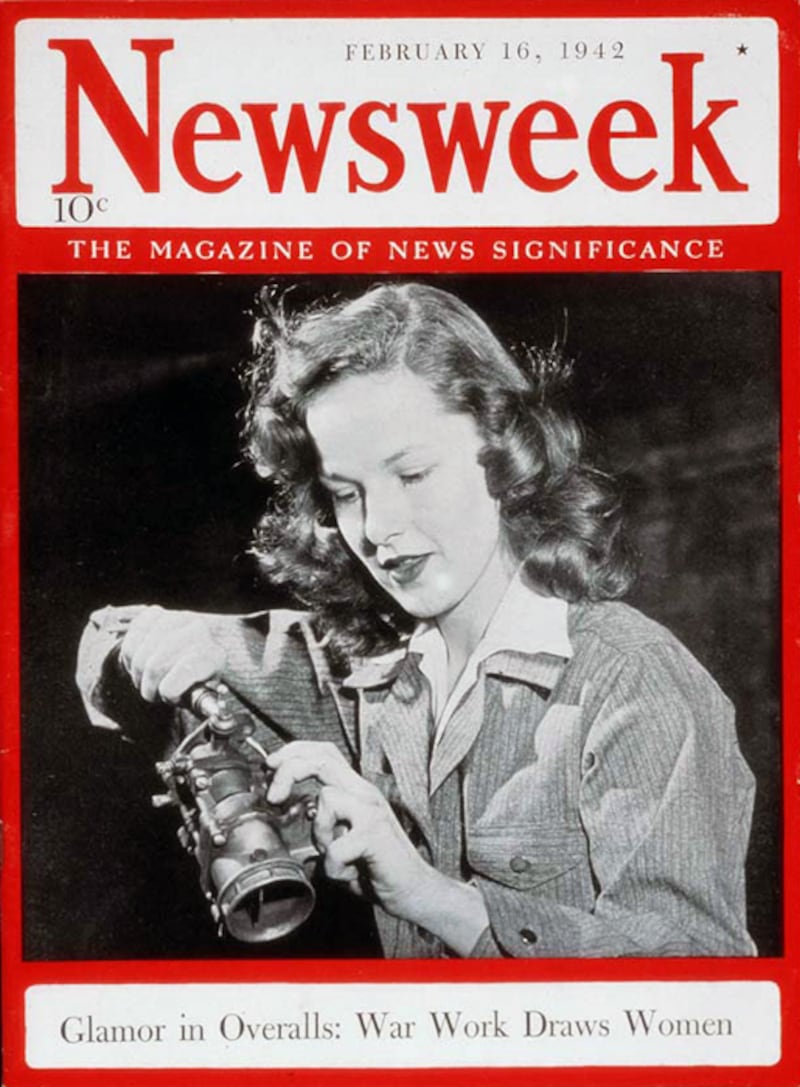
With so many men off fighting in World War II, women filed into the workforce at record numbers, NEWSWEEK reported. "Midway between industry and the military came the great mass of volunteer housewives, co-eds, white-collar girls and society debutantes and matrons, training for everything from air-raid wardens to fire fighters, ski aides, motorcycle couriers, parachute riggers and ground mechanics."
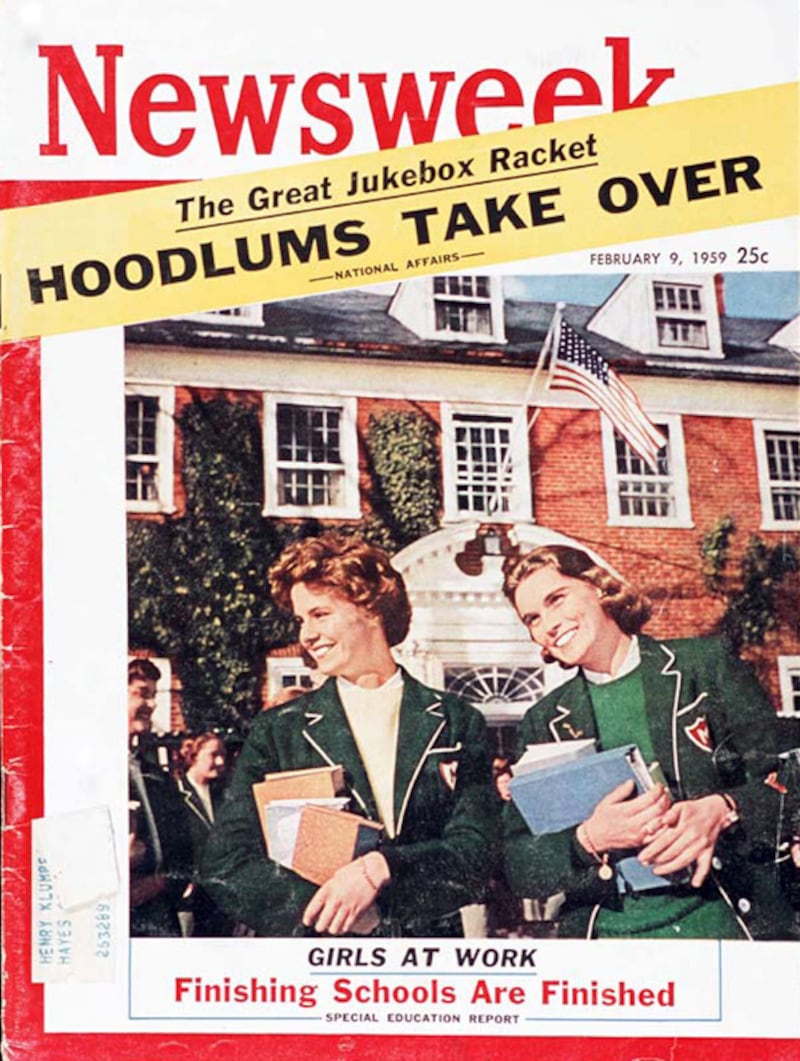
These two beaming students at Madeira, the white-glove boarding school outside Washington, D.C., represented the new fad for "concentrating on academic perfection" at girls' schools, instead of just manners and etiquette. From NEWSWEEK's Special Education Report: "Plinking mandolins, learning to pour tea and to stand erect by balancing books on their heads all used to be exciting and important pastimes for the proper young ladies ... But times have changed. The girls' school student of 1959 tends to be more interested in man-made satellites than mandolins; her goal is college, not just the college weekend."
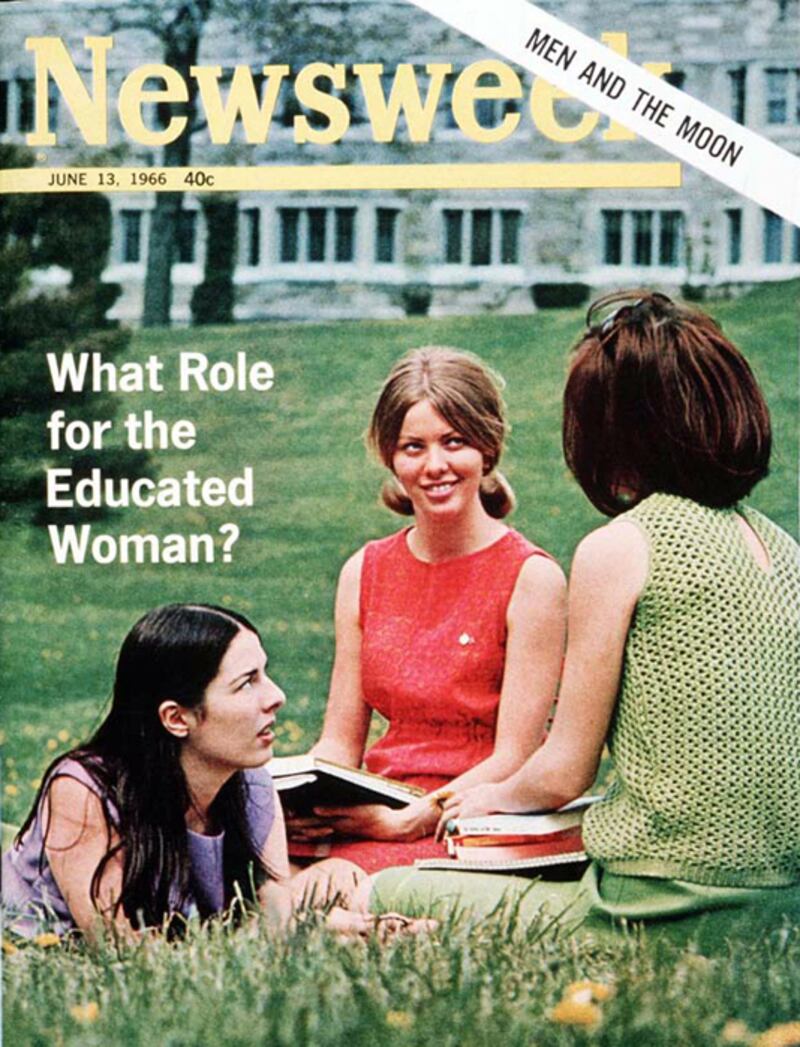
Three Bryn Mawr students sprawl out on the grassy commons at a time when, even though "strong commitment to an activity or career other than that of housewife is rare," for the first time, "the career drive in girls exceeds the mating drive." Though not without serious tension. As one law school-bound Vassar student says in the piece, "Because you are a woman, you want to be able to throw good cocktail parties as well as plead a good case."
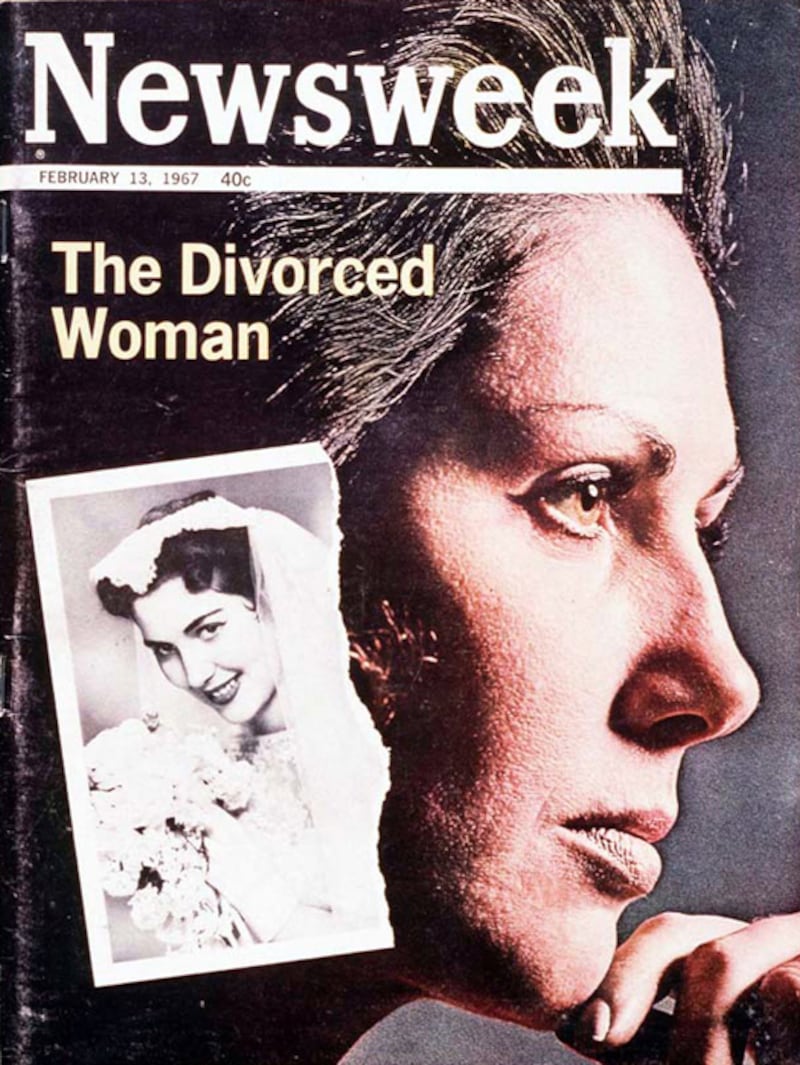
On the left is the prim, blushing bride, ready for domestic bliss; at right, the haggard and wrinkled divorcée. Divorces were increasingly wife-initiated by 1967 and were happening among middle-class couples who'd been married for 10 or more years-as the cover story reported, "stable" homes were splintering due to wives' "almost mystical faith in the powers of a second chance." As NEWSWEEK wrote: "What underlies the failure of so many mature marriages is not a new form of friction-but a new unwillingness to tolerate the old frictions. In the age of the Pill, the sexual revolution, and the feminine mystique, the notion that happiness takes precedence over female solidarity has clearly captured the female imagination."
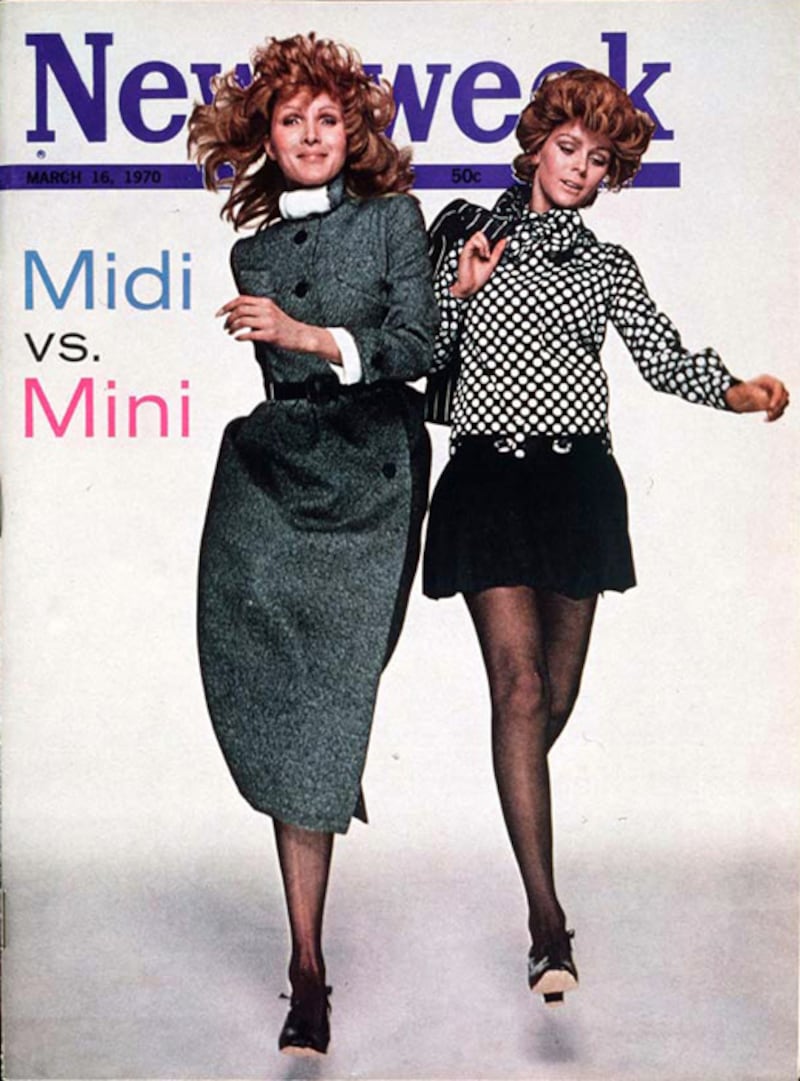
The intersection of fashion and politics, relayed with comical gravity by a male writer: "At issue is a deceptively miniscule few inches of fabric that will determine whether women's skirts will drop to a demure mid-calf, or stay casually provocative above the knee. The Presidents of the U.S. and France have proclaimed their approval of the midi, but most men sense a conspiracy in action. The Beautiful People like the longer look, but many women who are merely lovely are outraged at the thought of buying entirely new wardrobes."
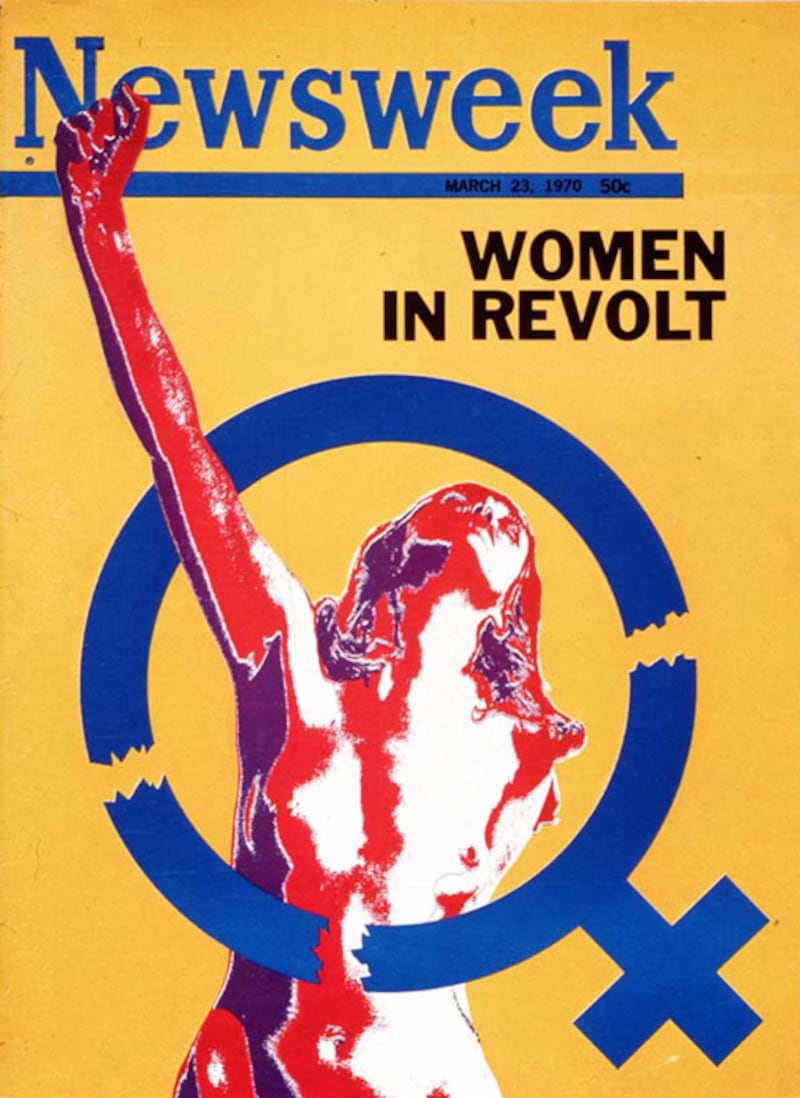
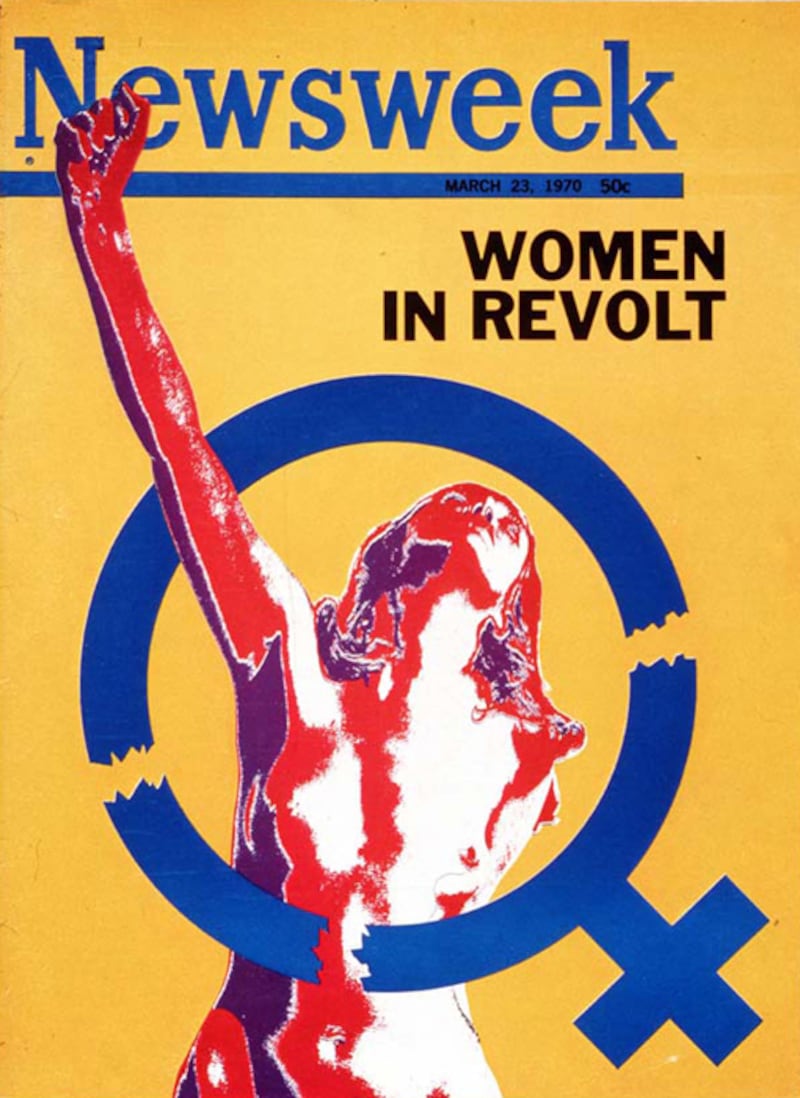
The women's movement, relegated to the fringe during prior decades, suddenly went mainstream. From the editor's note: "A new specter is haunting America-the specter of militant feminism. Convinced they have little to lose but their domestic chains, growing numbers of women are challenging the basic assumptions of what they consider a male-dominated society. They demand equal rights in every area from wages through child-rearing to sexual expression."
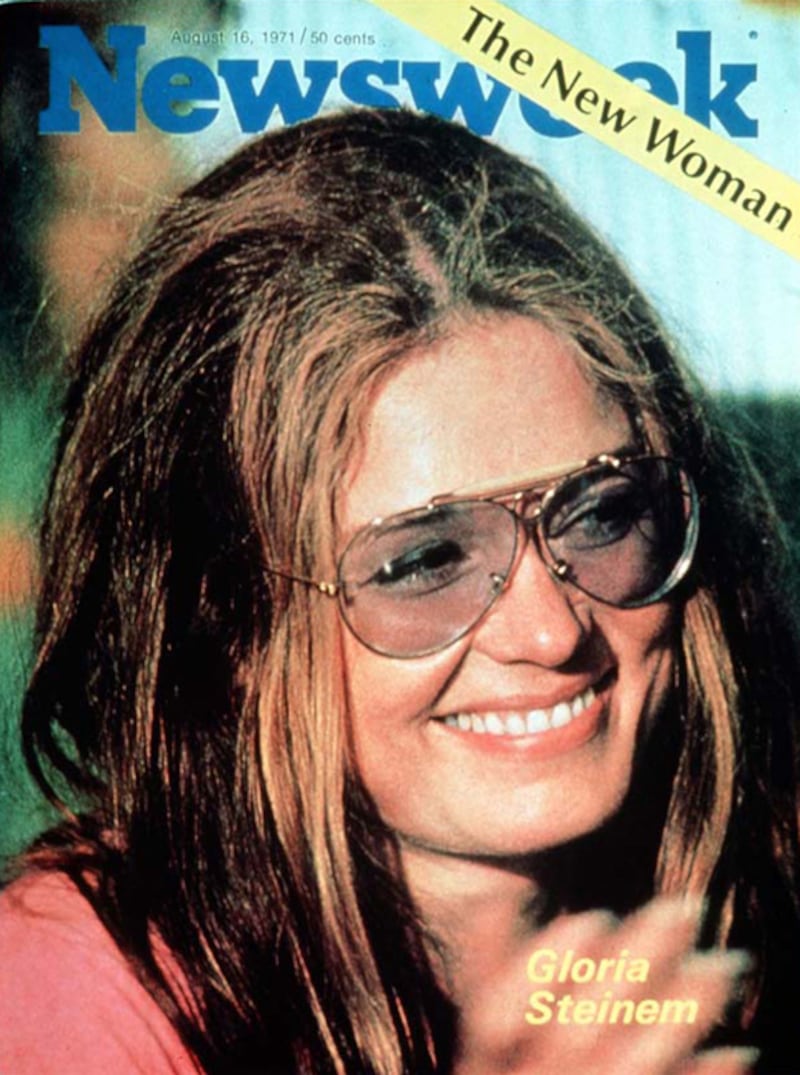
Gloria Steinem's words were serious. As she wrote of the Pill at the time, "The real danger of the contraceptive revolution may be the acceleration of women's role change without any corresponding change of man's attitude towards her role." But the description of her appearance didn't convey the same grave tone. "In hip-hugging raspberry Levis, two-inch wedgies and a tight poor-boy T-shirt, her long, blond-streaked hair falling just so above each breast and her cheerleader-pretty face...Any old swatch of cloth rides like a midsummer night's dream on what one friend calls her 'most incredibly perfect body.'"
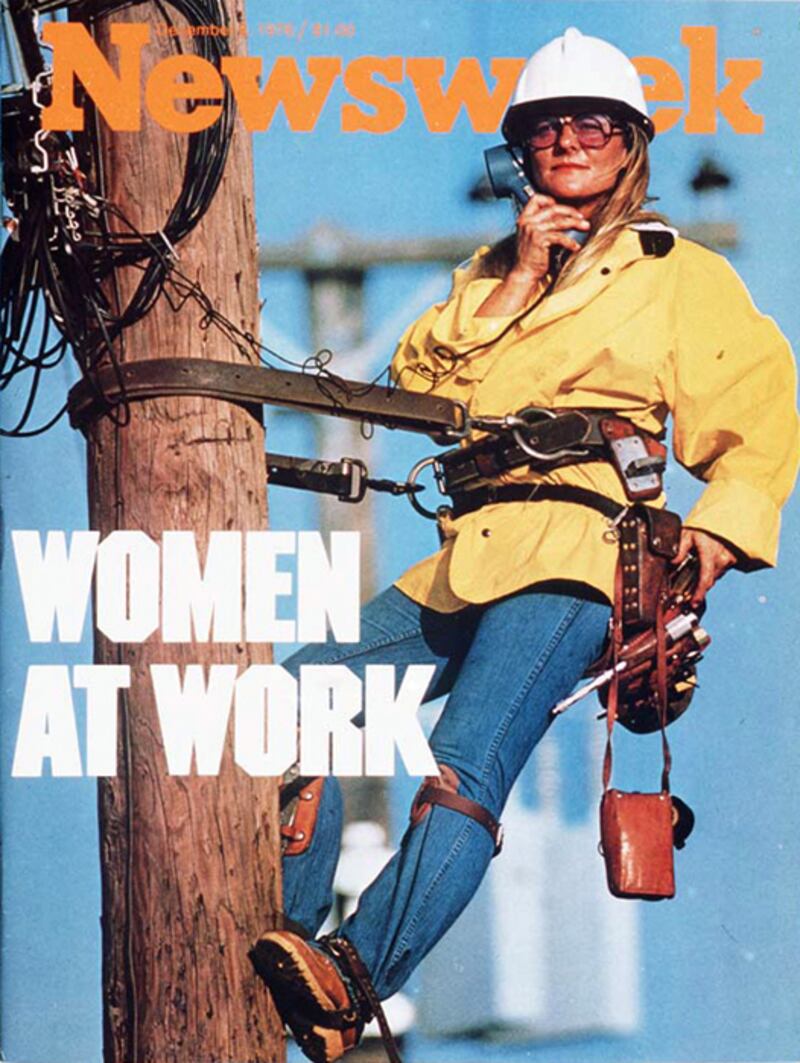
Not since World War II had women entered the workforce in such numbers-they were "surging into offices, stores and factories of America at a rate higher than in the WWII days of Rosie the Riveter. By choice or not, most women end up in what economist Marina Whitman calls the 'employment ghetto' of women's work: as waitresses and seamstresses, secretaries and bookkeepers, nurses and teachers ... [But] if anatomy is no longer to be destiny, and society genuinely wants full equality between the sexes, the wrenching readjustments may have only begun."
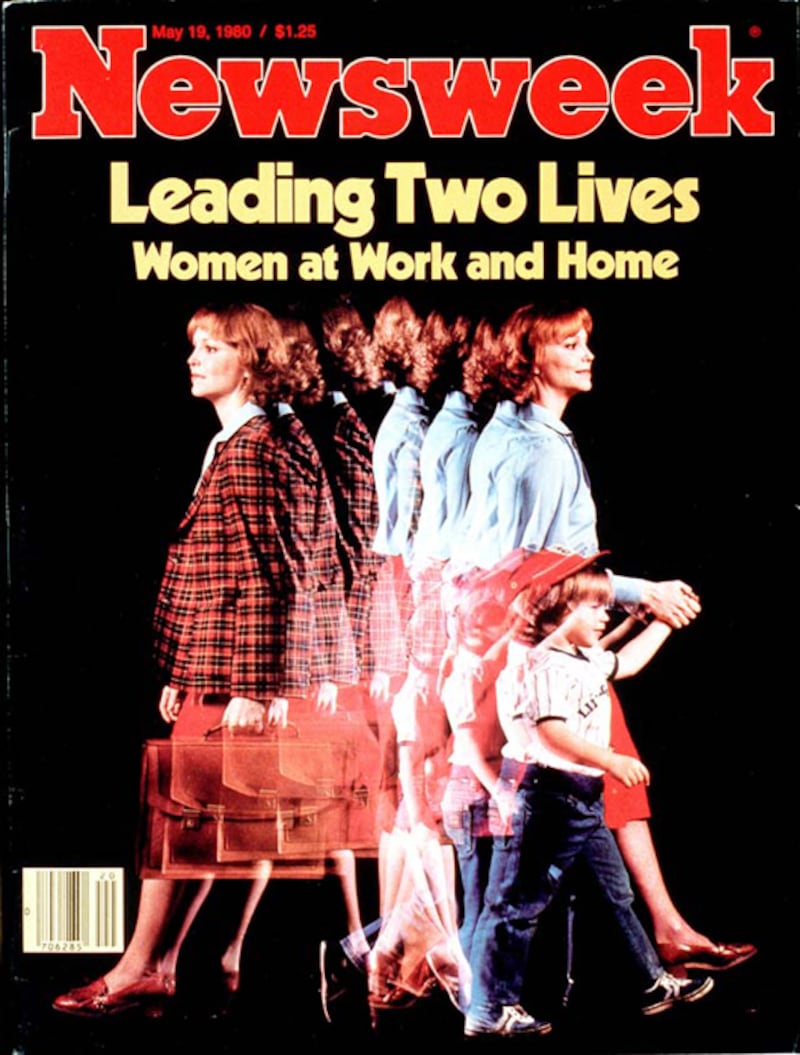
By the early '80s, women were in at least a few corner offices. Balancing careers with home lives became the new marquee issue for feminists, and it manifested itself in the call for day care. "The women's movement, after concentrating on legislative action in the past decade, has now vowed to make day care and other family issues top political priorities in the '80s," wrote NEWSWEEK.
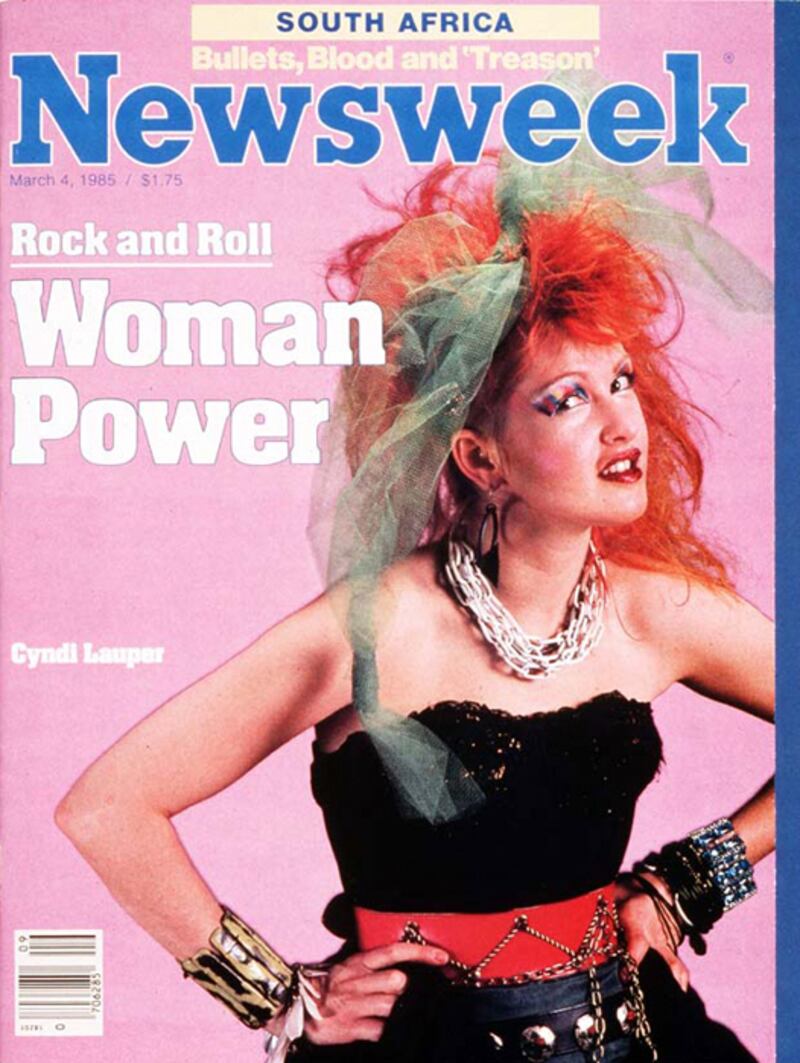
Girls just want to have fun, too, so they gate-crashed the rock scene. "As one of the most influential strongholds of knee-jerk misogyny, the rock scene has long cried out for women with power, ideas and an independent sense of style. Now, it seems, they're emerging one after another. Many of the new women rockers do a lot more than sing. They play their own instruments, write their own songs, control their own careers...With their costumes and come-ons, their thoughtfulness and their wit, their dopey hairdos and varied musical styles, they're turning old ideas about pop's feminine mystique inside out and upside down."
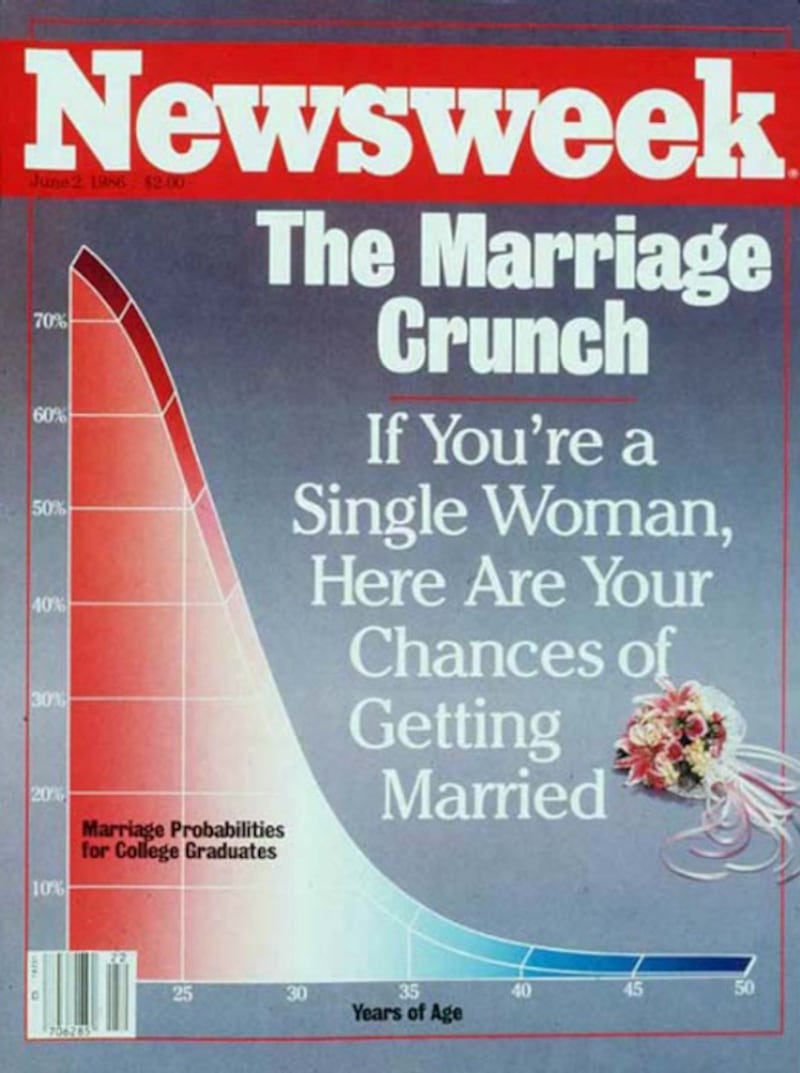
The "Too Late for Prince Charming?" cover story infamously proclaimed that a 40-year-old woman had a better chance of being killed by a terrorist than actually getting married. "The dire statistics confirmed what everybody suspected all along: that many women who seem to have it all-good looks and good jobs, advanced degrees and high salaries-will never have mates." The terrorist stat was later retracted.
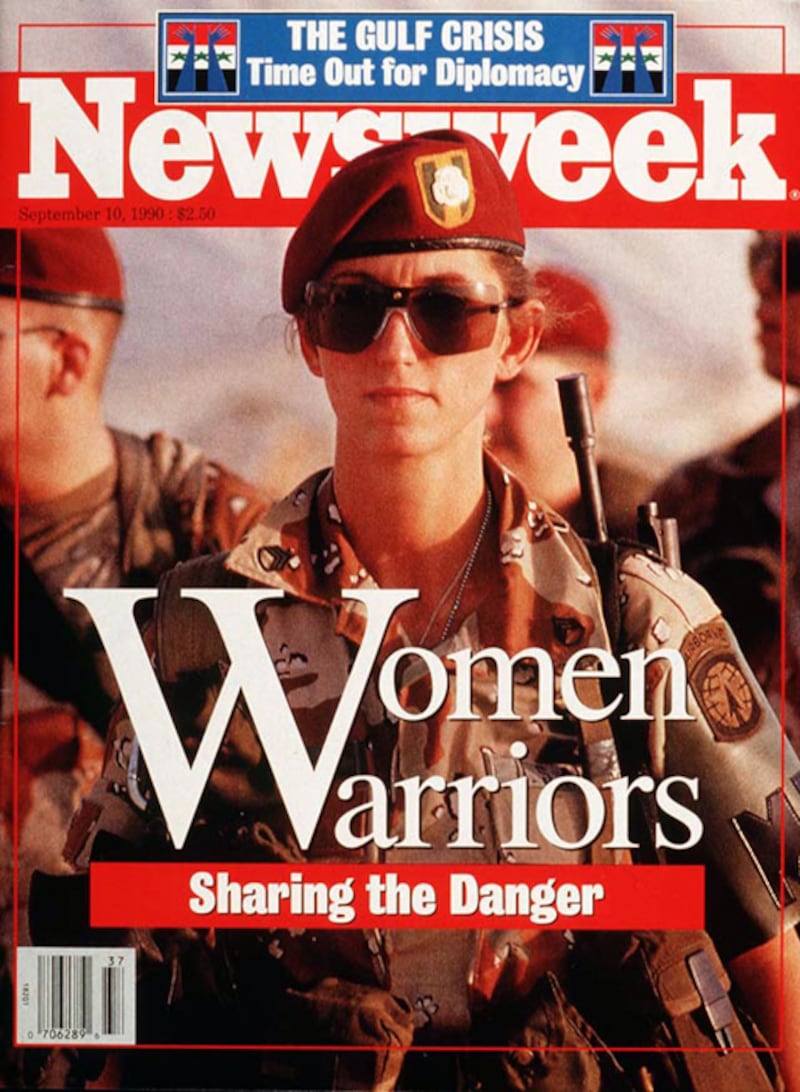
By the '90s, questions of whether women belonged in the workplace-blue- or white-collar-had largely been put to rest. But the armed forces were a different story. "Given the desert realities, some servicewomen are lobbying the military to lift the combat restrictions. 'I can fly that F-15 just as well as a man,' insists 25-year-old Lt. Stephanie Shaw, who controls flight missions for a tactical air wing in the Gulf. 'I volunteered for the Army, not the Girl Scouts,' echoes Capt. Leola Davis.... But the objections to women on the front lines are deeply entrenched, as Schroeder found this year when she proposed legislation calling for a four-year Army test of women in combat posts. The Army rejected the idea, and it stands little chance of passage."
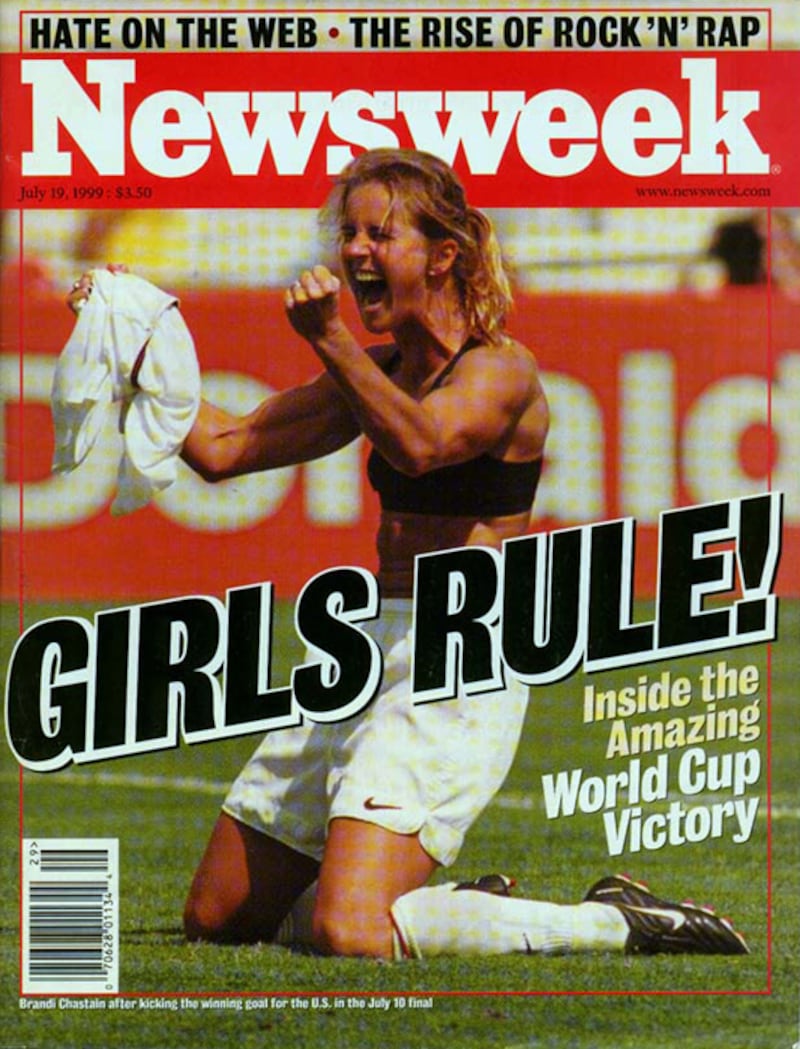
U.S. women's sports finally get their due: "It was a delirious moment-one that enthralled sports fans, especially young girls, and which may mark a new high for women's sports. Some 650,000 tickets were sold to the 32 Women's World Cup matches. More than 90,000 fans packed the final game alone, making it the biggest event in the history of women's sports. Record TV audiences tuned in. In the stadiums and on the tube, the air was filled with a novel sound: the high-pitched chanting of soccer-loving, Mia Hamm-worshiping girls. It wasn't just in the stands. From suburban soccer fields far and wide came a new battle cry: Girls Rule!"
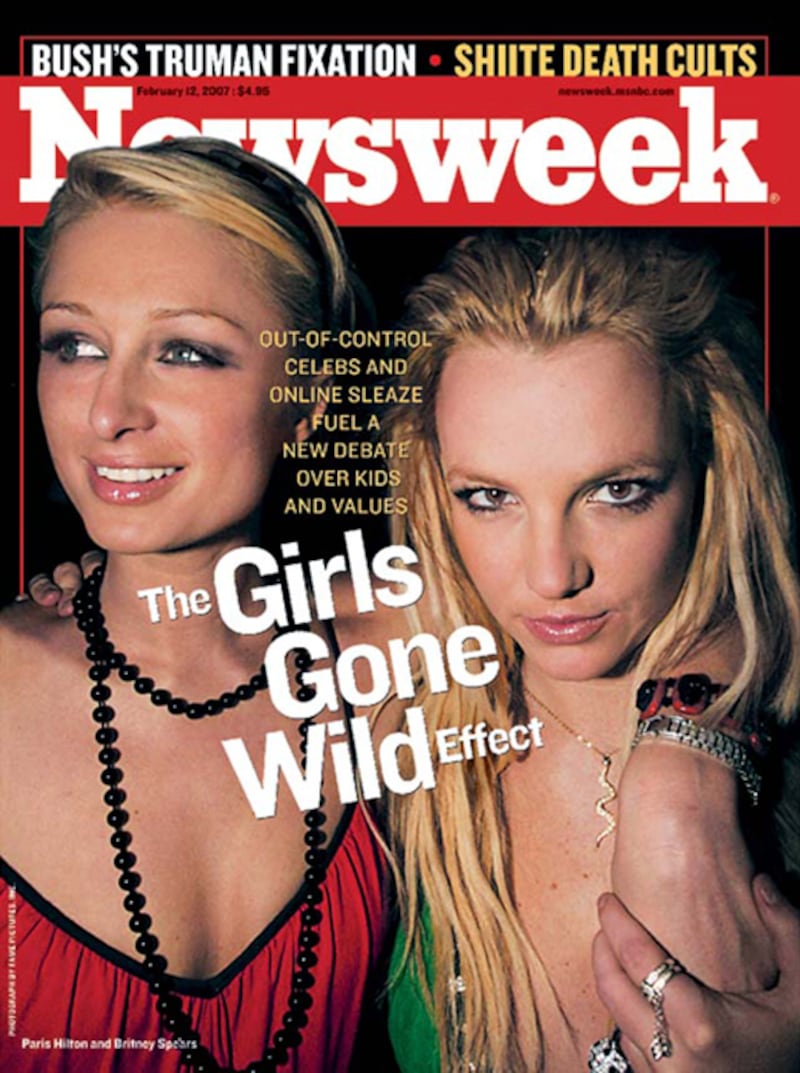
Paris Hilton and Britney Spears, pictured here, were characterized in this 2007 cover as co-conspirators in a culture of sexual self-subjugation. "Like never before, our kids are being bombarded by images of oversexed, underdressed celebrities who can't seem to step out of a car without displaying their well-waxed private parts to photographers," NEWSWEEK wrote.
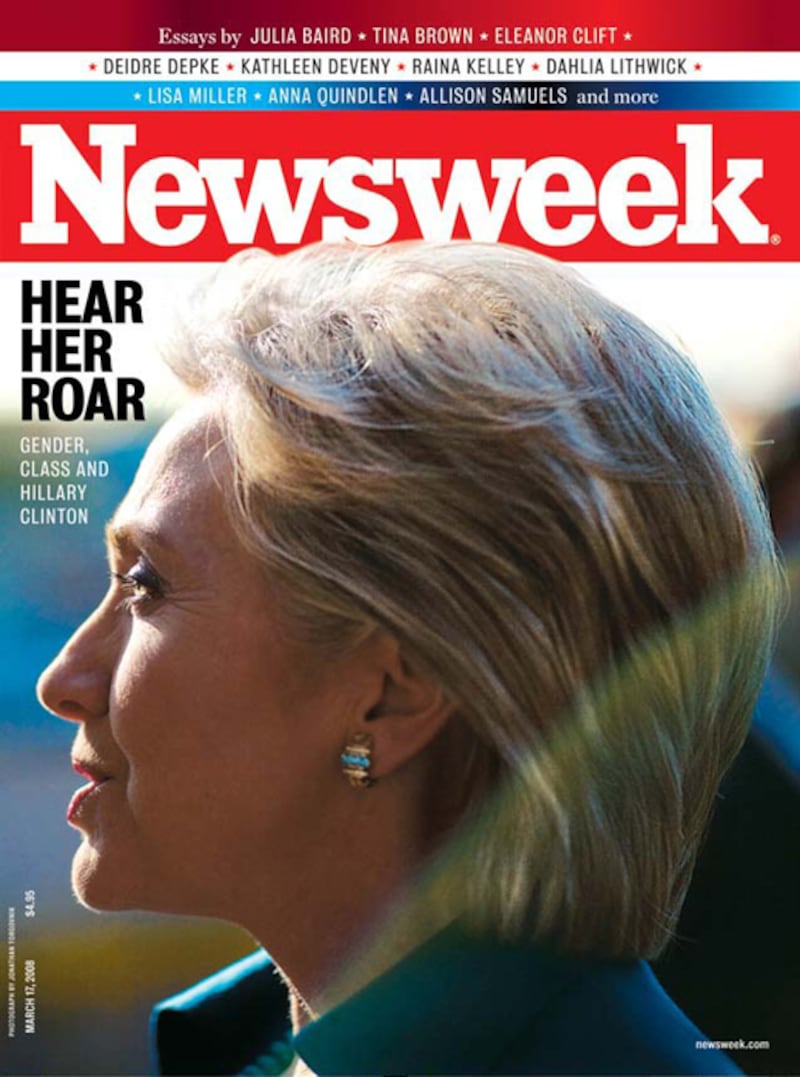
This lipstick-written cover line, "What Women Want," drew the ire of feminists in this 2008 story about Sarah Palin's selection as a VP candidate. "Women are flocking to her, cheering her can-do attitude and her unabashed embrace of the hockey-mom label," the magazine wrote.
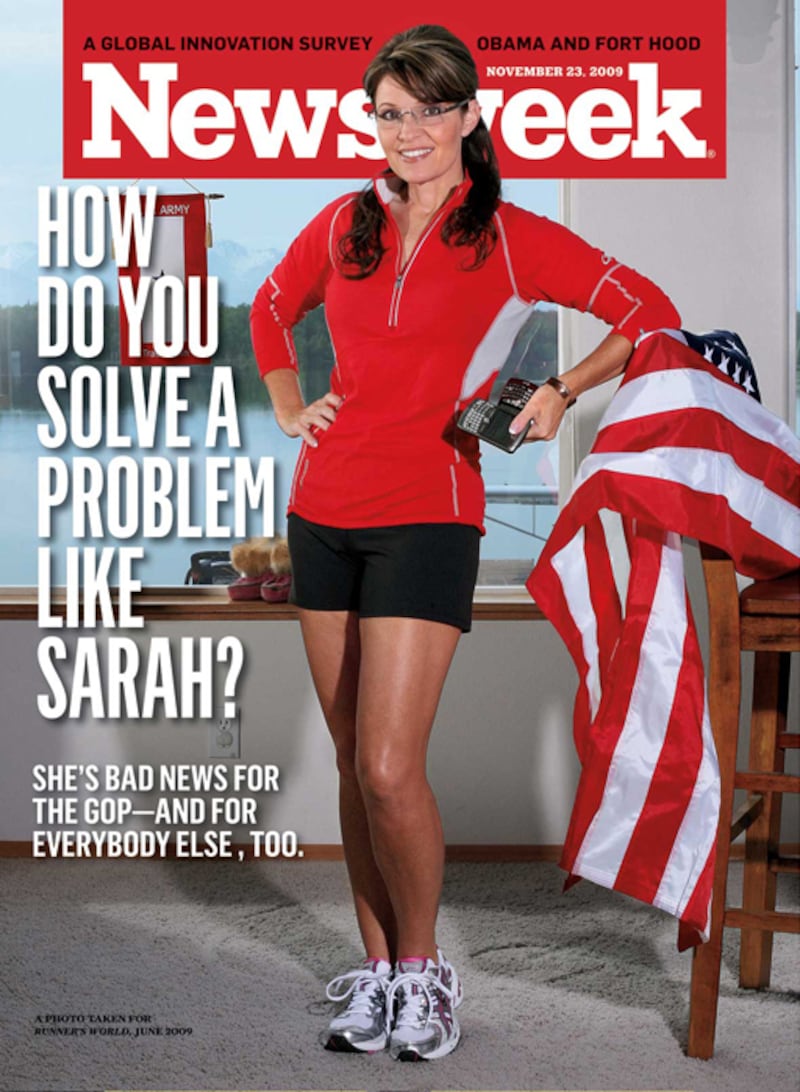
And the backlash. This image of the former governor in running shorts, originally shot for Runner's World, ignited a firestorm on the blogs, but the story stuck to critiquing her politics. "Obama knows the long odds against a right-wing populist winning the presidency, no matter how good she looks in a skirt (or running clothes), brandishing a gun."
See more of our coverage in your search results.

Got a tip? Send it to The Daily Beast here.
Register below to read this article for free or subscribe
to unlock unlimited access to The Daily Beast.
Monthly
$1
First month then $5.99/month
Annual
$35
First year then $59.99/year
Premium
$79
First year then $119.99/year
*Substack access provided by the next business day, using your subscription email. Choosing the Premium plan constitutes your permission to share your subscription email with Substack and your agreement to Substack’s Privacy Policy.
Already have an account? Sign In
Looks like you already have a subscription!
You're all set!
Thanks for subscribing.