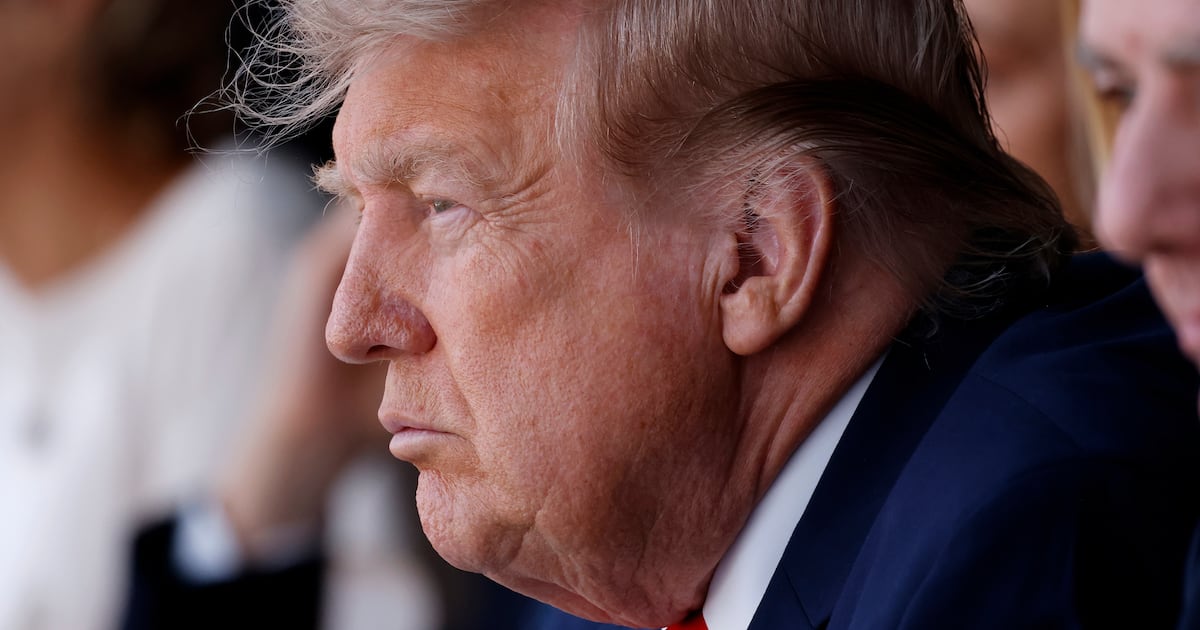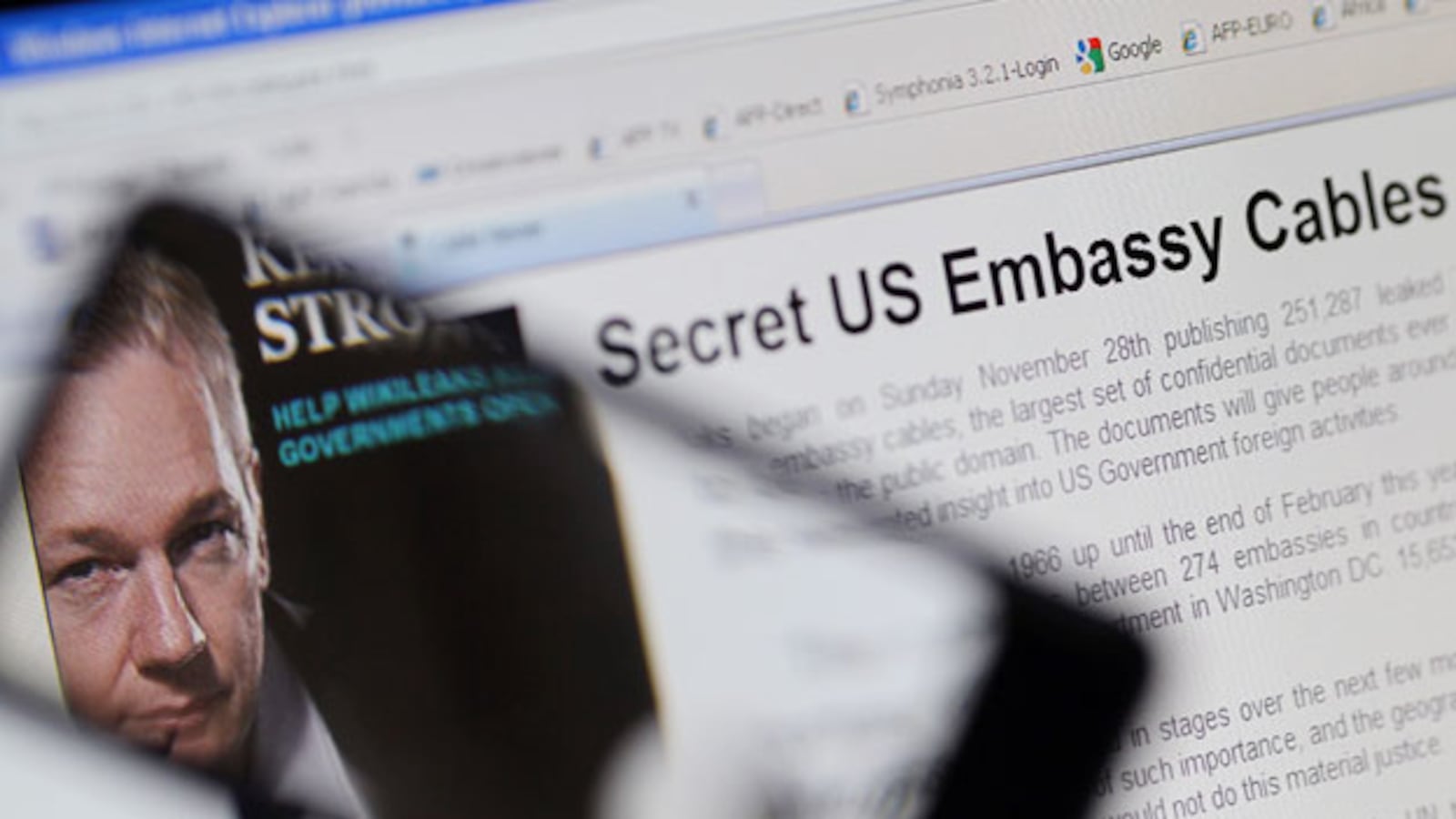
Is Julian Assange a brave defender of the knowledge is power axiom or an egoist immune to the collateral damage caused on his way to worldwide notoriety? It's a question that preoccupied the media world throughout 2010, as the four-year-old WikiLeaks whistlerblower website dumped reams of scathing, confidential documents and video about the Afghan and Iraq wars on the public. As WikiLeaks grows more prominent, each new document dump has been coordinated with a press strategy—such as partnering with the venerable New York Times—designed to have maximum impact not just for the information exposed, but also for Assange's celebrity. That has put observers in the uncomfortable position of questioning Assange's motives and credibility as an individual while at the same time accepting the information WikiLeaks provides at face value. Viewed as something between a martyr and a pariah, Assange is out on bail after being imprisoned because of sexual-assault allegations.
Thomas Coex /AFP / Getty Images
At bottom, The Social Network, David Fincher and Aaron Sorkin's brilliantly executed, Oscar-contending meme on Facebook, is a creation story. But one unintended consequence of the film is that focusing so intensely on Facebook's origins underscores how much CEO Mark Zuckerberg has grown since the social network's incubation at Harvard. Famously dubbed the " toddler CEO," Zuckerberg, 26, came of age as an executive this year. Sure, he had his moments, like when he took a sweat bath under questioning from Kara Swisher at the D Conference in June. But for the most part, Zuckerberg handled a personal and professional spotlight more on par with celebrities or athletes than CEOs with a maturity that few would have foreseen after his first, awkward 60 Minutes interview in 2008. Zuckerberg, whose net worth Forbes estimates at $6.9 billion, seemed more at ease and sure of himself in 2010 despite the distractions, which included the movie, another lawsuit challenging his ownership of Facebook, and more accusations of violating users' privacy. After all, you don't get to be Time's Person of the Year without facing and/or causing some controversy. Through it all, Zuckerberg kept rolling out product after product—messages, new profile pages, single sign-in—that make clear that he doesn't want Facebook, which now has nearly 600 million users, to be an Internet destination. He wants Facebook to be the heart through which all digital information is pumped.
Paul Sakuma / AP Photo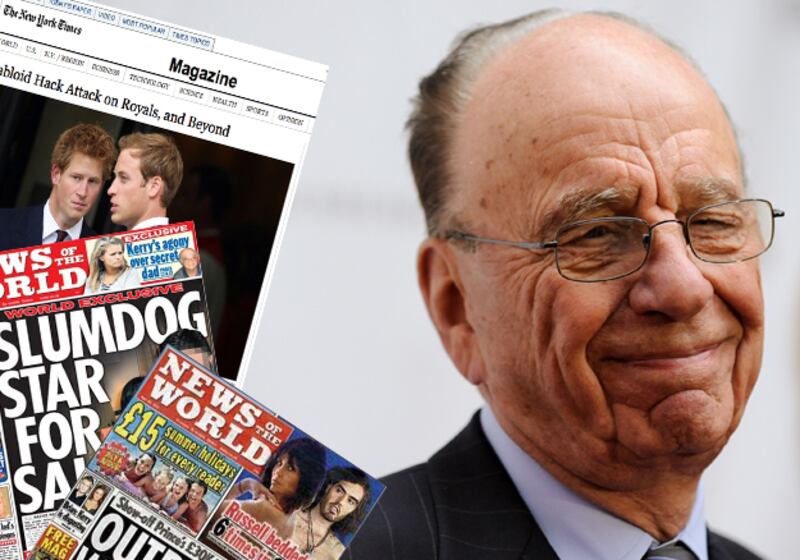
Julian Assange and Mark Zuckerberg weren't the only ones forced to confront thorny questions about invading privacy in 2010. Rupert Murdoch's British tabloid News of the World came under a fresh attack thanks to the New York Times, which alleged in a September magazine piece that the Murdoch-owned newspaper's illegal tapping of the voicemail accounts of celebrities and politicians was far more extensive than originally thought. That's pretty extensive,considering that the paper paid roughly $1.6 million in 2009 to settle two potential "phone-hacking" lawsuits by public figures, according to Slate's Jack Shafer, and the NYT piece said it paid an equal amount to an unnamed public relations executive this year. The original charges date back to 2006, when a reporter for the News of the World and a private investigator were arrested and jailed for tapping into the voicemails of members of Queen Elizabeth II's family. Media observers viewed the New York Times' piece as payback and secretly applauded the paper for finally punching back at Murdoch after enduring two years of jabs from his Wall Street Journal. Regardless of the motives, the story proved effective—Scotland Yard in September reopened the case and last month brought in Andy Coulson, the former News of the World editor who now serves as spokesman for Prime Minister David Cameron, for questioning about his role in the phone hacking.
Evan Agostini / AP Photo
No presidential candidate since John F. Kennedy has as effectively used television as Sarah Palin did this year. The unofficial start to Palin's 2012 run began in January when she signed on as a contributor to Fox News, where she provides political commentary, serves as guest host on Real American Stories, and participates in special political event programming like Election Night coverage. In March, the former governor of Alaska and reality-television producer Mark Burnett inked a deal to do a travelogue-type show for TLC that pays her a reported $250,000 per episode. That show, Sarah Palin's Alaska, premiered in November to an audience of 5 million viewers, though after the pre-launch hype the audience appears to have leveled off at roughly 3 million viewers. Mama Grizzly was also a ubiquitous presence in the audience during her daughter Bristol's turn on ABC's Dancing With the Stars this year, a run that erupted in accusations of favoritism and ballet stuffing after she finished third despite frequently being viewed by judges as one of the weaker contestants. Against this backdrop, Palin continued to move copious copies of her memoir, Going Rogue, as well as drive magazine newsstand sales for Vanity Fair, New York, and others. Last month, Palin was the subject of a lengthy profile in The New York Times Magazine where she confirmed that she was discussing a presidential run in 2012. The title of the article: The Palin Network.
Courtesy of TLC
Proving that men—particularly really old men—will do anything for the attention of young women, 87-year-old Viacom Chairman Sumner Redstone first tried to force MTV to produce a reality show about a scantily clad, all-girl band dubbed The Electric Barbarellas that had caught his eye. After The Daily Beast quoted anonymous MTV executives saying they objected to the show, Redstone showed his age—and technological naiveté—by calling up writer Peter Lauria and leaving a now-infamous voicemail offering Lauria a "reward" and "protection" in return for revealing his sources. "We're not going to kill him," says Redstone in the message. "We're not going to fire him. We just want to talk to him. You will be well-rewarded and well-protected." The voicemail led to revelations that Redstone, who also owns CBS, gave $77,000 worth of stock and a job in publicity at Showtime to another young female acquaintance named Rohini Singh and that he paid $1 million to CBS Vice President Karen O'Rourke Zatorski to avoid her bringing harassment charges against him.
Robyn Beck / AFP / Getty Images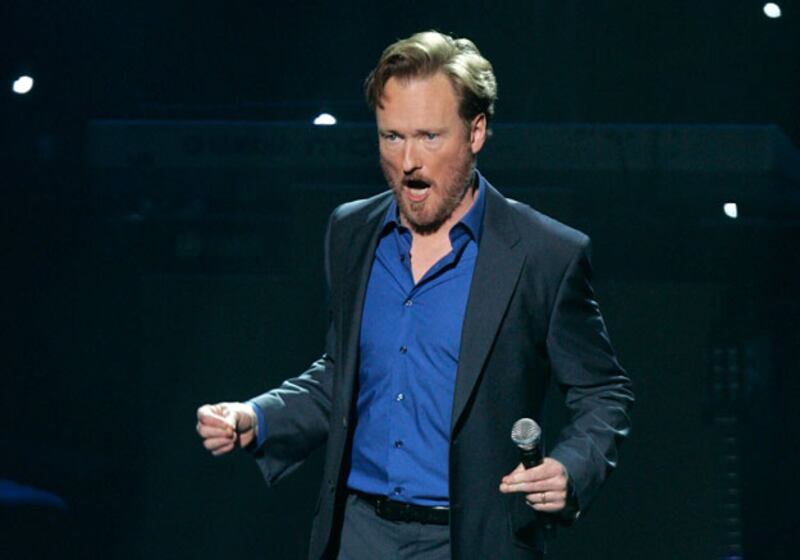
This year may as well have been split in two for Conan O'Brien. The beginning of 2010 could not have been more nightmarish for the comedian—NBC announced in January that after just seven months it was bumping his Tonight Show to bring back Jay Leno to the 11:35 slot, causing O'Brien to quit. Known for self-deprecating humor, the lanky host with the funny hair did the only thing he could think of: mined his misery for laughs on Twitter and through a successful nationwide comedy tour. That marked the turning point for O'Brien, who evolved from dejected NBC pariah into a folk hero as the " people of the Earth" identified with his righteous indignation toward NBC and declared themselves part of "Team Coco." By April he had a deal with TBS to return to late-night television. An avalanche of press coverage soon followed, including a segment on 60 Minutes and a Rolling Stone cover profile. Just last month Conan, as his new show is called, premiered to a debut week average audience of just under 3 million viewers (the show's viewership has since fallen to roughly 1.4 million.)
Don Ryan / AP Photo
From the moment Comcast announced its takeover of NBC Universal, entertainment-industry insiders salivated over the eventual dismissal of Jeff Zucker. The bald, bespectacled, 45-year-old CEO of NBC Universal knew he wasn't part of Comcast's plans for the company, which is why way back in May he started laying the groundwork for his departure by talking up his aspirations for political office. But when the official word of Zucker's ouster came in September, it was bittersweet. During his ensuing three-month farewell tour, Zucker has showed a grace and humility that was obscured by egoism and ruthlessness during his tenure. After spending his entire career, 24 years, at NBCU, Zucker leaves with perhaps one of the most perplexing records of any modern day media CEO. For every criticism that can rightly be leveled against him—NBC's primetime failures, the Leno-O'Brien fiasco—there is a data point of praise to offset it—the strength of NBC's cable networks, his acumen as a news producer. Zucker will go down in history as the Icarus of media executives, a bright, shining star who got burned the higher he rose. Of his legacy, Zucker told The Daily Beast, "Hopefully, people will see it as one of creativity, innovation, a willingness to take risks, a belief in diversity and of creating a culture of cooperation and collaboration that is unique in media."
Bill Clark / Roll Call via Getty Images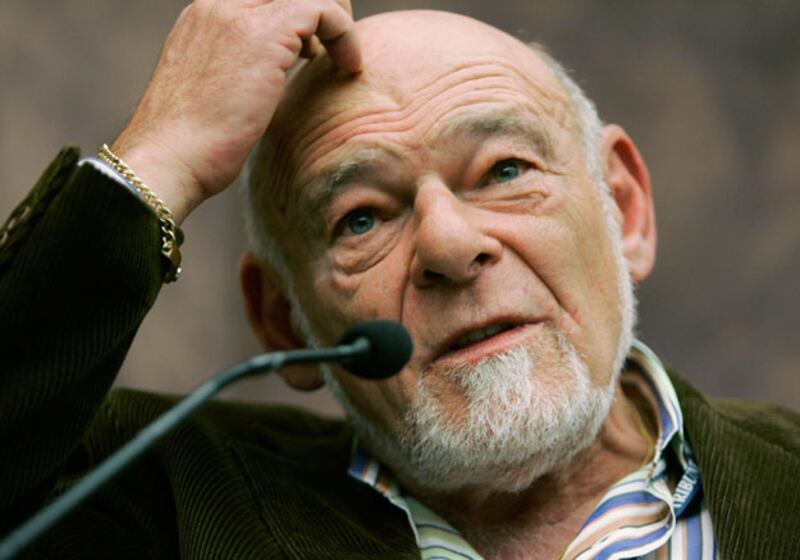
It takes a lot for a story about a newspaper company to dominate the media news cycle these days, but when David Carr's New York Times' story about the bankrupt culture fostered by Sam Zell at the Tribune Co. hit in October, it was all anyone who ever held a journalism job could talk about. Anecdotes about executives offering waitresses cash to show their breasts and cigar- and booze-fueled gambling nights at company headquarters tend to capture readers' imaginations. The story—which added a third, unseemly dimension to Zell's disastrous financial and journalistic stewardship of Tribune—lit up Twitter for days. Rarely does a story have enough impact to generate action, but this one did, resulting less than a month after its publication with the firing of Tribune CEO Randy Michaels and Chief Innovation Officer Lee Abrams.
Charles Rex Arbogast / AP Photo
Not to take anything away from Piers Morgan, but when the hiring of the former tabloid editor and TV talent judge is the most positive development your news network can point to all year long, you're in trouble. This year the acronym CNN became synonymous with the confused news network. Desperate to catch Fox News and MSNBC in the ratings, CNN in 2010 made a bunch of moves that appeared... well, desperate. In June, after years of declining ratings and influence, the network politely nudged Larry King, the wrinkled, 76-year-old face of CNN, out the door. Three months later, the ratings Grim Reaper claimed the head of President Jon Klein. A week after Klein's firing, CNN was forced to fire anchor Rick Sanchez after he made controversial remarks in a radio interview. Ratings for Anderson Cooper, CNN's lone breakout star in recent years, are on the wane, and the network's biggest programming bet, Parker/Spitzer, has been a ratings bust with reports of infighting among co-hosts Kathleen Parker and former New York Governor Eliot Spitzer hitting Page Six and The New York Times. And just for good measure, CNN last week announced that John Roberts would be leaving its low-rated American Morning news show. But hey, as Time Warner will tell anyone who will listen, at least CNN's profitable!
Ric Feld / AP Photo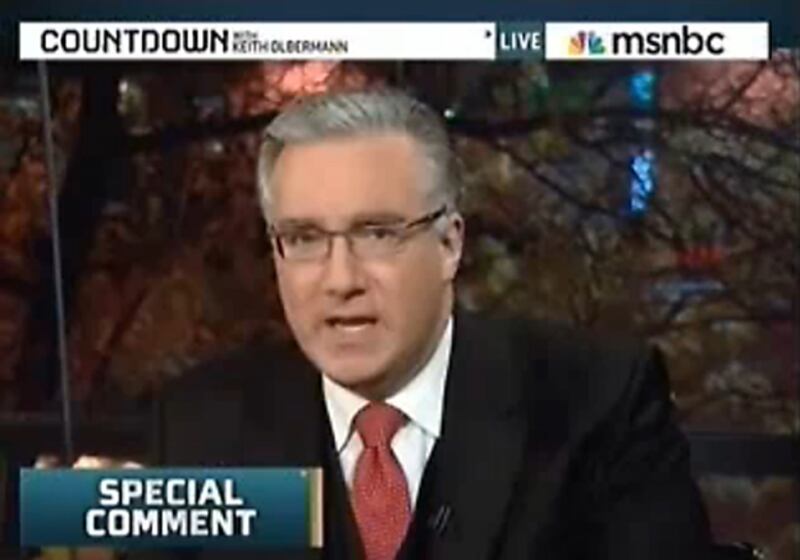
The dysfunction at MSNBC reached new levels of absurdity in November after Politico.com revealed that Keith Olbermann gave donations to the campaigns of several political candidates. Citing network policy that forbids news anchors from political donations, MSNBC suspended Olbermann indefinitely without pay only to reinstate him after two days. Olbermann, who railed against Fox News for similar political donations, predictably railed against MSNBC's suspension, claiming that the network's policy was "inconsistently applied." An internal battle between executives and Olbermann over his erratic behavior and increasing prickliness with colleagues and management has since ensued to the surprise of precisely no one.
AP Photo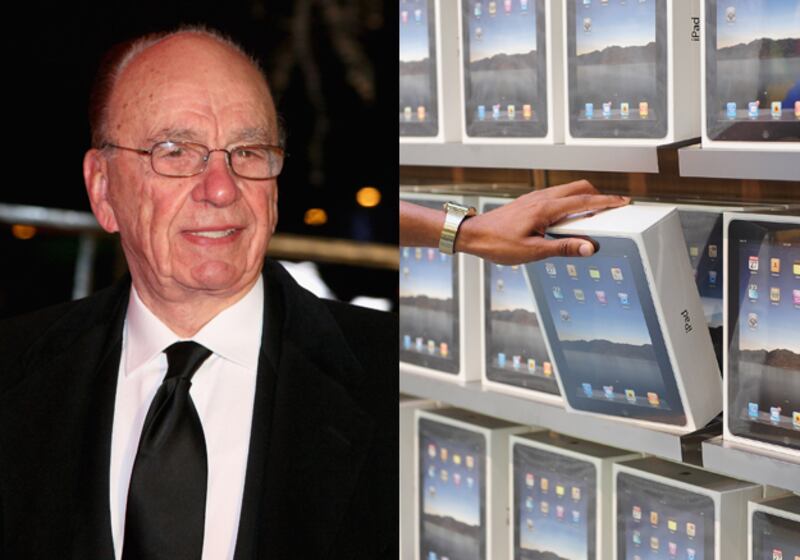
Combining Rupert Murdoch's love of newspapers and tolerance for financial losses, News Corp. spent most of 2010 planning the ambitious launch of an iPad-only newspaper called The Daily. Scheduled to debut in early 2011, News Corp. is setting aside $30 million to fund what it views as the company's " flagship product." Murdoch has assembled a murderer's row of editorial talent to staff The Daily, including New York Post alumni Richard Johnson and Jesse Angelo, New Yorker writer Sasha Frere-Jones, and television producer Steve Alperin. Already the buzz around the project is almost deafening, with media's most mundane observers wondering if Murdoch, the penultimate newspaperman, can create a successful digital model for news. Not everyone in publishing will read The Daily when it launches in 2011—and it has many naysayers—but you can bet that they all will be watching how it performs.
Chris Jackson / Getty Images; Ian Gavan / Getty Images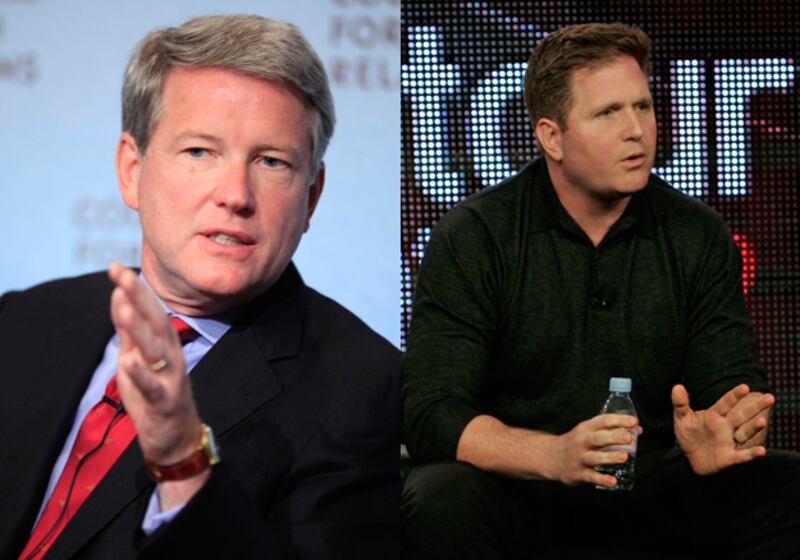
Remember when everyone in moguldom thought Disney's Bob Iger was a shrinking violet? Neither do we. But anyone still holding that opinion of the Disney CEO entering 2010 was quickly disavowed of it after watching Iger amputate ABC's leadership with surgical precision. Iger, who for years toiled in relative anonymity as former Disney CEO Michael Eisner's top lieutenant, followed up the ouster of beloved studio boss Dick Cook in late 2009, by turning his attention to the troubled ABC. Already struggling with declining ratings and a lack of hits, Iger in July reportedly forced the resignation of ABC entertainment head Stephen McPherson after an internal investigation uncovered alleged personal misconduct In September, Iger gave in to the long-held wishes of Disney/ABC Television President Anne Sweeney and got rid of ABC News head David Westin (Sweeney and McPherson also had a history of conflict). Though Sweeney had friction with Westin, she had previously been powerless do anything about it since he was protected by Iger. Indeed, Westin would still likely be at ABC had he not lost Iger's support. Just as he brought in Rich Ross from the Disney Channel to run the studio, Iger again went outside ABC's broadcast network to find replacements for McPherson and Westin, naming ABC Family's Paul Lee as entertainment head and former ABC News executive Ben Sherwood to lead news.
Mark Lennihan / AP Photo; Rick Rowell, ABC / Getty Images)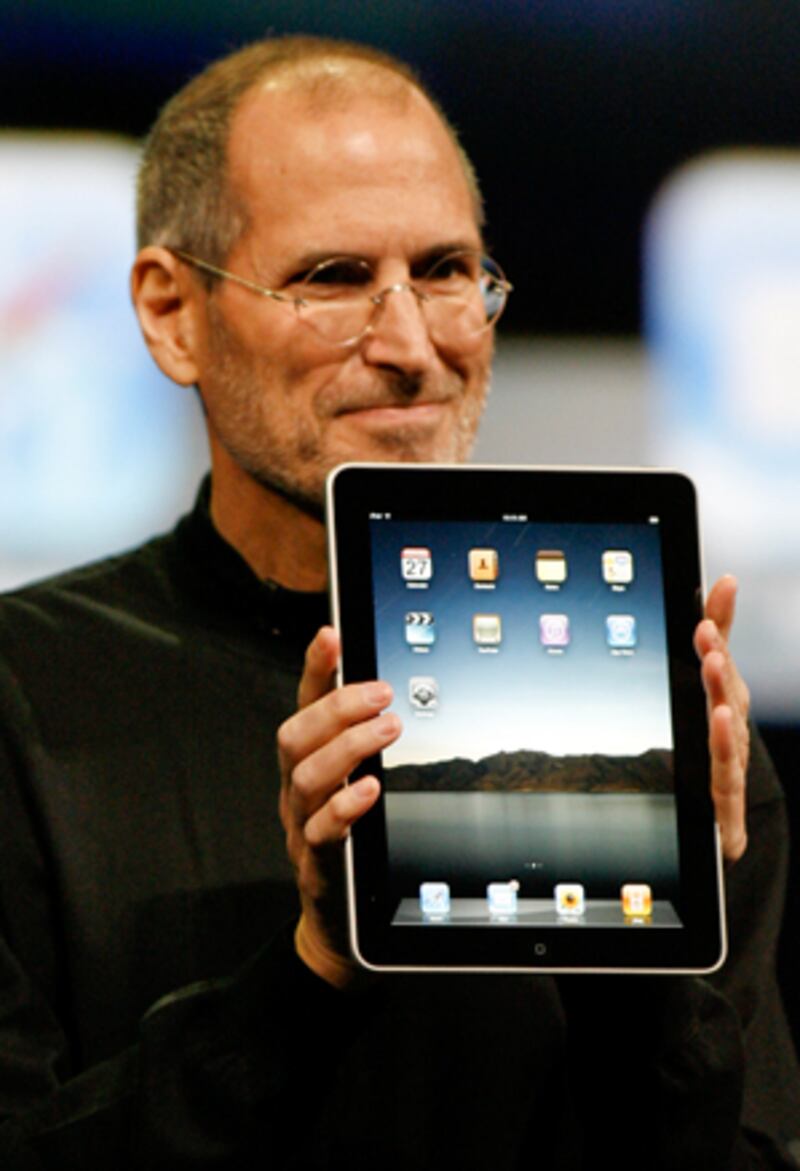
Despite Apple's history of disrupting traditional business models and controlling content distribution with its technological innovation, publishers were quick to embrace the iPad upon its launch in January. No less a media baron than Rupert Murdoch is on the record as saying that the iPad "may well be the saving of the newspaper industry." Time Inc., Conde Nast, Hearst, The New York Times and other publishers were equally effusive in their praise. Sales figures bear out their excitement: 7.5 million iPads were sold in 2010, and some analysts project sales could reach 28 million next year alone. The hope among publishers is that they can convert iPad users into either paying subscribers to their apps or keep them engaged long enough to increase the potential for advertising revenue derived from their free apps. Initial data suggests that there's cause for optimism. The average Conde Nast reader spends an hour each month with its magazines' iPad apps, for instance, and The New York Times' free app has been downloaded more than 650,000 times. The increased engagement has prompted advertisers to offer publishers five times as much to place ads on iPad apps as opposed to regular websites.
Tony Avelar, Bloomberg / Getty Images
If it's true that journalism is history's first draft, then future textbooks will have a lot to say about the Tea Party in 2010. Though the Tea Party isn't an actual political organization, candidates supported by the movement won primary elections in Alaska, Colorado, Delaware, Florida, Nevada, New York, South Carolina, and Utah this year. Nurtured by the ample bosoms of Sarah Palin, Glenn Beck, and Dick Cheney, among others, and fostering a decidedly populist stance, Tea Party-endorsed candidates like Scott Brown, Rand Paul, and Nikki Haley rose to national prominence. Despite helping Republicans gain control of the House by getting more than two dozen conservatives elected in November, however, Republicans blamed their inability to take control of the Senate on the Tea Party's perceived extremism.
Brendan Smialowski / Getty Images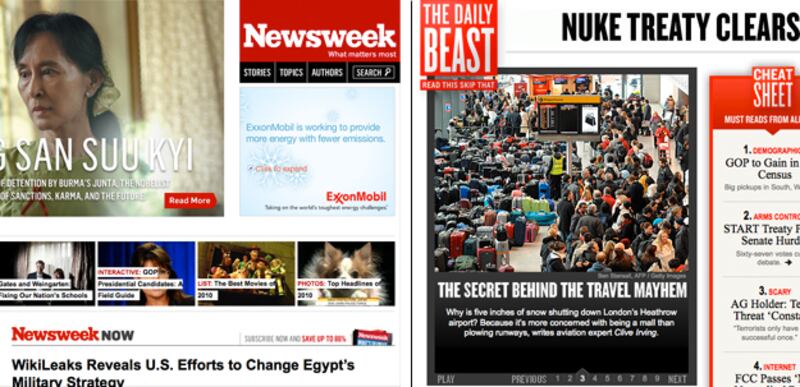
Old and new—as in both age and media—came together in November when 77-year-old Newsweek magazine and two-year-old digital magazine The Daily Beast agreed to merge in a 50-50 joint venture. "The Daily Beast's animal high spirits will now be teamed with a legendary, weekly print magazine," wrote Tina Brown, who will serve as editor in chief of both titles, in a blog post announcing the deal after months of on-again, off-again talks. The merger capped an eventful year for both publications. In August, stereo magnate Sidney Harman bought Newsweek, which was cast off by the Washington Post Co. earlier in the year, for one dollar. Suffocating under the weight of high-profile staff defections and heavy financial losses, Harman three months later breathed new life into Newsweek with the deal. For The Daily Beast, the deal adds a brand name of international recognition to a website that was created just two short years ago under the auspices of Barry Diller's IAC and has grown to nearly 5 million unique visitors a month. It also gives Brown, who rose to prominence as the editor of Britain's Tatler and, later, Conde Nast's Vanity Fair and New Yorker, a print platform to grow and expand upon The Daily Beast's breaking news and commentary.
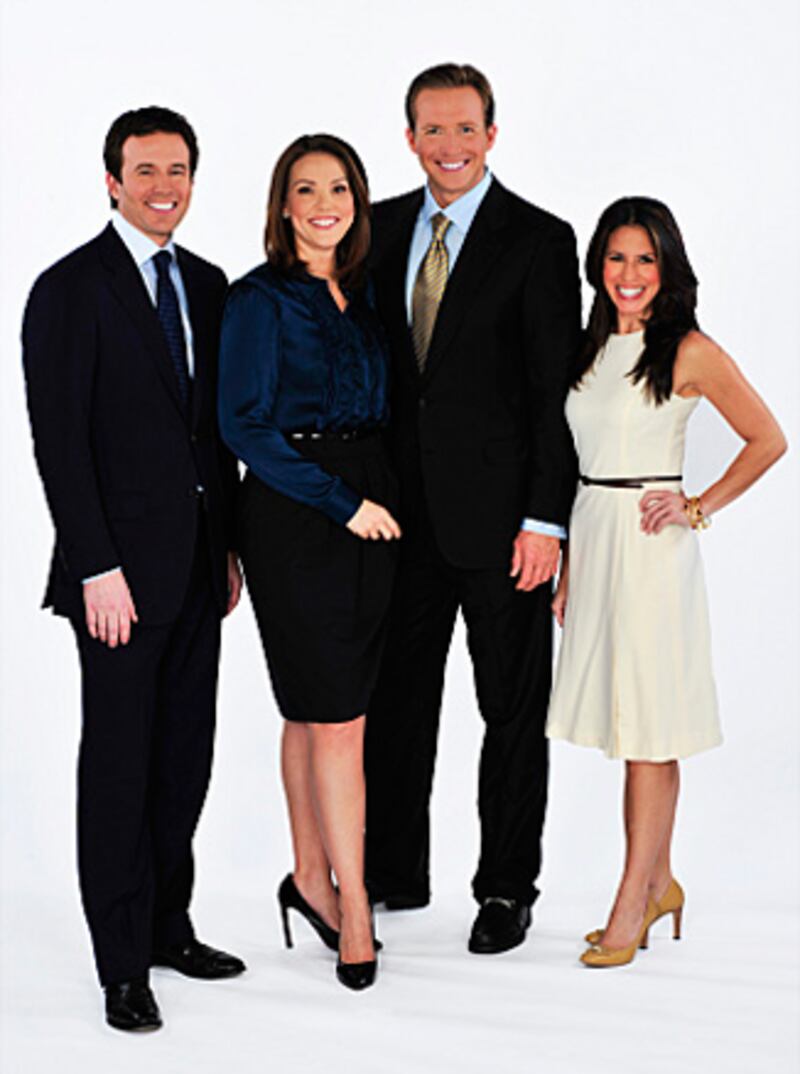
Memo to CBS: Getting viewers to your news programs requires more innovative thinking than simply changing anchors. Apparently, CBS hasn't learned that from the great Katie Couric-to-anchor-the-evening-news experiment. The network last month pink-slipped Early Show co-hosts Harry Smith and Maggie Rodriguez, and weatherman Dave Price and replaced them with a new contingent of hosts. But, just as the Couric move didn't do much to juice its evening news ratings, the Tiffany network's wholesale remake of its Early Show isn't likely to get that program out of the morning news ratings basement, where it trails NBC's Today and ABC's Good Morning America by millions of viewers. Our bet is that the latest Early Show shakeup will be as successful as the innumerable ones that preceded it, which is to say that it will fail miserably.
CBS
Every year can be counted on to produce at least one major upheaval in the television network executive ranks. In 2009, for instance, NBC's Ben Silverman experiment abruptly ended. But this year there seemed to be an inordinate number of programming executive moves. Stephen McPherson and David Westin were both ousted from ABC, as was Jon Klein at CNN and Jeff Gaspin at NBC, to name a few. Bob Greenblatt left Showtime in June only to be named to fill Gaspin's role at NBC in November. After two decades at MTV, programming president Tony DiSanto is leaving at the end of the year to start his own production studio as well.
Jonathan Alcorn, Bloomberg / Getty Images; Kevin Mazur, WireImage / Getty Images