Two Americans caught up in a hantavirus outbreak were put into biocontainment units for a dramatic repatriation flight.
The rat-borne disease took hold on MV Hondius, a Dutch-flagged vessel that left Argentina for Spain on April 1.
The ship was instructed to stay in open waters, with passengers advised to practice “maximal physical distancing” and remain in their cabins after some started showing symptoms of the virus.
It reached Tenerife in the Canary Islands on Sunday night, before people from all over the world were repatriated on flights to their home countries and, in some cases, sent to third-party countries for isolation.
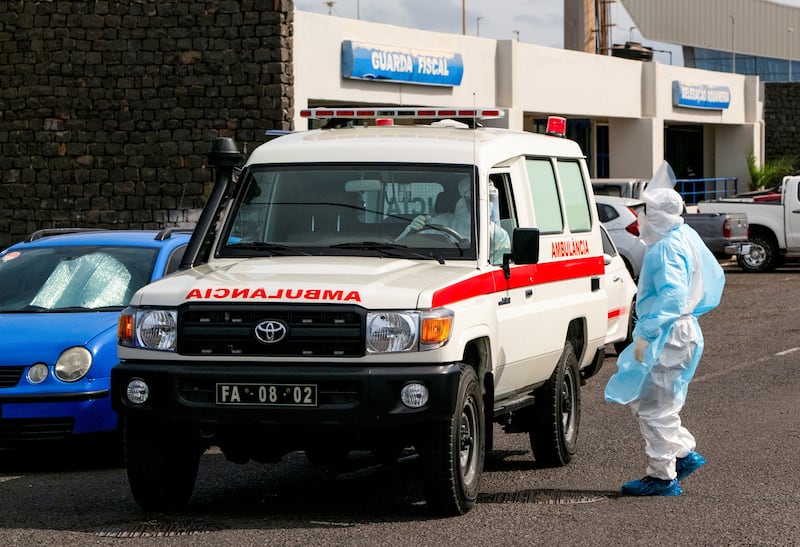
Seventeen Americans “are currently en route via @StateDept airlift to the United States,” the Department of Health said on social media on Sunday night, adding that two of those people were “traveling in the plane’s biocontainment units out of an abundance of caution.”
The statement added: “One passenger currently has mild symptoms and another passenger tested mildly PCR positive for the Andes virus.”

The Andes virus is a strain of hantavirus thought to be able to spread between people, unlike other strains of the disease. The people are being taken to a secure facility at the University of Nebraska Medical Center in Omaha.
The passenger with mild symptoms is being taken to a second specially designed facility.
The ship has reported eight confirmed cases of the Andes strain rat-borne disease, including three deaths.
The fatalities include a 70-year-old Dutch passenger who died on April 11, followed weeks later by his 69-year-old wife, whose posthumous test later confirmed hantavirus infection. A third passenger, a German national, died on board in early May.

Alexandra Phelan, associate professor and senior scholar at the Johns Hopkins Center for Health Security, previously told the Daily Beast that individuals who left the ship early — or were missed by ongoing contact tracing — could potentially have carried the virus elsewhere.
In a late Friday health advisory, the Centers for Disease Control and Prevention said the likelihood of “broad spread to the United States is considered extremely unlikely at this time,” while adding that “clinicians should be aware of the potential for imported cases.”

Phelan cautioned that it was “very likely that we will see more cases in the coming weeks,” though she stressed that “the general risk to the public remains low.”
She noted that the threat is limited because hantavirus does not spread easily between people. By contrast, she explained, COVID-19 transmits far more efficiently.
“The virus that causes COVID transmits significantly more easily between people and can do so in a ‘sustained’ manner because of the short periods between becoming infected and being contagious, and its ability to transmit with much more casual levels of contact,” Phelan said.