Are Food Stamps Becoming a De Facto Guaranteed Minimum Income?
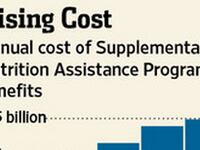
Today's Wall Street Journal report on food stamps raises the question: is nutrition assistance evolving into a de facto guaranteed minimum income?
The newest factor in the program's growth, one that hasn't been tested in past boom-and-bust cycles, stems from policy changes that began almost two decades ago. The 1996 welfare overhaul, coupled with a rule change crafted four years later by the Clinton administration, allowed states to make it easier for residents to qualify for benefits. …
The goal was to help Americans with government aid before their savings were wiped out. Policy makers wanted to allow newly poor families, such as those where the breadwinner was temporarily unemployed, to have enough money to put gas in the cars and pay phone bills—two necessities for finding and retaining jobs. To qualify for this easier screening process, Americans had to do little more than prove their income levels were low enough to meet certain thresholds.
The change didn't attract much attention until the financial crisis hit. After that, states began aggressively implementing the laxer standards, which allowed cash-strapped states to funnel more federal aid to their residents. … Today, 43 U.S. states and territories have such expanded eligibility policies. …
See more of our coverage in your search results.

Got a tip? Send it to The Daily Beast here.
Register below to read this article for free or subscribe
to unlock unlimited access to The Daily Beast.
Monthly
$1
First month then $5.99/month
Annual
$35
First year then $59.99/year
Premium
$79
First year then $119.99/year
*Substack access provided by the next business day, using your subscription email. Choosing the Premium plan constitutes your permission to share your subscription email with Substack and your agreement to Substack’s Privacy Policy.
Already have an account? Sign In
Looks like you already have a subscription!
You're all set!
Thanks for subscribing.