CNN host Erin Burnett was forced to flee to a secure shelter during the middle of a live interview on Donald Trump’s war with Iran.
Burnett, speaking at 1 a.m. in Tel Aviv, addressed the possibility of incoming strikes at the start of Tuesday’s Erin Burnett OutFront.
She noted her team had just received an early warning for “possible incoming missiles... you’ll see how that all plays out.” Burnett added, “Usually those early warnings do mean sirens and missiles, but not always.”
Burnett then began a satellite interview with the former vice chief of the U.S. National Guard Bureau, Major General Randy Manner, who was discussing reports that Iran was laying mines in the Strait of Hormuz.
The Strait is used to transport oil out of the Middle East, with access through the route being limited after the start of Trump’s war.

Speaking from Virginia, Manner had started to call out Republicans over their mixed messaging during the war, noting the Trump administration “has got to get its story straight between the Defense Department and the Oval Office.”
However, only minutes into the interview with Manner, Burnett and reporter Jeremy Diamond were forced to take shelter near a stairwell in Tel Aviv as missile sirens could be heard ringing out.
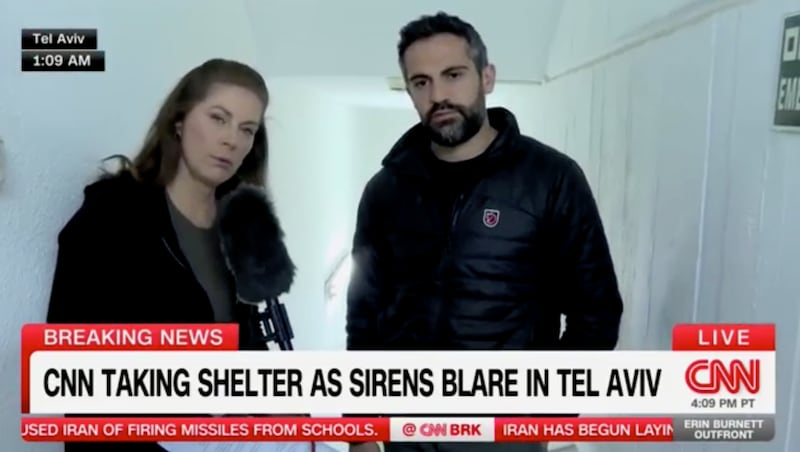
Burnett and Diamond picked up their equipment, including a boom microphone ,as they received updates from crew and walked to a safe location.
“Alright, so Jeremy and I are, obviously we’re having trouble hearing because we have the sirens going on here as we are going to seek shelter,” Burnett said on the move.
On their way to the shelter, Burnett cut from Manner to speak to CNN senior correspondent Fred Pleitgen in Tehran, who they had previously experienced trouble connecting to.

“You’ve been in Tehran, where you don’t get warnings like this, you’ve been under bombardment,” Burnett said, noting Pleitgen also had to move to a safe location while reporting earlier in the day.
“We went to a site that had been hit a day before, maybe 12, 14 hours before, as we were on the ground, we all of a sudden heard that anti-aircraft fire,” Pleitgen said.
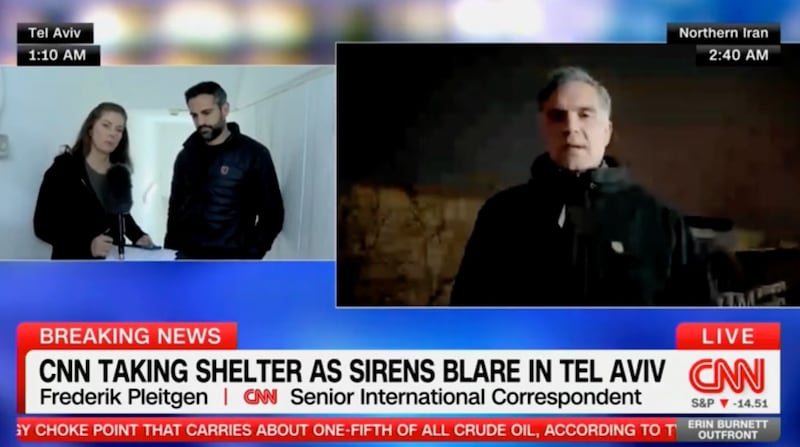
“There really isn’t much in the way of shelter around there,” he said.
After he and a CNN producer drove to the “other side of the city” they began hearing more explosions and “thuds”.
“That’s one of the main themes we’ve been getting,” he said. “That’s obviously something the folks in Tehran, in other cities in Iran, are dealing with on a very regular basis.”
Burnett resumed her interview with Manner, who continued to question the wartime optics of the Trump administration.
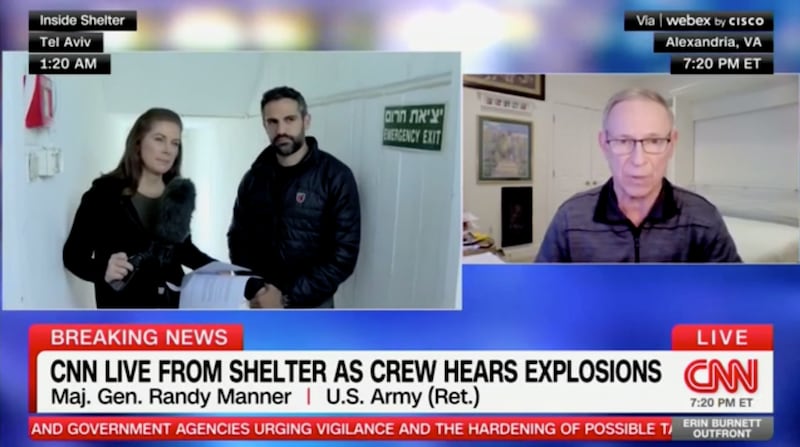
“It‘s great uncertainty and it‘s the lack of synchronization among our government and it‘s very disconcerting,” he said.
“They are reacting, they‘re reacting to what the the Iranians are saying, what the Israelis are saying, instead of actually being proactive to decide and to control the narrative about ‘Why are we there? What are we doing? How are we going to get out of this situation?’”

“So that‘s important, that they, again, synchronize their messaging and they get the United States behind them.”
After Burnett had been given the all clear to return to the regular set, Diamond said what they had experienced hearing were “ballistic missiles from Iran.”
Burnett said, “We‘ll be able to figure out exactly what we‘re able to tell you about what happened and where they landed obviously, with some of the censorship. But once they enter into the airspace, then we‘re able to share that information.”
CNN operates in Iran with the permission of the Iranian government, as required under local regulations, but insists that it retains full editorial control over its reporting.