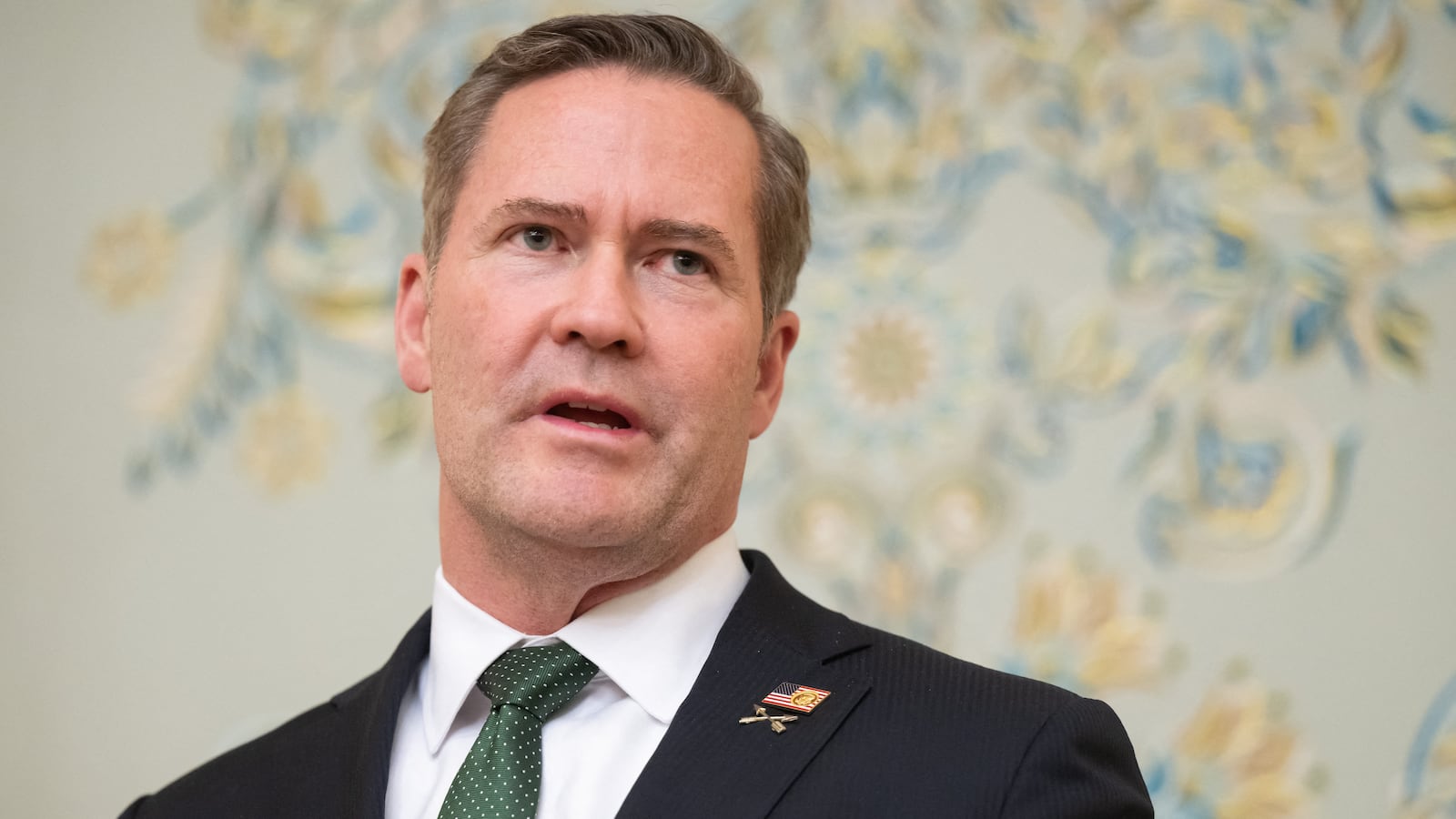
National Security Advisor Mike Waltz and a top aide shared sensitive information over their personal Gmail accounts, according to The Washington Post.
The commercial email platform is less secure than Signal, the encrypted messaging app that Waltz drew condemnation for using to discuss a military strike last month.
The Waltz aide, a National Security Council (NSC) official, used his Gmail account to discuss “sensitive military positions and powerful weapons systems relating to an ongoing conflict” with other government agencies, wrote the Post, which obtained the emails.
Unlike the NSC staffer, other officials involved in the exchanges were using government-issued accounts.
The items Waltz had sent to his Gmail was less sensitive—however, they included potentially exploitable information, like his schedule and other work documents, multiple officials told the Post.
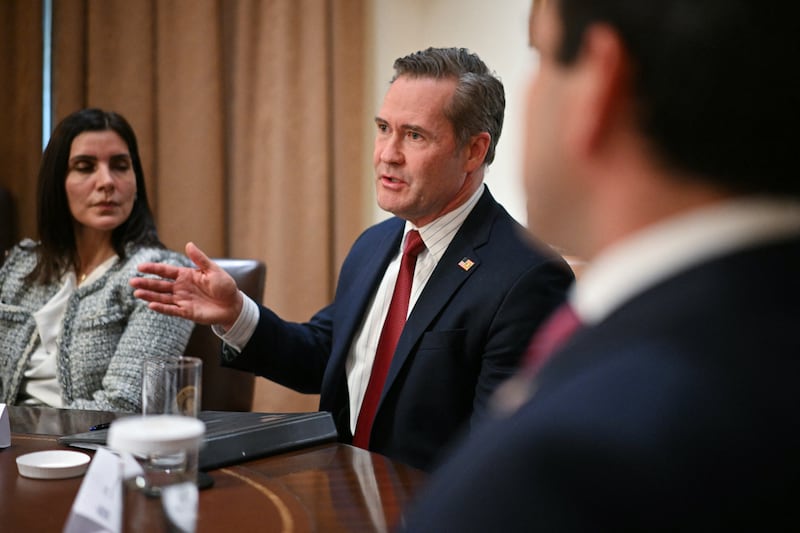
“Unless you are using GPG, email is not end-to-end encrypted, and the contents of a message can be intercepted and read at many points, including on Google’s email servers,” Eva Galperin, director of cybersecurity at the Electronic Frontier Foundation, told the Post.
Waltz is still reeling from last week’s Signal chat incident, in which he accidentally added a prominent journalist, Atlantic editor-in-chief Jeffrey Goldberg, to a chat where top Donald Trump aides were discussing an upcoming strike on Houthi militants in Yemen.
Trump, despite privately mulling firing Waltz over the embarrassing incident, has opted to publicly stand by him.
Brian Hughes, a spokesperson for the NSC, told the Post that he had seen no evidence that Waltz used his Gmail account in this way.
When “legacy contacts” do email Waltz about work at his personal email, he makes sure to copy his official government account to comply with the federal requirement that all correspondence be archived, Hughes added.
“Waltz didn’t and wouldn’t send classified information on an open account,” Hughes told the paper, adding that NSC staff are directed to use “only secure platforms for classified information.”
In a statement to the Daily Beast, Hughes reiterated that Waltz did not use his Gmail for classified information, adding: “This is the latest attempt to distract the American people from President Trump’s successful national security agenda that’s protecting our nation.”
He also said that he was unable to address the “claim of an NSC employee sending classified information over email... because [the Post‘s reporter] refused to share any part of the document reported.”
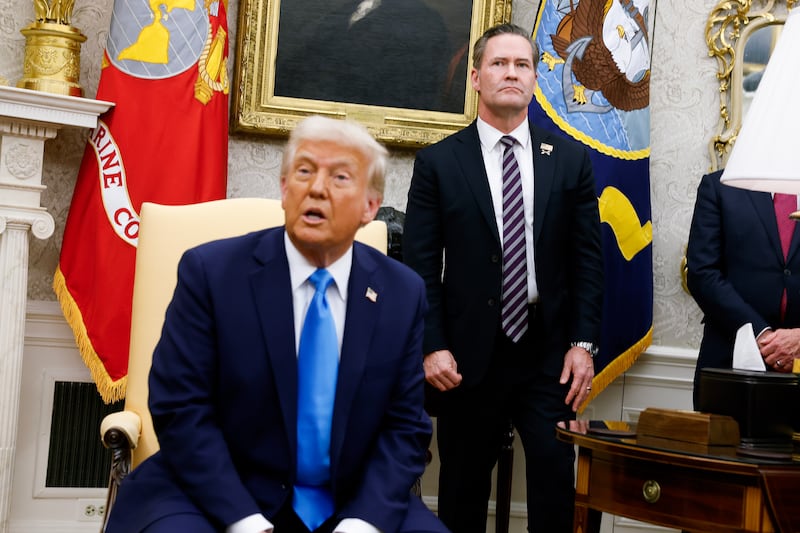
The Signal scandal, for which Waltz took “full responsibility,” brought the top national security official condemnation—even from senior White House aides, one of whom last week called him a “f---ing idiot.”
Since then, Waltz’s communication practices have come under scrutiny, revealing further slip-ups. The Wall Street Journal reported that Waltz used other Signal group chats to discuss national security topics, such as relations between Russia and China. The friends list on his once publicly visible Venmo account also revealed a trove of likely contacts—including some of Trump’s enemies in the media.
Publicly, Trump has never wavered in his support for Waltz. The president had a closed door meeting with several of his top advisers last week where he sought input about whether to fire Waltz. The president ultimately decided to keep him around, although some insiders have suggested that this decision was made to avoid the appearance of caving to media pressure.
“The one thing saving his job is that Trump doesn’t want to give Jeff Goldberg a scalp,” an administration official told the Post. “Despite all of Trump’s attacks on the ‘fake news,’ he still reads the papers, and he doesn’t like seeing this stuff.”