On October 4, 1933, Germany’s Propaganda Minister Joseph Goebbels introduced the Nazi’s new Schriftleitergesetz (Editor’s Law) with the words: “I have the natural intention to be and to remain the warm-hearted protector of the German press.”
From that day, the nation’s media had to sign a contract agreeing never to publish anything “calculated to weaken the strength of the Reich abroad or at home.”
The decision on what was appropriate was taken away from journalists and their editors and made the sole responsibility of Hitler’s Ministry of Propaganda.
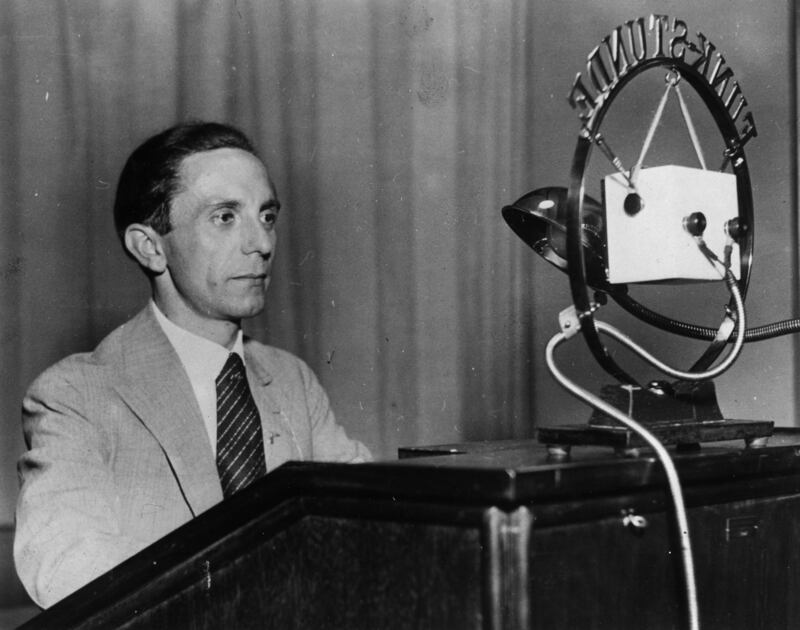
All journalists were required to sign up on a professional register and complete a training course, which included a final exam.
The most sinister requirement was that only people with an “Aryan certificate” were allowed to continue in their profession. Only people the Führer deemed worthy of writing about him.
Hundreds of journalists lost their jobs when the law came into force on January 1, 1934—many of them Jews and writers who had been critical of Hitler’s authoritarian regime. Some journalists ended up in concentration camps, and many were killed.

On Wednesday, ABC reacted to criticism of Jimmy Kimmel’s comments about last week’s murder of right-wing influencer Charlie Kirk by yanking his show off the air indefinitely.
Nothing is preventing a TV host from losing his job because of what he says, but it appeared to reflect the nervousness in the industry in this second age of Donald Trump.
The late-night host was effectively canceled after suggesting that the “MAGA gang” was seeking to capitalize on the tragedy.
In itself, the move is not unprecedented. Just days earlier, MSNBC fired analyst Matthew Dowd for remarks he made about the shooting.
What is disturbing is the nervousness in the media about speaking out concerning issues that may challenge authority or perceived cultural norms.
And that fear is being fueled by Trump and his antagonistic administration. People in the media, particularly those running major corporations, are becoming increasingly afraid to raise their heads above the parapet.
The day before Kimmel was axed, Trump launched a lawsuit against The New York Times that reads like a paean to himself. It’s as if the 47th president of the United States dictated it.
The legal filing makes it very clear that Trump considers himself a “warm-hearted protector” of the American media.
“President Trump’s transcendent ability to defy wrongful conventions has been vividly reflected in his successful undertaking to restore integrity to journalism, and repair the immense damage caused by legacy media outlets such as the Times for the better part of a decade,” says the legal filing.
Self-aggrandizement dominates the 85-page legal document. It could as easily be a campaign resume as a lawsuit demanding $15 billion in damages from The New York Times for, ostensibly, hurting his feelings.
Trump’s 2024 election victory was, after all, in the words of the suit, the “greatest personal and political achievement in American history.”
The timing of Trump’s action against the Times doesn’t seem random.
It came just days after Kirk’s killing and the subsequent attacks on the left by Trump, Vice President JD Vance, Deputy White House Chief-of-Staff Stephen Miller, and Attorney General Pam Bondi.
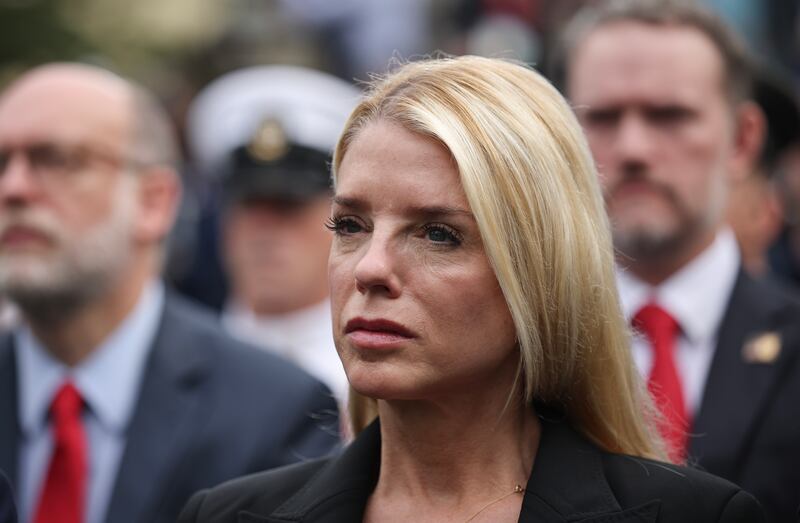
It was time to act against the “radical left”, they insisted, suggesting that their political foes were misusing America’s freedoms to foment violence.
Most egregiously, Bondi, deeply out of her depth when she’s not fawning over her Oval Office benefactor, said incorrectly that the First Amendment did not cover hate speech.
“There’s free speech, and then there’s hate speech,” she said on a podcast. “We will absolutely target you, go after you, if you are targeting anyone with hate speech.”
She doubled down on X, before finally accepting: “If you want to be a hateful person and simply say hateful things, that is your right to do so.”
Still, the seed had been sewn.
On the same day as he filed his lawsuit against the Times, Trump launched personal attacks on journalists who dared to ask questions he didn’t like. He took exception to longtime ABC News Chief Washington Correspondent Jonathan Karl asking him about Bondi’s hate speech remarks.

“We’ll probably go after people like you because you treat me so unfairly,” said Trump. “It’s hate. You have a lot of hate in your heart. Maybe we’ll go after ABC.”
He also snapped at Australian Broadcasting Corporation journalist John Lyons for asking him if it was “appropriate” that he was profiting from his position.
“In my opinion, you are hurting Australia very much right now, and they want to get along with me,” said Trump, before telling Lyons to be “quiet.”
Trump’s comments were laced with threats. He reminds anyone who will listen that he has sued ABC News, CBS News, and Rupert Murdoch’s Wall Street Journal.
The blue chip TV networks folded, paying Trump millions in compensation and emboldening his attempts to reshape the media in his image.
The White House media pool has already been stacked with podcasters, influencers, and right-wing journalists from niche outlets loyal to Trump. They include the White House Correspondent for Steve Bannon’s War Room, Ben Shapiro’s Daily Wire, Mike Lindell’s (the MyPillow guy) Lindell TV, Kirk’s Turning Point USA, and Marjorie Taylor Greene’s boyfriend Brian Glenn, of Real America’s Voice.
Trump will take umbrage if a journalist asks him a probing question. If his posse of patsies throw him a softball—as they always do—he will smile and say, “I like this one,” and point them out as examples to the seasoned, often incredibly accomplished network and “old media” correspondents who understand that it is both their mission to report on what the White House says and does but also to call it to account when necessary.
PR puff pieces for the president have no part in their job description.

To understand Trump’s thinking it is necessary to go back to his life before politics. He surrounded himself with celebrity as a starry-eyed real estate developer, and he considered himself a star in his own right following the success of The Apprentice.
Nobody questioned him. If they did, they weren’t around very long.
“By the early 2000s, President Trump was a well-known household name to the American people and internationally,” reads the Times lawsuit. “The public associated President Trump’s persona with someone who was highly successful, had built an enterprise worth over a billion dollars, and was tough and principled, yet courageous enough to speak his mind without fear of rebuke.”
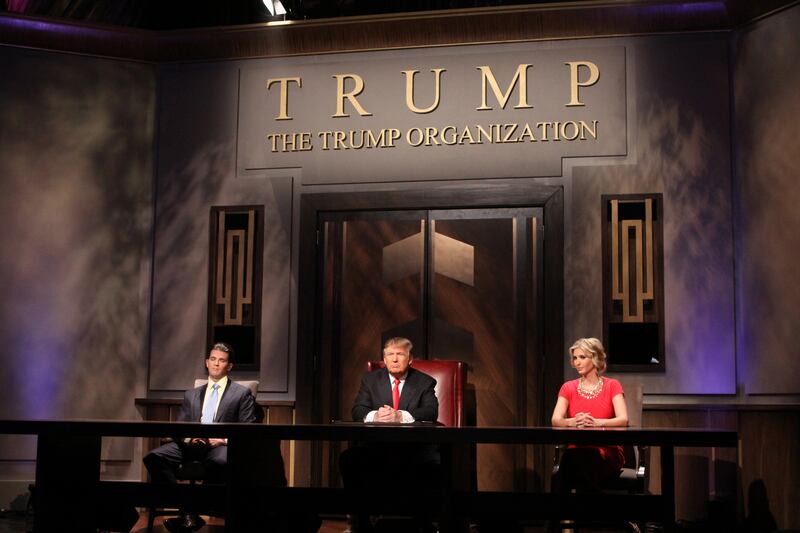
It continues: “Because of President Trump’s sui generis charisma and personality, “The Apprentice” instantly became a top-rated television show. The program generated hundreds of millions of dollars in revenue and was on television for over thirteen years, with nearly 200 episodes…'The Apprentice’ was a monumental success directly because of President Trump.”
The legal filing lists Trump’s “hundreds of history-making media appearances.”
They read like the resume of a bit part soap star.
“WrestleMania V (1989); Ghosts Can’t Do It (1989); All My Children (1992); Lady Boss (1992); Home Alone 2 (1992); Fallen Champ: The Untold Story of Mike Tyson (1993); Fresh Prince of Bel Air (1994); The Little Rascals (1994); Across the Sea of Time (1995); Eddie (1996); The Nanny (1996); The Associate (1996); The Drew Carey Show (1997); NightMan (1997); Spin City (1998); 54 (1998); Celebrity (1998); Sex In The City (1998); Miss Universe 2001 (2001); The Job (2001-2002); Zoolander (2001); Donald Trump Real Estate Tycoon! (2002) (video game); Two Weeks Notice (2002); Miss USA 2002 (2002); Ali G Show (2003); Marmalade (2004); Days of Our Lives (2005); Miss Universe Pageant; The Apprentice (2004-2015) and Celebrity Apprentice (2008-2015); Hosted Saturday Night Live (2015); Hosted WWE; and much more.”
Of course, he could say what he liked in his own lawsuit. He has so much power as the president of the United States. More power than he could ever have dreamed of as he fired people week in, week out on The Apprentice.
But the most powerful man in the world can’t control the media.
Most weeks, the White House press office will issue a list of stories detailing the president’s successes. It is the way he wants news to be seen. They are largely ignored.
And it bugs the hell out of him.
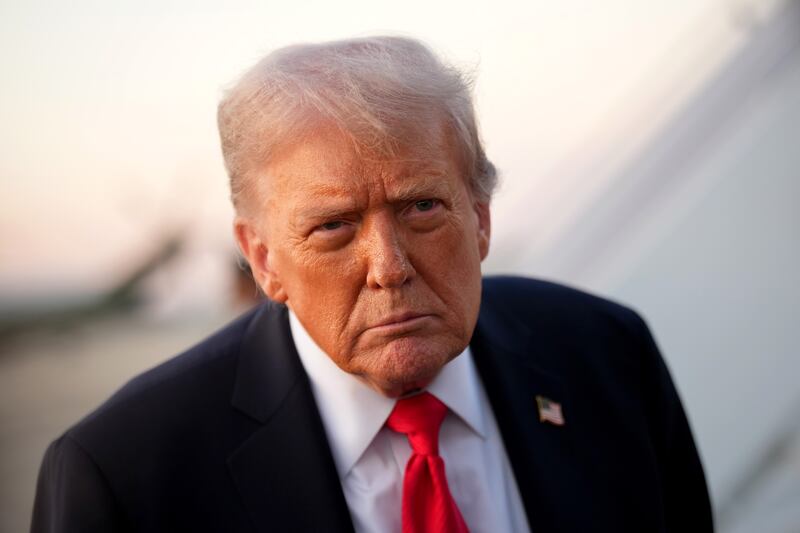
There were very sound reasons why Hitler tasked Goebbels with taking control of the media. It was one of the essential pillars of freedom he needed to demolish to allow what was to come.
He also targeted the courts, just as Trump and his cronies have done.
Martin Luther King Jr. would point out, “Never forget that everything Hitler did in Germany was legal.”
The monster of the 20th century grew his evil in darkness with nobody to call him to account. Goebbels made that possible with the Editor’s Act.
Lest we forget, the First Amendment of the United States Constitution is one of the foundations upon which our freedoms were built.
It is one of the great legacies our forefathers left us. It is what made America great in the first place.
And it could disappear in a moment.