
A sweary skirmish broke out during the summit between the U.S. and China.
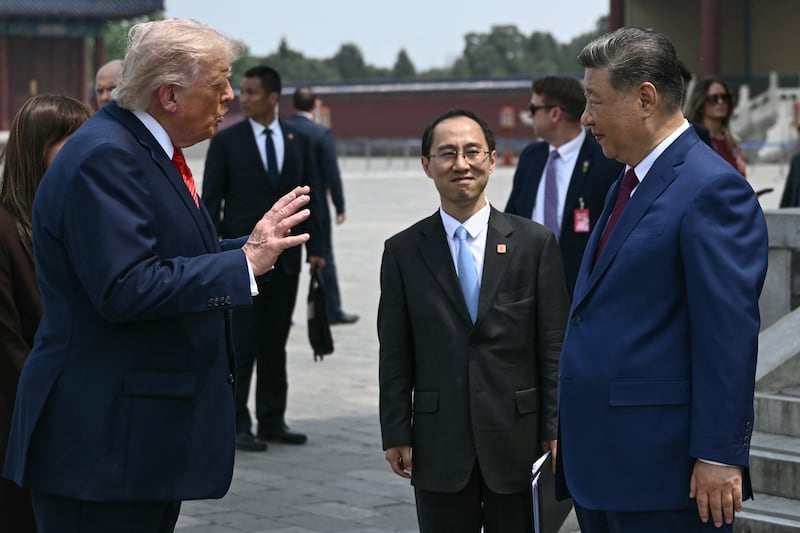
Leaders from Washington and Beijing were filing into the Great Hall of the People, China’s national legislature building, where top officials from both sides were meeting for bilateral talks.
As they took their seats, a press pool camera broadcasting on PBS News kept its tape rolling whilst its operator appeared to be lambasted by an unnamed person with an American accent.

“No, no, get the f--- out of here,” the mystery person said. “No. Move. Got to move.”
At that moment, several voices started speaking close to the camera, the squeak of shoes on the ground could be heard, and the camera flailed, darting across the ceiling.
Tensions had been high ahead of the showdown, as the war with Iran, Chinese posturing over Taiwan, and long-standing economic hostility all simmered away.
Still, the two leaders left the Great Hall with positive sentiments afterward, with Chinese President Xi Jinping saying that relations had remained “generally stable.”
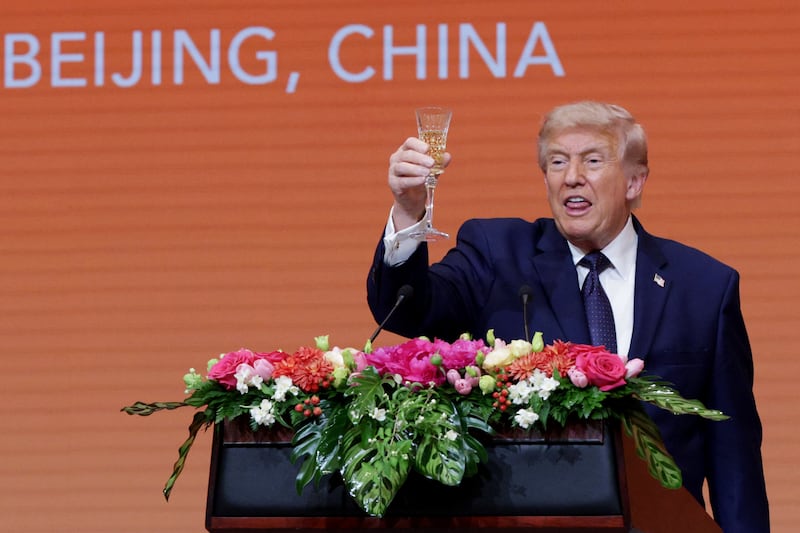
“Today, President Trump and I had in-depth exchanges on China-U.S. relations and the international and regional dynamics,” he said, according to The Guardian. “We both believe that the China-U.S. relationship is the most important bilateral relationship in the world. We must make it work and never mess it up.
“Both China and the United States stand to gain from cooperation and lose from confrontation. Our two countries should be partners rather than rivals.”
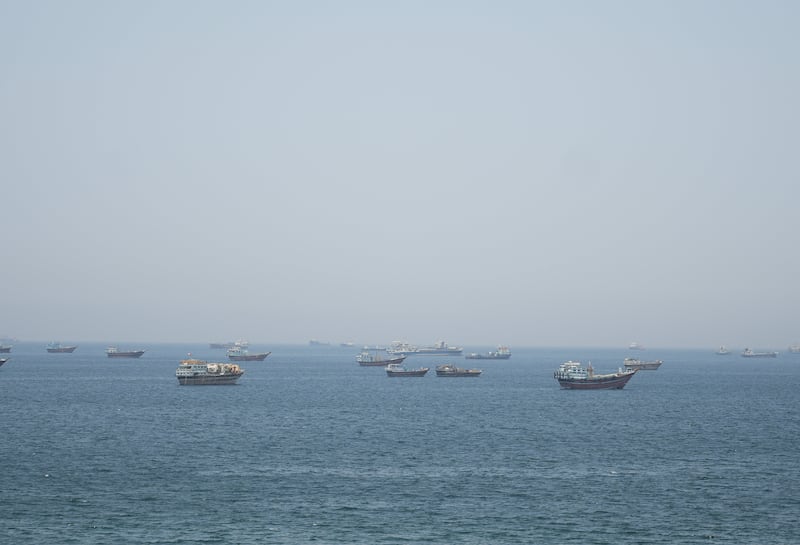
In the White House’s statement following the meeting, there was a similar tone of understanding, but it became clear that Trump’s activity around the Strait of Hormuz had become a cause for concern for China.
“The two sides agreed that the Strait of Hormuz must remain open to support the free flow of energy,” it said, according to The Guardian. “President Xi also made clear China’s opposition to the militarisation of the strait and any effort to charge a toll for its use, and he expressed interest in purchasing more American oil to reduce China’s dependence on the strait in the future. Both countries agreed that Iran can never have a nuclear weapon.”
China has a flashpoint of its own to contend with: Taiwan.
China has long claimed ownership of the democratically governed island and has carried out aggressive military drills around it, along with rhetoric that has sparked fears it could have intentions of taking control of it by force.
So delicate is the situation that fears have swelled, threatening to spark a wider global conflict.
The situation is such a tinderbox that Xi warned it could be “dangerous” for U.S.-China relations and even lead to conflict. The U.S. has not yet commented on Taiwan, but is expected to speak about it in the coming days.
Treasury Secretary Scott Bessent said following the summit that President Donald Trump, however, was all over the intricacies.
“President Trump understands the issues here and understands the sensitivities around all this, and anyone who has been saying otherwise does not understand the negotiating style of Donald Trump,” he said.
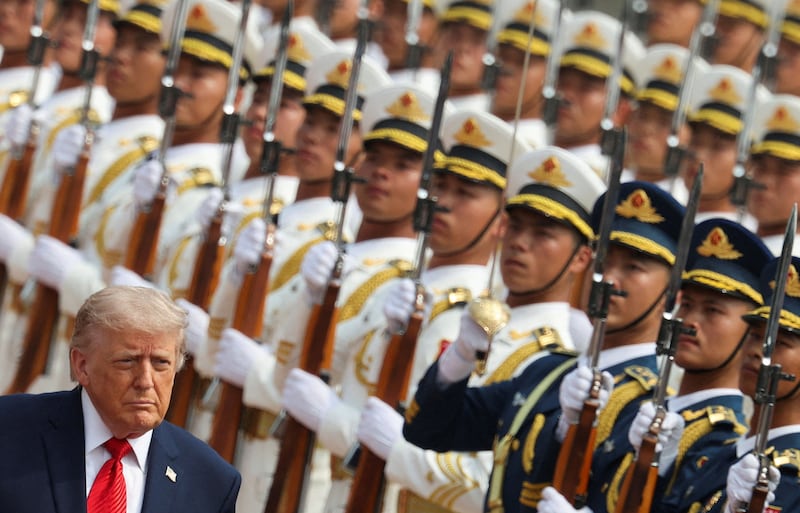
A Chinese handout following the talks said Taiwan “is the most important issue in China-U.S. relations”, and stated that a poor diplomatic effort could mean “the two countries will clash or even come into conflict, pushing the entire China-U.S. relationship into a very dangerous place”.
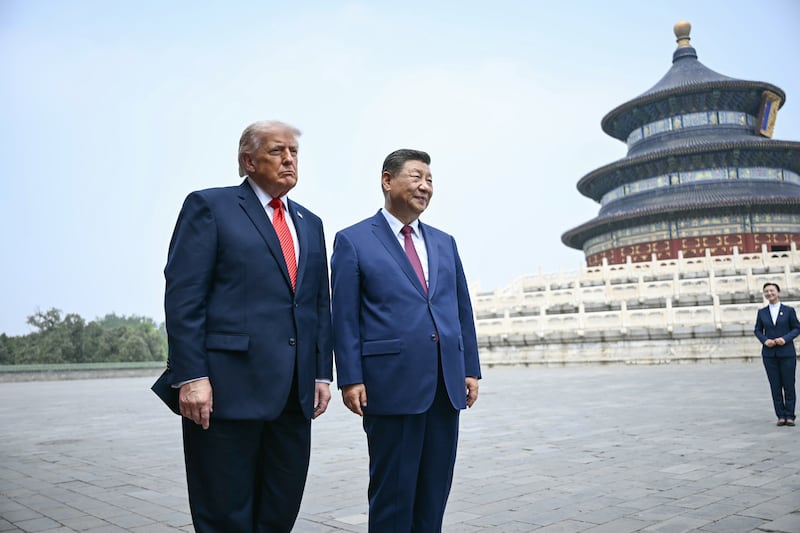
After the talks, the schedule called for a ceremonial visit to the Temple of Heaven, a complex of Confucian worship buildings.
When the U.S. delegation arrived, an incident occurred in which Chinese security barred Secret Service agents from bringing their guns inside.
The Hill reports that entry was delayed by around 90 minutes due to “intense discussion” between officials from the two sides.