I remember sitting in a hospital room following the birth of my younger daughter watching reports of the early days of the first Gulf War. The U.S. hasn’t stopped fighting wars in the Middle East since. That daughter is now 35 and has a child of her own.
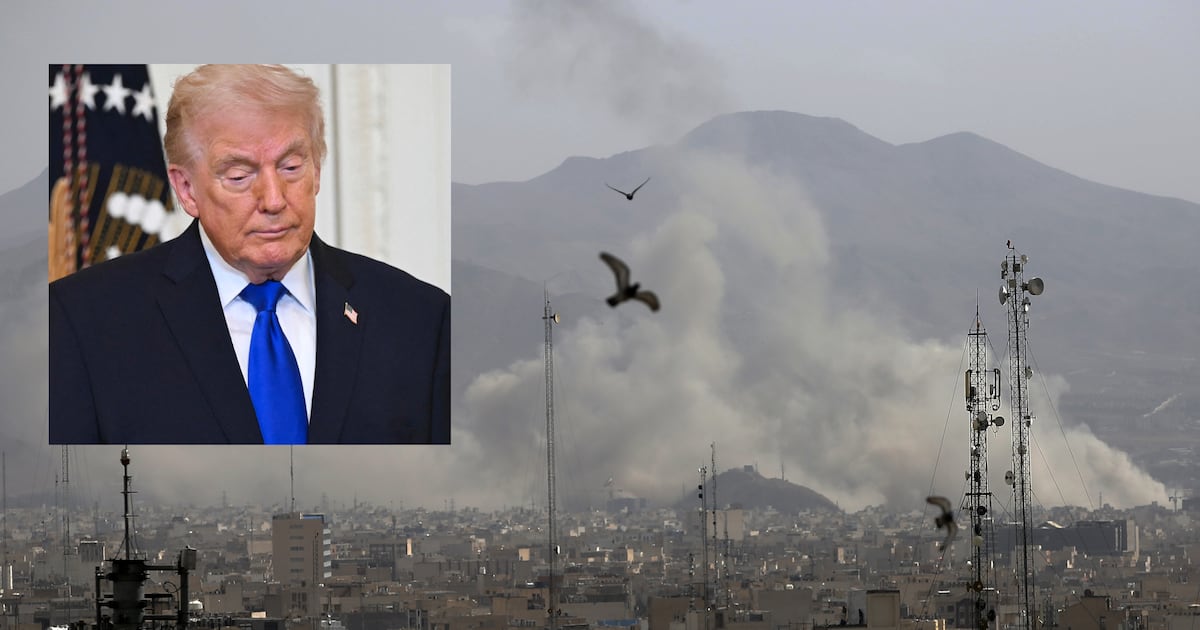
However, of all the ill-conceived wars undertaken, fought, lost and mismanaged in that period, the latest, launched early Saturday by Donald Trump, may be the most incoherently planned or justified… and it could also be the most dangerous if not resolved quickly.
Without the approval of Congress that the law requires, without evidence that Iran poses a growing threat to the U.S., following repeated assertions we had months ago “obliterated” any threat it may once have posed, amid myriad conflicting reasons for even going to war, a U.S. president who is a serial draft dodger who covets both the Nobel Peace Prize and the Congressional Medal of Honor on Saturday morning launched the third major military operation of his second term in office.
What is more, his Operation Epic Fury may have thrown the entire Middle East into chaos primarily to distract from his growing problems and scandals at home.
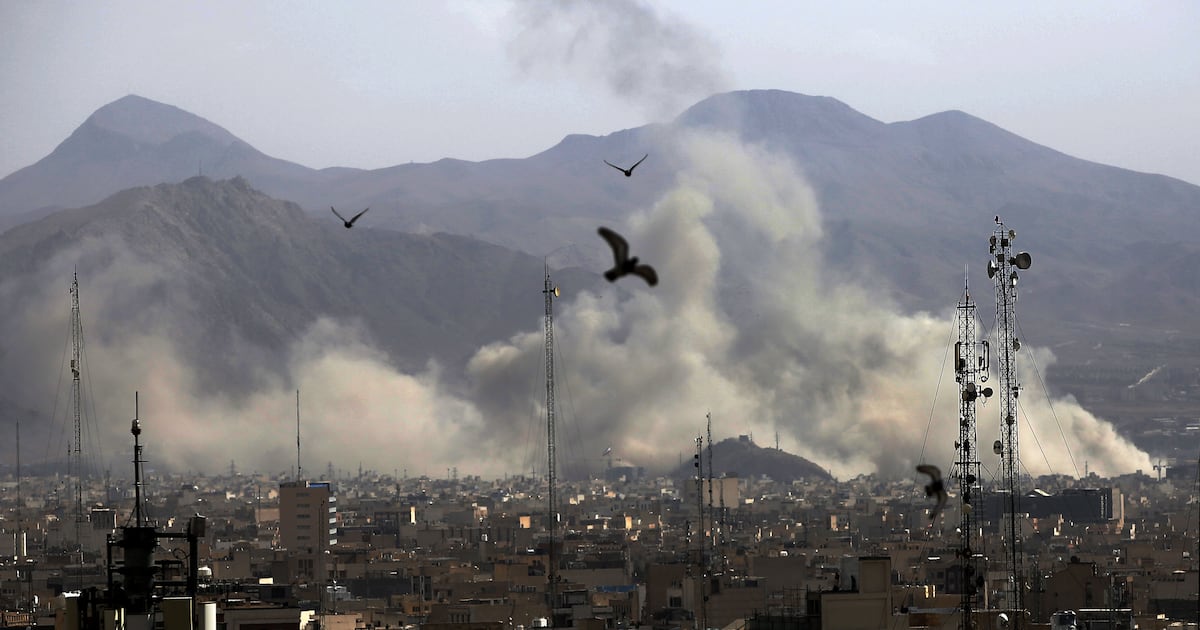
In conjunction with the Israelis, American forces launched wide-spread aerial attacks on targets across Iran. In announcing the raids early on Saturday morning, President Donald Trump indicated that the objective of the assaults was regime change. Independent reports and initial aerial photography indicate that among those sites targeted by the U.S. and the Israelis were military facilities and locations believed to be the residences of top Iranian officials including the country’s Supreme Leader and its president.
Trump called the effort “massive and ongoing.” Trump’s call for regime change in Iran comes less than a day after him also calling for regime change in Cuba and weeks after a raid to decapitate the leadership of Venezuela, a pattern of active intervention in foreign governments unseen by the U.S. since the height of the Cold War.
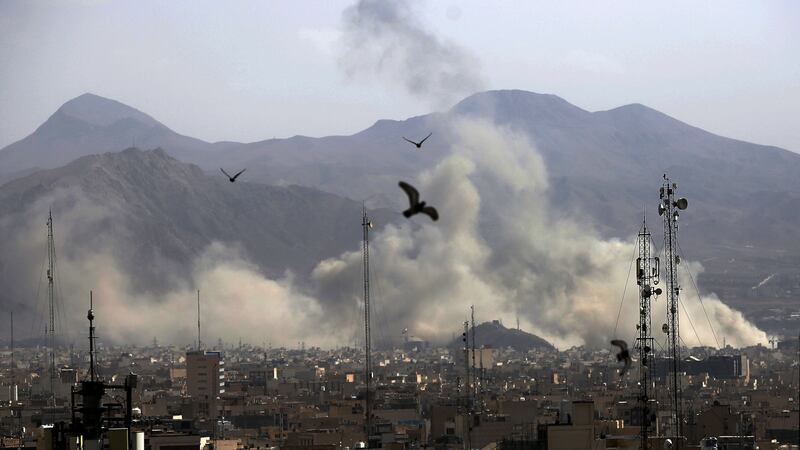
Israel’s Prime Minister Netanyahu stated, “Israel and the U.S. embarked on an operation to remove the existential threat posed by the terrorist regime in Iran, I thank our great friend Donald Trump for his historic leadership.”
As muddled as the reasons for going to war may be, it seems clear that even less thought was given to its potential consequences. A protracted conflict with Iran could involve the whole region, produce significant civilian casualties, result in major losses to the U.S. military and our allies, result in major economic disruptions especially as Iran has already indicated it will stop traffic through the Straits of Hormuz, and leave the region destabilized for years to come.
Within hours, Iran launched missile and drone attacks on targets across the Middle East including reportedly in Israel, Bahrain, Jordan, Kuwait, Qatar, Saudi Arabia and the United Arab Emirates. Videos appearing on social media showed some apparent missile attacks being intercepted while others produced significant explosions. Initial reports suggested most of the aerial attacks were thwarted by air defense systems. Iran’s Houthi proxies have also indicated they will now resume attacks on Israel and on commercial shipping.
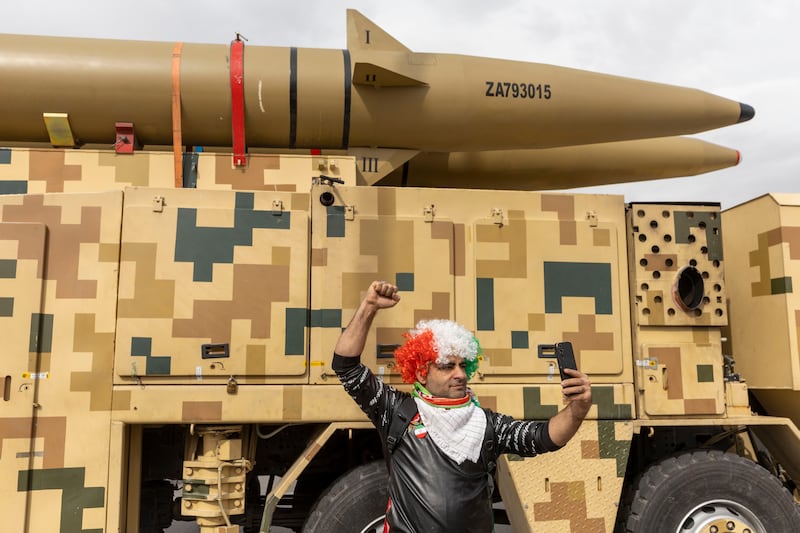
U.S. military bases in the region were among the sites targeted by Tehran. Each of the countries under attack expressed outrage, categorized the attacks as violations of international law and indicated high levels of preparedness for the actions of Iran including, as in the case of the Qatari statement, reserving their own right to respond to Iran’s strikes.
Casualty figures and damage assessments were not available in the hours immediately following the attacks although again, early reports suggested that the impact of Iranian assaults across the region were very limited. That said, there were spotty reports of both casualties among Iran’s leadership as well as its civilian population including, according to multiple sources, at a girls school in Minab, southern Iran. Israeli media reported that General Amir Hatami, the commander-in-chief of the Iranian Army, was among those killed.

For weeks, the threat of war had been growing as the U.S. moved massive military assets into the region and to staging zones worldwide. Two U.S. carrier battle groups were within striking distance and multiple advanced aircraft and logistical support capabilities were moved into position. At the same time, U.S. embassy officials had called upon families and nonessential personnel to leave the region and then, in the wake of the attack, to shelter in place. Other nations had taken similar precautions.
The preparations for war had produced a widespread consensus among experts and regional observers that war was both inevitable and imminent. Nonetheless, talks to avert a conflict continued until just days ago, led for the U.S. by presidential negotiators Steve Witkoff and Trump’s son-in-law, Jared Kushner.
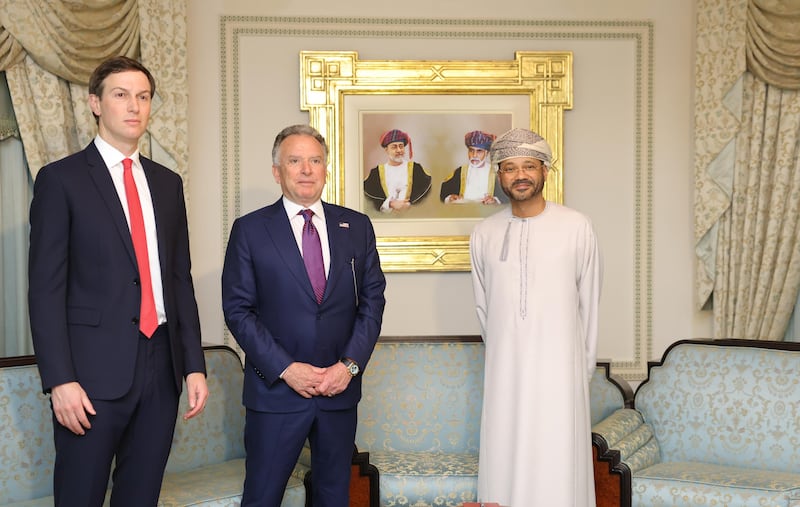
The purpose of the talks was ostensibly to win a commitment from Iran to cease all nuclear weapons development activities—despite the fact that Trump had said after initial attacks on Iran last summer that all Iran’s nuclear weapons capacity had been destroyed, a claim he repeated during his State of the Union address last week.
Having said that, Trump and his aides had offered many reasons for tension with Iran and as rationales for potential assaults including, beyond the nuclear argument, a demand that Iran stop its brutal repression of protestors in that country and that Iran stop the development of its ballistic missile program. In his early morning statement following the attack, Trump asserted that reasons for the operation included both Iranian efforts to rebuild its nuclear program and concerns about its program to develop missiles that could threaten “our very good friends and allies in Europe, our troops stationed overseas and could soon reach the American homeland.”
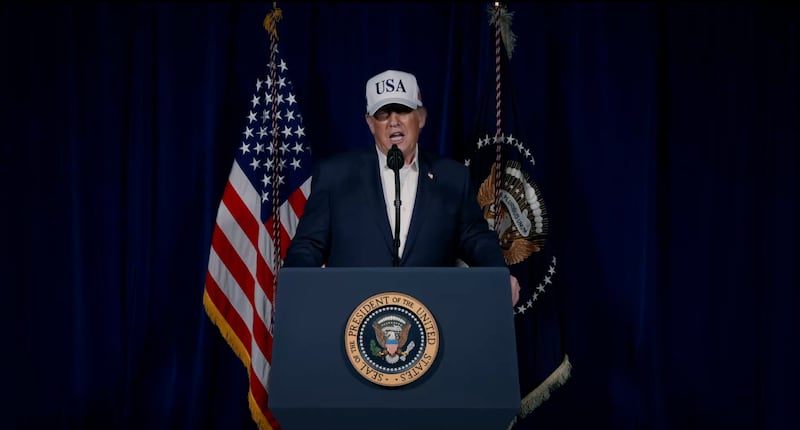
Experts dispute that Iran is anywhere near developing missiles capable of reaching the United States and no evidence of such a capability or looming capacity was given.
Iran itself, already weakened by economic hardship and decades of brutal, incompetent rule by the theocratic government that has been in place there since the late 1970s, has entered an almost complete Internet blackout in the wake of the attacks with reports of national connectivity levels at under 5 percent. The Iranian regime characterized this new conflict as a great national test saying that “the time has come to defend the homeland.” The country, apparently prepared for the onslaught, was swift to launch its most widespread retaliation across the region ever. Iranian leaders also, however, called for the immediate intervention of the UN Security Council.

U.S. and Israeli officials indicated that the conflict would continue for an indefinite period, a statement made even murkier by the shifts and discrepancies in stated U.S. objectives.
The action by the Trump Administration comes without the authorization by Congress that is required by the law and by the Constitution. Moves in the Congress to block the administration’s action were ineffective and at this point, given that both Democratic and Republican administrations have ignored such provisions during recent decades, it is as though they had been struck through and rendered moot.
In the immediate aftermath of the attacks, critics of the president raised the concern that these attacks were undertaken to distract the American people from domestic challenges faced by Trump including plummeting approval ratings and the Epstein scandal.

Once again, this is not the first time in recent U.S. history that the argument has been made that U.S. interventions in the Middle East and elsewhere were an effort to “wag the dog.” Indeed, Trump made similar assertions regarding the possibility of Obama era military interventions in the region. (It is worth noting that the term “wag the dog” was popularized by a movie with that title, released in 1997, during the Clinton Administration.)
It should be noted that Israel’s Netanyahu, also facing elections and scandals at home, is also seen by critics as using war to shore up his standing and to divert attention from difficult headlines in the Israeli press.

Offering a partial clue to Trump’s motive for the attacks, in his first social media post following his video announcement of the attacks, Trump wrote “Iran tried to interfere in 2020, 2024 elections to stop Trump, and now faces renewed war with the United States.” The timing of this statement was ominous coming two days after a Washington Post article asserting that Trump advisors were seeking ways to give him emergency powers to intervene in and possibly impact the results of the upcoming midterm elections in November.
While ending the Iranian nuclear program has been a stated goal of the Trump Administration, it should be noted that the U.S. was party to a multinational agreement to stop Iranian weapons development that was struck in 2015 during the Obama Administration. Trump, during his first term unilaterally withdrew from that agreement and has been on a hostile footing versus Tehran ever since—including killing the leader of Iran’s elite Quds Force, Qasem Soleimani, on January 3, 2020, an act Trump has regularly touted as among his foremost national security achievements.
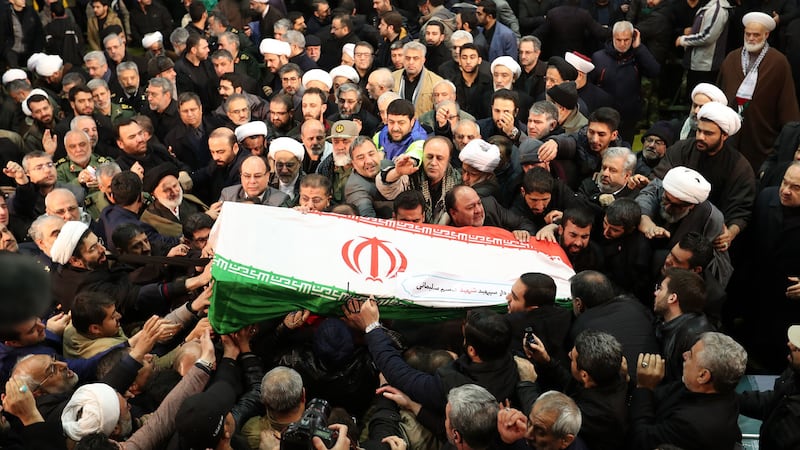
"Iranians carry the coffin during the funeral ceremony of Qasem Soleimani, commander of Iranian Revolutionary Guards' Quds Forces, who was killed in a U.S. drone airstrike in Iraq, in Tehran, Iran on January 06, 2019."
Iranian Leader Press Office /Anadolu Agency/GettyIn conversations with experts on my own “Deep State Radio” podcast several days ago, the consensus was that even after military intervention, it was highly unlikely the U.S. would be able to achieve terms regarding Iran’s nuclear program that were materially better than those achieved by the administration of Nobel Peace Prize-winner Obama. (You can watch the episode, which provides a good contextual deep dive into the regional situation and is entitled, “The Chairman of the Board of Peace is Bored of Peace” here: https://www.youtube.com/watch?v=ubWREai6wZ4.)
Top EU diplomat Kaja Kallas wrote on social media, “The latest developments across the Middle East are perilous,” while also noting the threat posed by the Iranian regime. Other leaders in Europe called for their citizens in the Middle East to seek safety and for the soonest possible cessation of hostilities.

When such a conclusion may come is unclear at this point given the early stage of the operation and its unclear objectives. That in and of itself should be a source of deep concern given that America’s unhappy history of military interventions in the Middle East has been plagued by repeated instances in which the U.S. goals were vague or shifting and therefore metrics for success and sound exit strategies eluded U.S. planners.
Given that Iran is the largest and most powerful country ever targeted by the U.S. in the region, such complexities and challenges are only compounded.