In the wake of Louisiana v. Callais, the Supreme Court’s opinion over gerrymandering and redistricting of Congressional maps, a bevy of voices, overwhelmingly Black, have raised their opposition and protest to the high court’s limiting of the Voting Rights Act of 1965. Activists, civil rights organizations and even Democratic House Minority Leader Hakeem Jeffries have cried foul at a decision that threatens to devastatingly dilute the voting power of the Black electorate. Yet, it appears that White Democrats in Congress—as well as leadership at the Democratic National Committee (DNC)—haven’t made it to the front lines of this fight, leaving matters almost exclusively to the voices and efforts of their colleagues in the Congressional Black Caucus (CBC) and other civil rights leaders.
Prominent White Democrats have been noticeably quiet about the decision, as well as the real impact that has already begun with plans to redraw districts in Tennessee and Alabama.
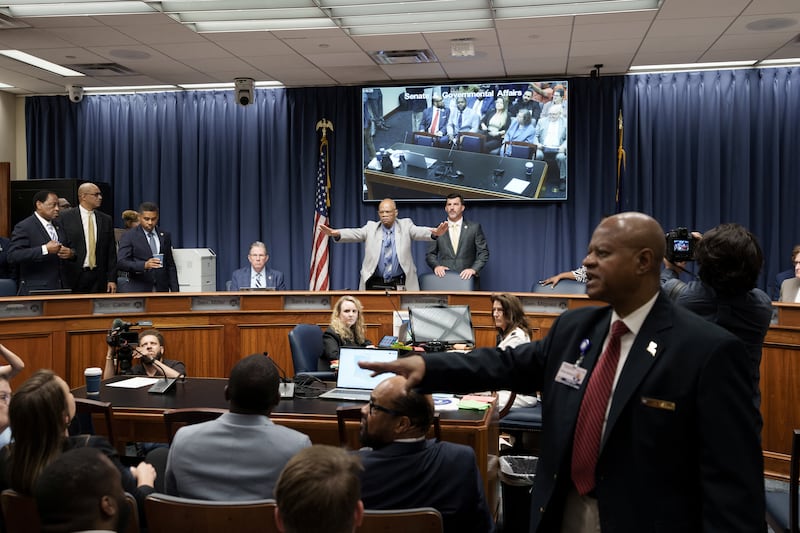
And the absence of a real plan from Democrats during a vital midterm election year threatens to leave votes on the table from a demographic it desperately needs to secure widespread wins.
With its decision, SCOTUS did affirm that gerrymandering voting maps on the basis of race is illegal. However, the high court raised the bar for establishing that racial animus was the underlying motivation for redrawing maps. This has already led to both predictable and ridiculous scenes in state legislatures, like in Tennessee, where a Republican lawmaker involved in the redistricting denied knowledge that Memphis, a city boasting more than 60% Black residents, has a large Black population. All in the name of hardly plausible deniability.
Most importantly, the ruling eliminates the guarantee that historically disenfranchised groups, like Black voters, are entitled to protection against gerrymandering; so long as there is no proof of racial animus, which is typically not overt in 2026, political parties within states are free to carve apart voting maps in ways that split heavily Black populated areas, diluting their voting strength and ability to choose who best represents them.
The plain result is that parties are free to rig the maps for candidates to pick their voters.
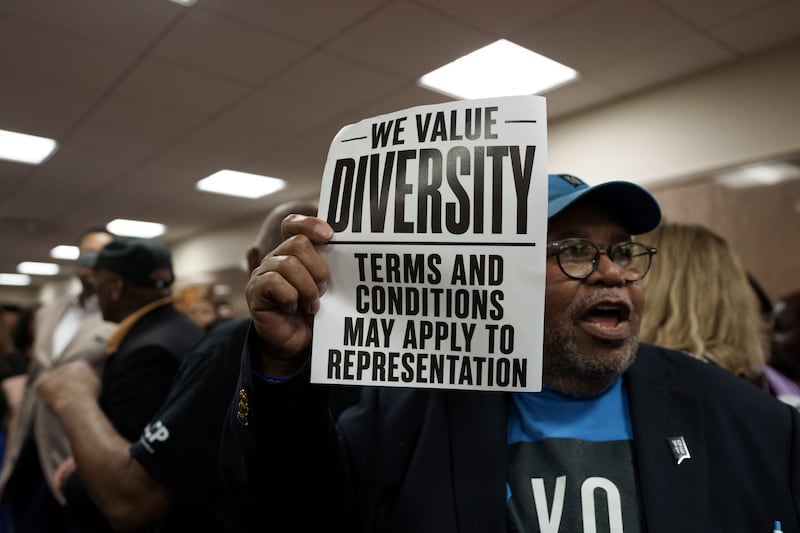
It should be of deep concern to Democratic leadership that the number of Black legislators at both the state and federal levels is undoubtedly bound to see a significant decline. Currently, the CBC has over 60 members—the largest it has ever been, and one of the largest congressional caucuses on the left. But a poorly-kept secret among Democrats in D.C. is that not everyone who labels themselves a Democrat is thrilled about its current size and potential influence.
To the extent that a larger contingent of Black congresspeople could impact the Democratic legislative agenda in ways that may be unpopular in more centrist-leaning districts, it is not a hard leap to believe that White Democrats in some areas may quietly appreciate a little breathing room.

It is unclear why White Democrats seem largely uninterested in the issue, despite its potential to impact some of their districts, too. One theory is that many White Democrats understand that, in some ways, the Callais decision may make it easier for them to keep their jobs. For Democrats who are in solidly blue states, for example, rolling part of a majority Black district into their own is no matter, so long as a substantial—i.e. majority—part of the new district remains full of White voters. (This also reduces the notion of potential competition if the Black population within a certain district was growing or already sizable enough that it could impact a future primary or election.)
Another possible reason is the turmoil that continues to plague the top of the Democratic party apparatus at the national level. Embattled DNC Chair Ken Martin has faced questions around his leadership and hasn’t seemed able to give clear marching orders to the party in a manner that sufficiently rallies the troops. If Jeffries is the only prominent figure in Democratic leadership pushing the importance of this issue, it sends a tacit message that this is not, for the entire Democratic establishment, an all-hands-on-deck moment.
But Democrats cannot sell voters—particularly the Black electorate—a vision of a multi-racial democracy if the White members of the party appear lackluster in their willingness to fight for it.
There is also the question of how this fight looks moving forward. The SCOTUS opinion is now law. Protests are important in drawing awareness, but the next steps will require strategy and policy. Democrats will need to sell voters an actual plan; they can’t do that if it only appears that a fraction of the party is endorsing the approach. The appearance of division, or worse, indifference, by White Democrats is not an image that Democrats can afford to have in the minds of Black voters headed toward November.
To galvanize this critical voting block, all Democrats must not only clearly and unequivocally communicate their disapproval and outrage over this attack on voting rights, but also pledge their support for a unified strategic response that practically addresses what has already been a shift in Southern states seeking to cripple the power of the Black electorate.

One thing must be understood: the deafening silence from too many White Democrats on the issue of Black voting rights being curtailed threatens to be a needless distraction for a party that needs widespread turnout from the Black electorate to secure the scale of wins it needs during this November’s midterms. There is also the domino effect of the future. Democrats need these midterm wins to slow the momentum of state legislatures in deeply red territories that might seek to take the opportunity to further game the system, making 2028 an even more challenging landscape. In that way, it seems like this fight is just beginning—and the imperative it places on White Democrats is to start showing up.