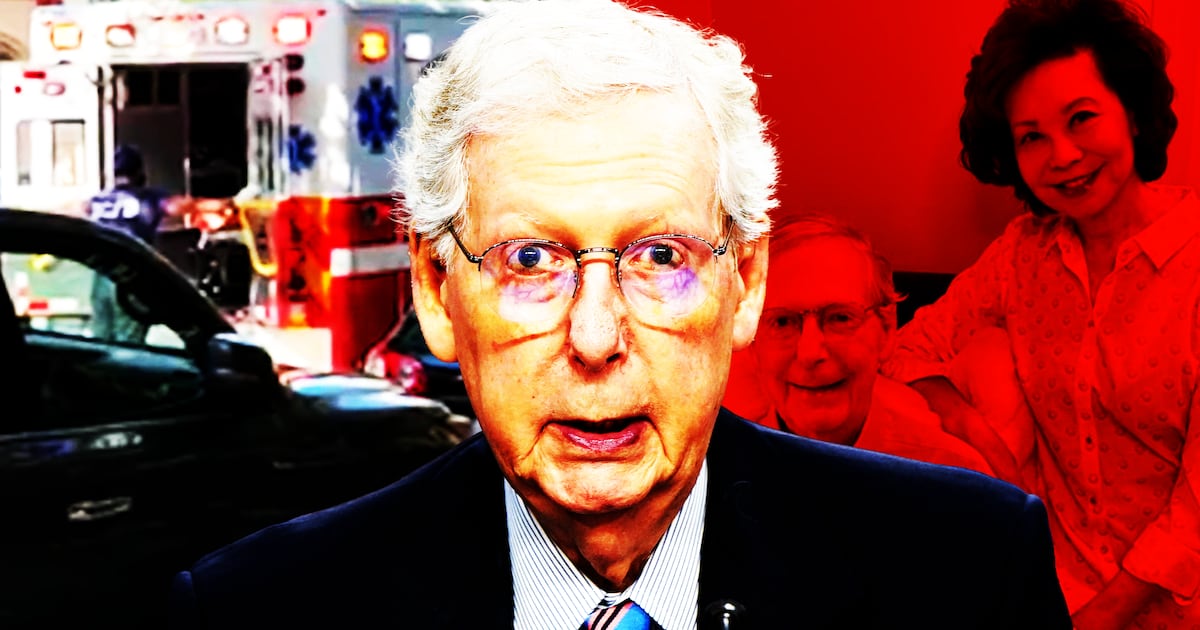

The legislative branch may not know how to get much done these days, but it is certainly expert in choreographing the appearance of progress—especially if you don’t look too closely. Over the past several days, as sexual abuse allegations surrounding Democratic Rep. Eric Swalwell have forced him out of the California governor’s race–and, last night, led to his resignation from Congress entirely amid bipartisan threats of expulsion—there has been renewed scrutiny on congressional misconduct. GOP Rep. Tony Gonzales also just announced his resignation on similar grounds.
And members in both parties are openly floating additional expulsion votes for those who refuse to step down—other scandal-plagued congressional figures like Florida Reps. Cory Mills and Sheila Cherfilus-McCormick have come into focus for activities ranging from fraud to revenge porn. Many are throwing around cheesy puns about “cleaning House,” which probably tells you all you need to know about how seriously they’re taking the issue.

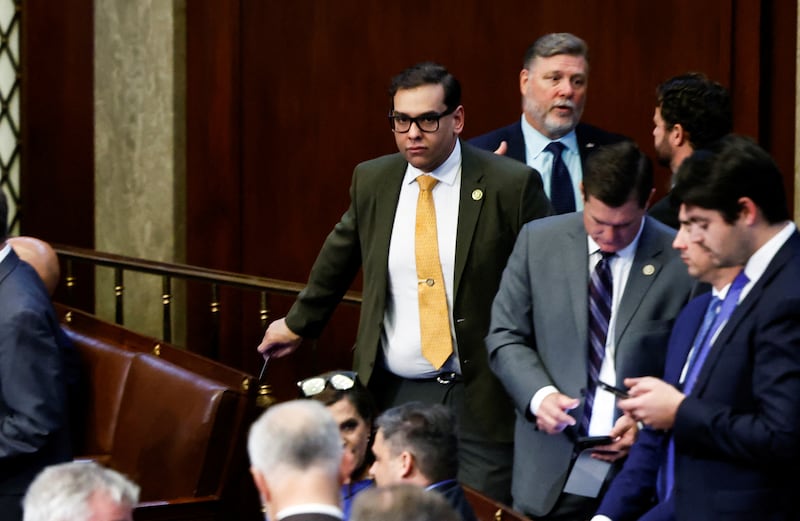
Yes, on its face, this moment presents as a reset, a rare moment of cross-party alignment that suggests the deeply unpopular institution may be willing to hold itself accountable. The House of Representatives has expelled just six members in its 237 years of existence. Half of those were in 1861 for supporting or joining the Confederacy. In 1980 and 2002, respectively, Reps. Michael Myers and James Traficant were expelled for bribery-related charges, and in 2023 fraudster George Santos was expelled after being indicted on 23 counts, including money laundering, wire fraud, and stealing public funds. That, all of a sudden, members have been proposing nearly doubling this number in one fell swoop would seem to be an extreme measure. But upon closer inspection, it seems more like a cast of seasoned political players scapegoating a few headline-grabbing bad actors to stem further scrutiny into the body as a whole.
(Their collective removal would not threaten the balance of power in the House, either. Dumping one or two hot-button names from each party, arranged in a way that creates symmetry, doesn’t meaningfully change the voting math, and signals fairness while serving to protect an institution that continues to make and play by its own rules.)
Congress has spent years sidestepping a broader set of ethical vulnerabilities that would be illegal if conducted in other industries. Stock trading is only the most visible example. Members routinely operate in a gray zone of influence peddling, where lawmakers bundle access with fundraising and where donors, industry groups, and lobbyists shape policy outcomes in ways that are legal but highly distortive. Financial disclosures are often incomplete or delayed with minimal consequence, creating a system where transparency exists more on paper than in practice. The House Ethics Committee has also historically moved slowly and imposed limited penalties for conduct violations, reinforcing the perception that enforcement is episodic rather than structural. For example, the committee opened its investigation into disgraced congressman Matt Gaetz back in 2021 and did not release its report until 2024. The House ultimately found there was “substantial evidence” that Gaetz had, among other things, raped a minor.

Allegations of workplace misconduct, including harassment and misuse of taxpayer-funded settlements, have surfaced repeatedly over the past decade, yet reforms have been negligible. Add all this to the soft corruption of members leveraging their positions for media platforms, book deals, K Street pivots and future employment pipelines, and what emerges is not a series of discrete ethical violations but an ecosystem where abuse of power and self-dealing are the norm.
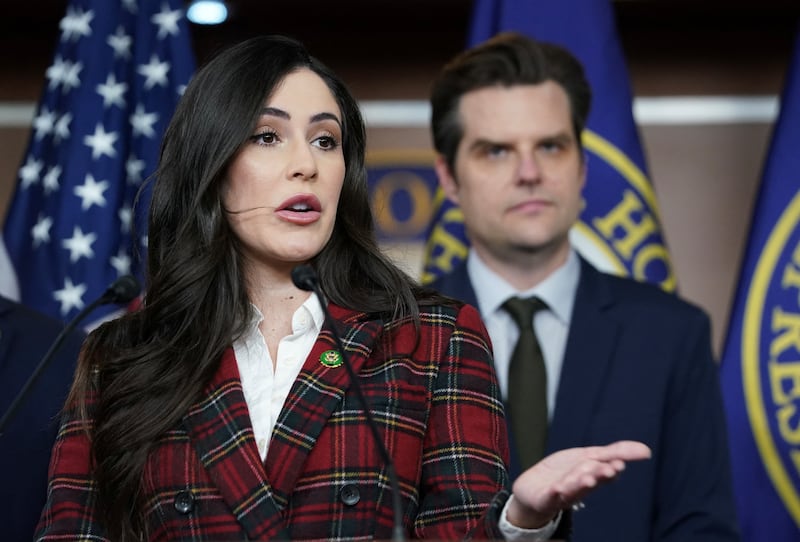
A full-on fumigation is needed, but Congress wants us to pretend the problem requires little more than a duster and some scented candles. By concentrating scrutiny only on a discrete cluster of members, House leadership is curating a version of accountability that is visible and contained, one that satisfies the demand for action without expanding into a more destabilizing inquiry. It is also no surprise to see the body’s more controversial figures, like GOP Reps Nancy Mace and Anna Paulina Luna, cheerlead this approach. After all, it validates their own conduct as non-expulsion worthy and acceptable.
To be clear, the danger is not that the threatened disciplinary actions are unwarranted in these select cases—in fact, consequences for Swalwell, Gonzales, and others are long overdue. The danger is that holding this small few accountable in a high-profile and high-drama manner will be interpreted as sufficient, worthy even; that the visible exercise of discipline will stand in for the harder to achieve but still urgent need for structural reform. If this moment is wrongly framed as a turning point, it may succeed in convincing Americans to accept the bare minimum when it comes to scrutiny and squander a much-needed opportunity for real change.