Welcome to UNMISSABLE, the Daily Beast’s Obsessed’s guide to the one thing you need to watch today. Whether it’s the most gripping streaming show, the most hilarious comedy, the movie which you’ll never forget, or the deliciously catty reality TV meltdown, we bring you the real must-see of the day—every day. Sign up for our daily UNMISSABLE newsletter now.
Beyoncé strutting down the bleachers at Coachella. Taylor Swift going dark with Reputation. Madonna soiling Catholic iconography. Jewel morphing from folk to bubblegum. Robyn synthesizing heartache by way of dance-floor escapism.
When constructing Mother Mary, his hypnotic new psychodrama about a pop diva in the midst of an artistic meltdown (in theaters Apr. 17), director David Lowery studied these touchpoints—the swagger, the sinfulness, the self-disclosure.
The eponymous star, played by Anne Hathaway, would embody them all. But when we first meet Mother Mary in the film, she has lost herself. She arrives at a moody atelier on a rainy London afternoon, begging her former stylist, Sam Anselm (Michaela Coel), to make a dress that properly reflects who Mary is. She’s mounting a comeback performance at the Hollywood Palladium in a few nights, and none of the fancy designers she ditched Sam to collaborate with 10 years earlier seem to understand her, at least not anymore.
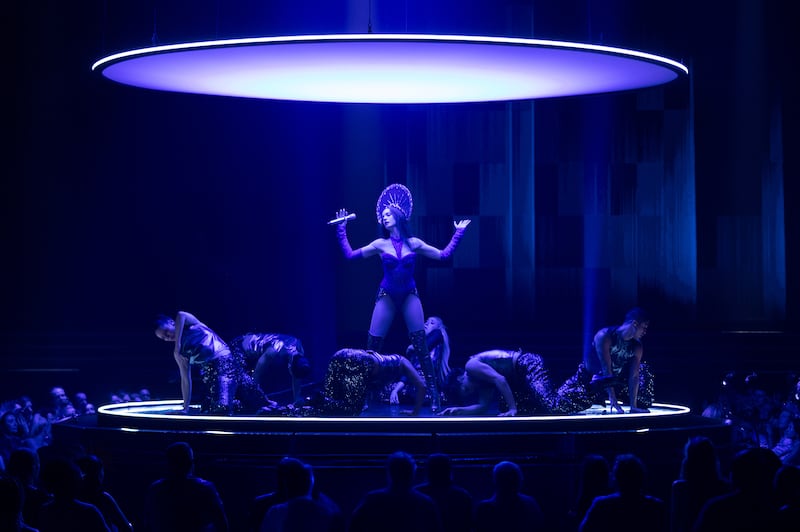
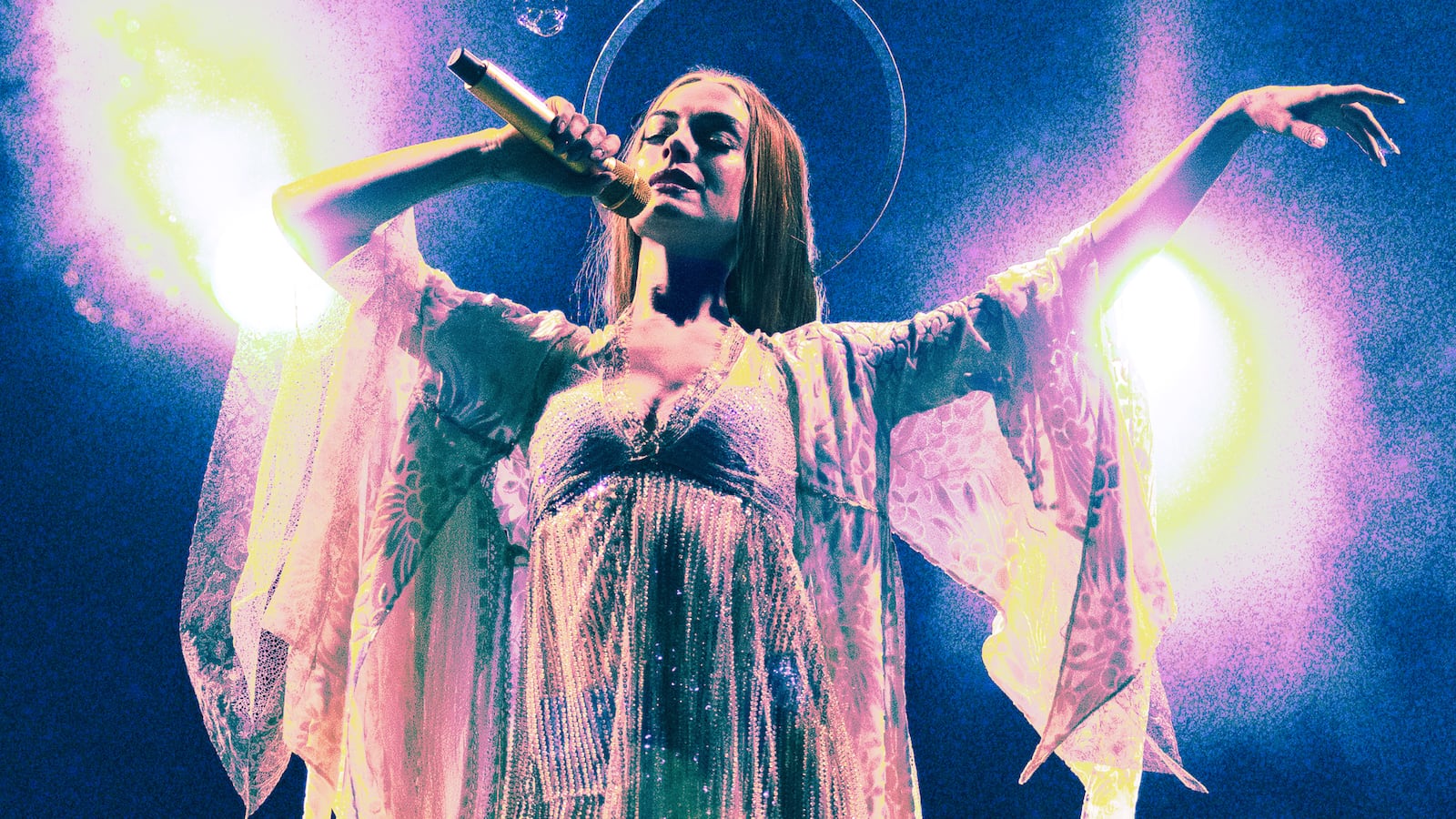
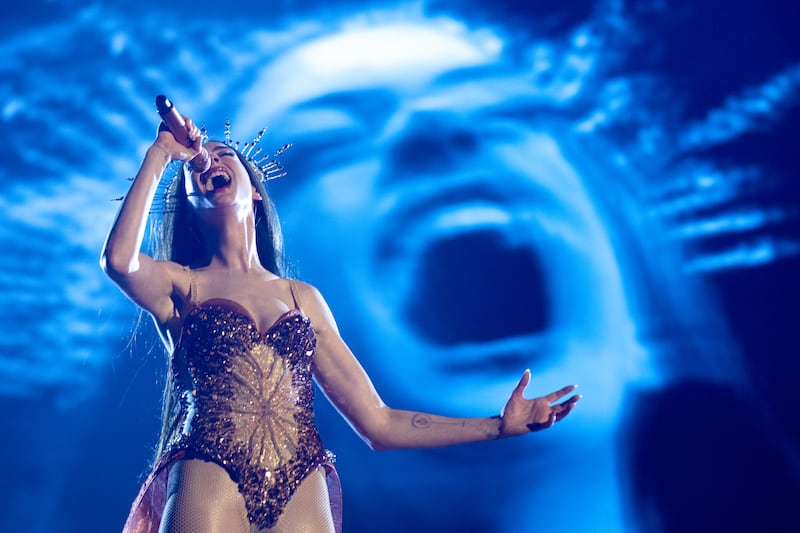
Mother Mary is primarily a two-hander, unfurling as a labyrinthine conversation between an adrift mega-celebrity and her embittered old friend. But throughout, we see glimpses of Mary onstage, commanding a devout arena.
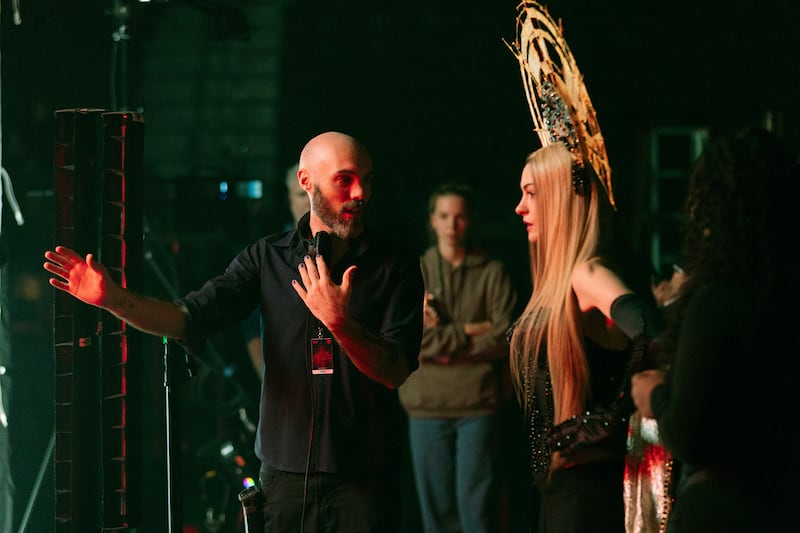
Those moments are where the Beyoncés and Madonnas really came in handy. Hathaway spent three months training with choreographer Dani Vitale, who also worked with her on The Idea of You and The Devil Wears Prada 2. Together, they prepared not only dance steps but the essential movement—the swagger, in other words—that Hathaway needed to embody a mainstream musical deity. Lowery likens it to “pop-star boot camp.”
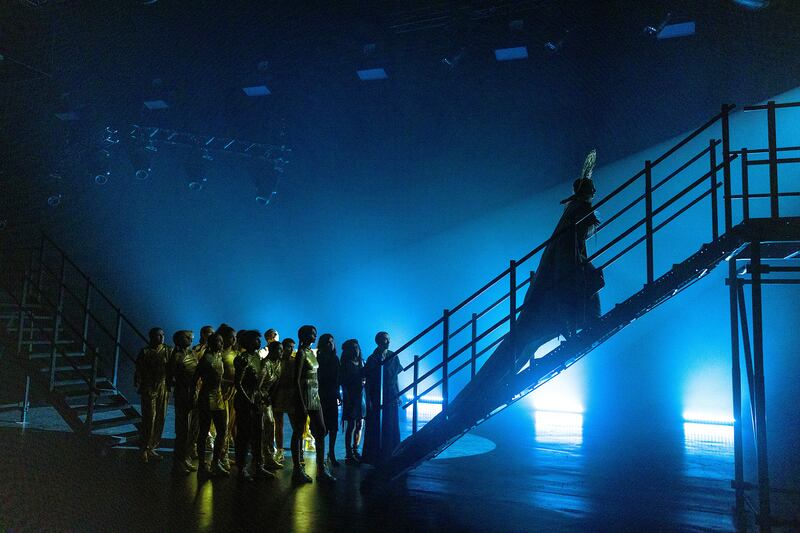
Aside from general verisimilitude, the aim was to prepare Hathaway to simulate part of a real concert in Bonn, Germany, where Lowery hired an experienced production company to construct a fully operational stage at a stadium. The director wanted to conjure the spectacle of contemporary pop tours, with a runway, a floating platform, giant LED screens, and an adoring crowd. He based the tone of the performances on what he sees as the “cinematic” edginess of Swift’s Reputation Stadium Tour. Hathaway played for about 500 extras, with the rest of the venue filled via postproduction wizardry.
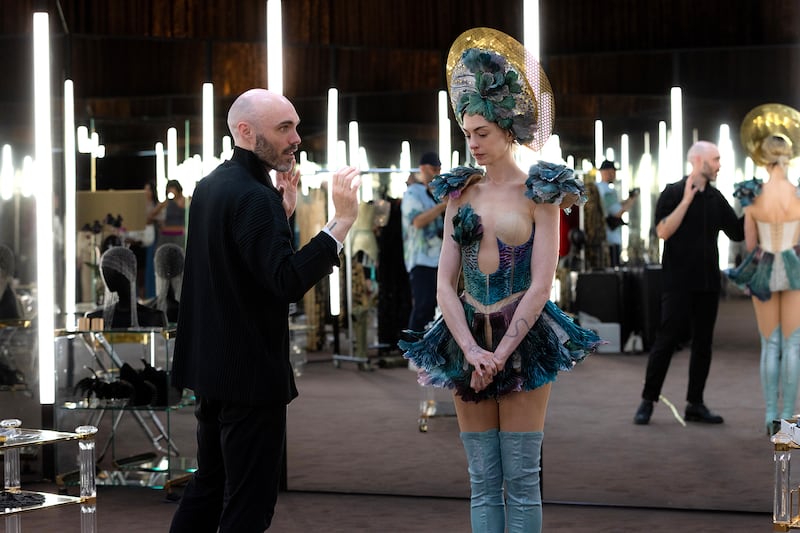
As Hathaway explained to Stephen Colbert on the Late Show this week, “I was really influenced by [Swift’s] tour film, Miss Americana, and how vulnerable she just let herself be in that, showing that pop stars who we’re so used to seeing in their power and so polished—what happens when they’re in between moments, when they’re having a moment of metamorphosis, which can be so painful? And what happens when you’re a public person, and you’re still trying to figure things out in the spotlight?"
To prepare for the shoot, Lowery and Hathaway also watched Madonna’s seminal Truth or Dare, Gaga: Five Foot Two, and Homecoming: A Film by Beyoncé. They discussed Britney Spears circa 1999 versus today, especially the turmoil revealed in her 2023 memoir.
Little of the biography that Lowery and Hathaway invented for Mary makes it into the film, though. There are tidbits sprinkled throughout—for example, an old photo of Mary and Sam in which Mary looks more Avril Lavigne than Lady Gaga, thereby illustrating how she has refashioned her public image over time—but the bulk of Mary’s ups and downs are known only to them.
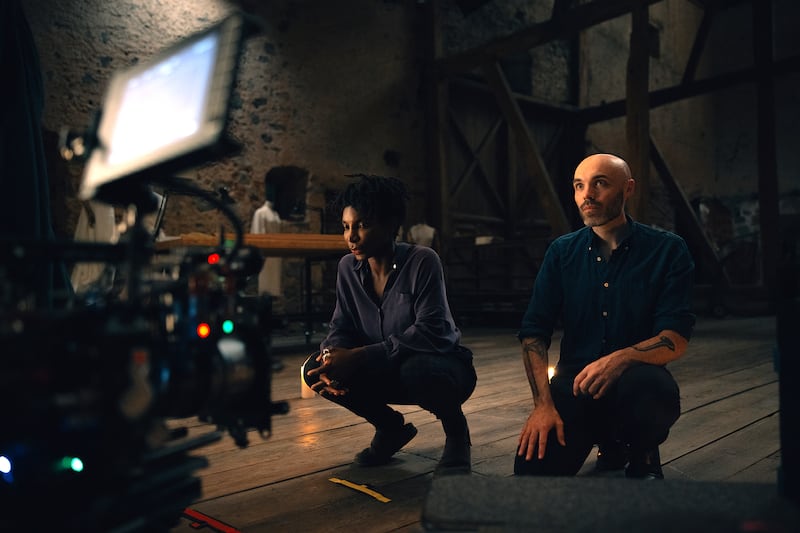
“Once Anne started bringing her ideas to the table, we came up with a very detailed backstory, like where she was born, how she was raised, what church she went to, and when she moved to Britain and met Sam,” Lowery told the Daily Beast’s Obsessed ahead of the film’s limited release. “All of those things are pretty well-charted-out, and they would make a really good movie. But for our purpose, it was important just for us to have a sense of the way in which she enters a room, for example, and the way people respond.”
According to Lowery, Mother Mary’s greatest hits span 2003 to 2017. Because pop trends are so “liquidy,” he wanted to keep that timeline a bit fuzzy. Musical fads come, go, and come again, and her sound needed not to hew to one precise era or micro-genre.
Of the Mother Mary soundtrack’s seven songs, one was written by FKA Twigs and most of the others by Charli XCX, Jack Antonoff, and Hathaway herself, as well as Brat‘s George Daniel and other producers. The songs, in Lowery’s estimation, are “sad bangers,” with the soaring power of Katy Perry’s “Firework.”
“What that means to me is a really heartfelt, emotional, perhaps even heartbreaking song that still makes you want to dance,” Lowery, who grew up in an ardent Catholic household where Madonna was considered blasphemous, said. “When I go to a stadium show, it’s like going to church. That sense of reverence, that sense of devotion, is akin to feeling a spirit move you.”
Hathaway sings each of the tracks, and though her overall performance isn’t as showy as Natalie Portman’s in Vox Lux or Elisabeth Moss’s in Her Smell, Mother Mary also touches on the fickle psychology of fame. The latter, however, displays less skepticism about the validity of pop. Lowery loves pop music. There’s a reason he cast Kesha in 2017’s A Ghost Story.
Ultimately, the core of Mother Mary is less about the vicissitudes of celebrity culture than it is the kinetics of intimate relationships. Sam and Mary were once connected in an almost quantum way, and now Mary is a ghost in Sam’s life, much to Sam’s disgruntlement. No artist owes their collaborators a lifetime commitment, but the pair’s fellowship left Sam feeling abandoned.
Now, if Mary wants that dress or any hope of a future bond, she’ll need to atone. Mother Mary wisely avoids caricaturing its protagonist as an egomaniac, though. She made a creative choice that seemed to benefit her at the time, but rock bottom has given her new insight. Hathaway still moves with the preternatural confidence of a pop icon, but we can sense hesitation in Mary’s current state.
Lowery, for his part, tends to work the same people, like Mother Mary cinematographer Andrew Droz Palermo, who also shot The Green Knight and A Ghost Story. One of the director’s worries is that someday, for whatever reason, those alliances will no longer be possible. Mother Mary was a way to process artistic integrity, the passage of time, and the ways those things get amplified on the world’s stage.
“I can see the way in which artistic collaborations can run their course or dwindle, and the fires can dim, and then they can start right back up again,” Lowery explained. “I also was fascinated with the idea of someone who is, for all intents and purposes, leaving someone in the dust for something better.”
“Maybe the way Mother Mary went about it was wrong, but it’s not wrong to follow that path,” he adds. “But how one deals with the people who aren’t going with you is really tricky. Maybe it was a little bit of self-diagnosing a fear of my own.”