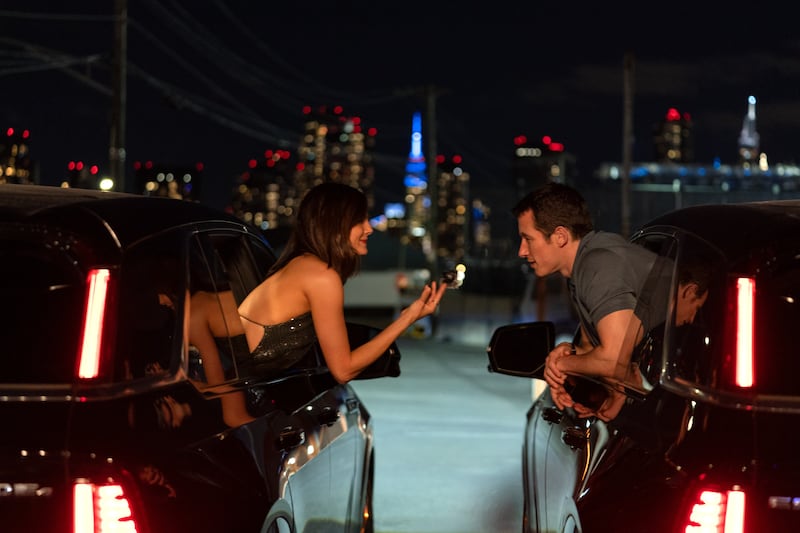
For a movie centered around the horniest night of the year, One Night Only is disappointingly clean-cut.
The R-rated film takes place in a dystopian version of the United States where non-married people are only allowed to bone once a year in a 12-hour window. Putting aside the weird, vaguely fascist politics inherent to this premise, it’s easy to see the film’s appeal: viewers were promised lots of simmering sexual tension and lots of cathartic sexual release.

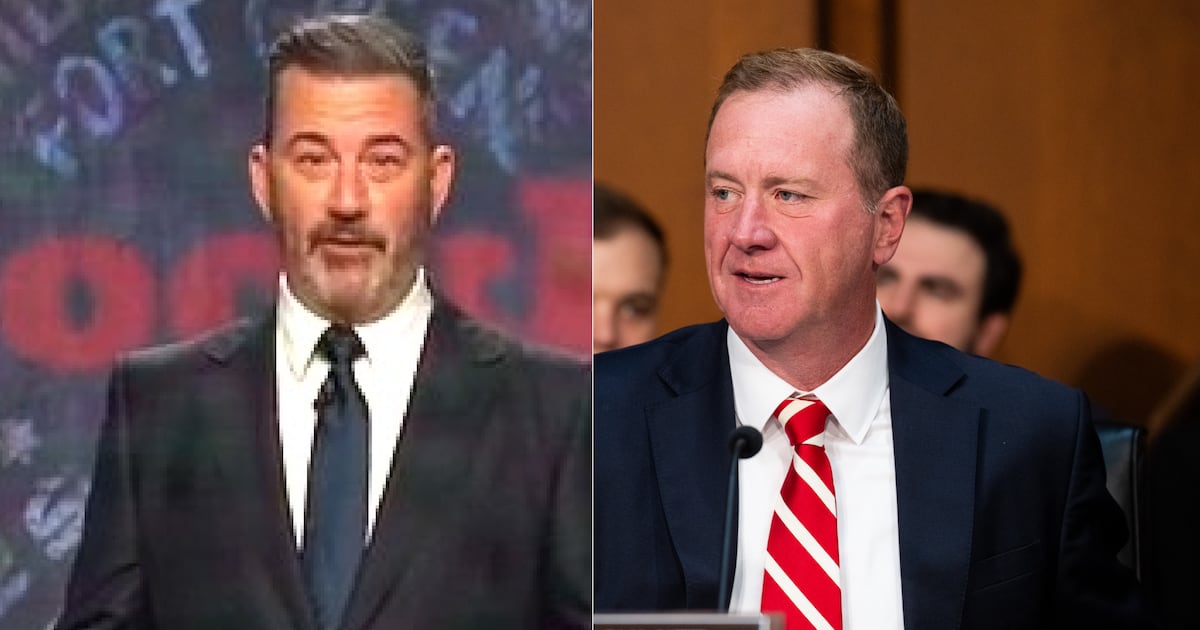
One Night Only offers precious little of either. If it cleaned up some of its language, it could’ve easily landed a PG-13 rating. Why was this movie about sex so oddly sexless? In a new interview with Variety, director Will Gluck blamed the prudish sensibilities of modern filmgoers.
“I believe it’s been a societal shift from taking nudity in adult situations and putting them on your phones at home for everybody,” he said. “Now it’s more of a private, intimate thing that people don’t want to see when they’re in a shared experience.”

Gluck, who directed Anyone But You in 2023 and Friends with Benefits in 2011, explained further, “Whenever people now see nudity or very adult situations in a big theater, they get uncomfortable.”
While the TV streaming landscape may be filled with popular sex-heavy shows, mainstream film has gone in the other direction. Almost all the top-grossing movies of 2026 so far are sexless, with even R-rated The Odyssey managing to avoid any sex scenes despite its lead character’s famous sexual encounters in the source material. Almost every version of Odysseus gets laid constantly, but not the one designed to appeal to a 2020s theatrical audience.

Gluck’s decision to tone down his movie was based not just on his understanding of social trends, but on test-screening feedback. Early cuts of the film had “so much” nudity, he claimed, but test audiences didn’t like it.
“As we started to show it to audiences, we felt it takes you out of the movie. You’re engaged in the characters and what’s going on, and then you pan over, and there’s two naked people having sex, and you watch the audience… it’s a physical thing," Gluck said.
He continued, explaining that he was able to watch test audiences “turn to who they’re with” and squirm in their seats. “The benefits do not nearly outweigh the negatives of it,” he said. “So we just kept editing it out until we got a balance, and those comments went away.”
It’s a frustrating explanation because, well, who cares if some viewers are uncomfortable? Why is someone turning to the person they’re with even considered a bad thing? Why film something as provocative as a sex scene in the first place if you don’t want the audience to be provoked?
Gluck’s concessions to sex-averse test viewers feel not just cowardly but misguided. If there was ever a time to embrace flustering the audience, this was it. The very concept of the movie implies a risqué experience, not to mention there’s so much comedy to be mined from everyone hooking up after a year out of practice.
One Night Only should’ve aimed to feel more dangerous, more awkward, more sultry; instead it played it as safe and generic as those psoriasis ads its lead character sings for.
Gluck also didn’t seem to consider in his interview that sometimes test audiences are straight-up wrong. If test audiences had their way, David Fincher would’ve scrapped the iconic ending of “Se7en.” James Gunn would’ve cut that lovely scene where Superman saves the squirrel. Sometimes a director has to do what David Lynch did after the first disastrous test screening of Wild at Heart: consider that the test viewers might be “too weak” to be taken seriously.

Gluck could’ve rejected the idea that audience comfort is what matters most. Nobody was comfortable with that incestuous handjob in Season 3 of The White Lotus, but it made for one of the most fascinating, most talked-about storylines on TV. A good storyteller should take their audience boldly into challenging territory, not water down their vision to cater to what they think the audience wants.
This is especially true when it comes to Gen Z viewers, who are perceived (not completely unfairly) as being a somewhat puritan generation when it comes to onscreen sex. Every week there’s another round of social media discourse over how unnecessary or gratuitous sex scenes in movies are.
But do those younger viewers actually hate sex scenes in cinema, or do they just not like watching sex scenes at home with their parents in the house? Or maybe this is just the chicken-and-egg scenario Martin Scorsese described in his 2019 op-ed: “If people are given only one kind of thing and endlessly sold only one kind of thing, of course they’re going to want more of that one kind of thing,” the director wrote. For viewers who grew up in the era of safe, sanitized, wide-appeal blockbusters, maybe they just need to get out of their entertainment comfort zone.

Or maybe when young viewers say they don’t like sex scenes, they’re talking about the sort of unrealistic, exploitative sex scenes you’d get in season 1 of Game of Thrones. That’s how Olivia Wilde, star of I Want Your Sex (a new sex comedy film that isn’t afraid of its own premise) chose to interpret their reluctance.
“I choose to interpret that statistic maybe as Gen Z saying, ‘We don’t want to see inauthenticity anymore. We want to see real relationships, and we want to have something that feels more genuine,’” Wilde said. Her co-star Chase Sui Wonders, meanwhile, said she hoped the film gives “exposure therapy to Gen Z about sexual experience and inspires them to go out there.”
In stark contrast to the bold storytelling of I Want Your Sex, perhaps the greatest sin of One Night Only is its penultimate scene. That’s where—spoiler alert!—its main characters Owen (Callum Turner) and Allie (Monica Barbaro) choose not to have sex after all. They instead wait an entire year for the next exemption period, and this is presented as the mature and healthy choice.
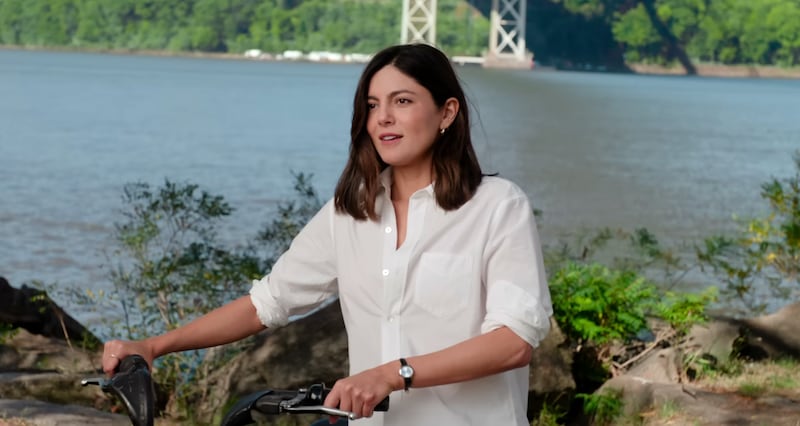
In other words, Only Night Only ends with its characters rejecting the idea of passion, pleasure, and taking risks. They decline a new interesting experience so they can stay longer in their comfort zones, and the script rewards them for the decision. It’s the sort of anti-fun resolution that only the world’s most boring test viewers could approve of, and it’s the worst possible message to give to modern viewers.