At its heart, cinema is a vehicle for empathy. Yet to what extent can one truly relate to another person’s plight in the face of stark class, wealth, and power imbalances?
That’s one of the challenging questions posed by Possible Love, the first film from South Korean auteur Lee Chang-dong since 2018’s Burning, and a drama whose agile touch serves a masterfully complex tale of two dissimilar couples brought together by suffering, desire, and a non-fiction film project.
Winner of the Silver Lion Grand Jury Prize at the Venice Film Festival, and screening at the Toronto International Film Festival before debuting on Netflix on Nov. 6, it’s as richly drawn and intricately crafted as any feature this year, and a surefire contender for best of 2026 honors.

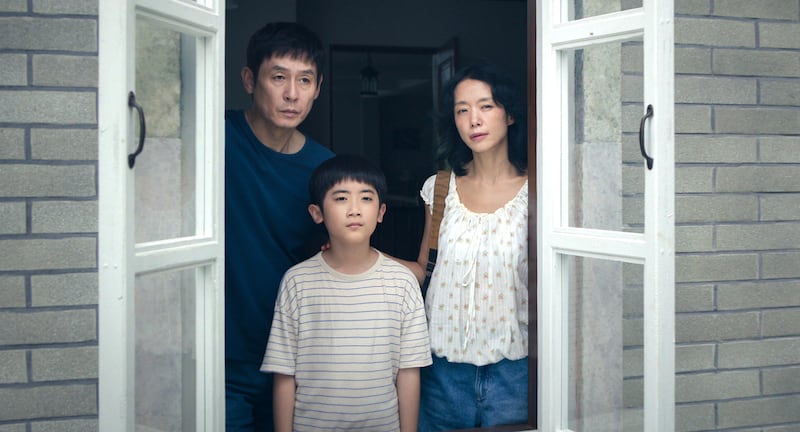
“Thou shalt not covet,” reads the opening title card of Possible Love, but various forms of envy course throughout its story. Lee has always been a writer/director of tremendous psychological and emotional insight, exploring interior lives complicated by misfortune, suffering, and fear, and in his latest, the character who’s in the most pain is Ho-seok (Sul Kyung-gu), a welder who, two years after being laid off from his factory job due to predatory foreign investment, is a shell of his former self.
His wife, Mi-ok (Jeon Do-yeon), wants him to attend the therapy sessions offered to people in his situation. However, given that he can barely bring himself to join his wife and 10-year-old son Cheol (Jung Seop) at a funeral—because it will entail interacting with others—he’s hardly ready to open up to a stranger about his misery.
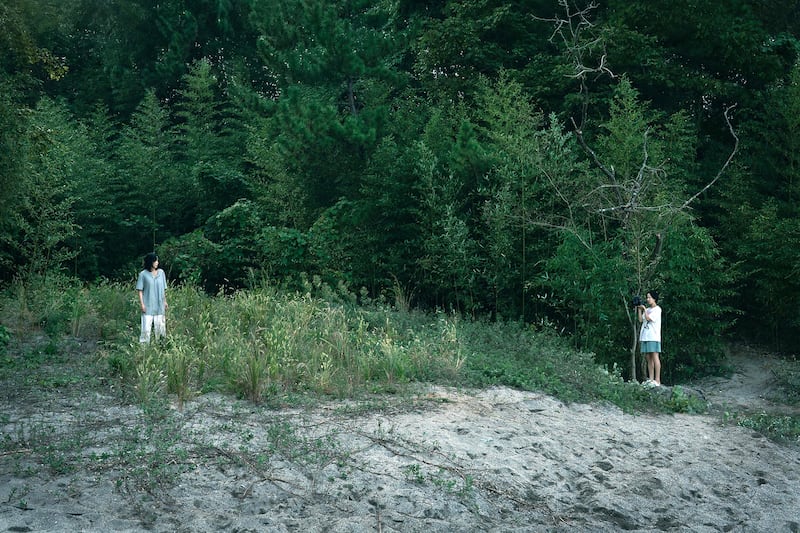
Ho-seok’s anguish directly impacts his spouse, who admits to others that she’s lost so much weight that her wedding ring keeps sliding off—a casual bit of foreshadowing that’s emphasized by her temporarily losing the ring beneath the car of Sang-woo (Zo In-sung). As it turns out, Sang-woo is the wealthy, handsome, and confident husband of Ye-ji (Cho Yeo-jeong), a documentarian intent on making a movie about the plight of local laborers.
She immediately decides that Ho-seok would be a great focus, but she swiftly learns that he’s not ready for an interview. Mi-ok, on the other hand, is more than willing to participate, and in short order she’s recounting to Ye-ji’s camera all sorts of details about their lives while inviting her inside their modest home.

Ho-seok is adrift because his identity (as with so many of his countrymen) is inextricably bound up with his profession, and the loss of the latter means that he no longer knows himself or his purpose. Calling his colleagues “brothers” suggests that work gave him another kind of family. In the aftermath of losing them, he now seems to be on the precipice of detaching from his biological clan—not because of their rejection but, rather, because of his crushing self-loathing, which is most evident during a heartbreaking scene in which, while buying Cheol a birthday cake, he stalks a well-off man who’s having a similar celebration, albeit with a happiness that eludes him.
Whereas Ho-seok is a closed book, Mi-ok is considerably more open, and she and Ye-ji gradually grow closer. Overt articulations of feelings (and themes) are largely absent from Lee’s script, but it’s clear that Mi-ok wishes she were Ye-ji—whose wealth and stature grant her freedom—at the same time that she resents her, the latter evidenced by a pseudo-helpful warning about Ye-ji wearing expensive shirts around the unemployed.
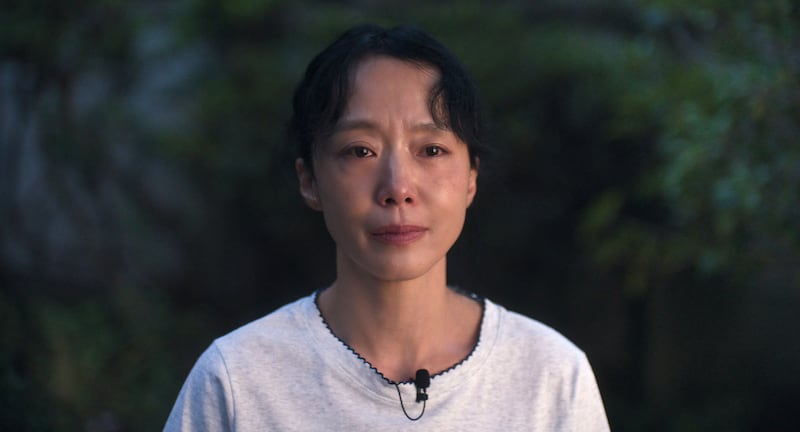
For her part, Ye-ji appears sincerely captivated by her subjects. Still, for all her patience, affection, and understanding, she remains a tourist, and her belief that she must love Mi-ok and Ho-seok in order to do them justice in her film is viewed with skepticism by Sang-woo, who better comprehends that the two couples exist on opposite sides of a chasm that can never be fully crossed.
Ye-ji’s ever-present camera is a reminder (to us and the characters) that there’s an inescapable voyeuristic pretext for this friendship. Lee’s own cinematic gaze is less intrusive, situated at a slight (often handheld) remove, better able to respectfully consider all four of his protagonists, who simultaneously want and detest what they can’t have and ultimately crash into each other in inevitable, subtly tragic ways.

Reflecting on their decades-earlier stations in life, Ye-ji wonders if she and Mi-ok stared at the same full moon, and that yearning—to feel a connection across a tremendous divide—is both earnest and quixotic, and it epitomizes the schisms that define the quartet’s interpersonal dynamics.
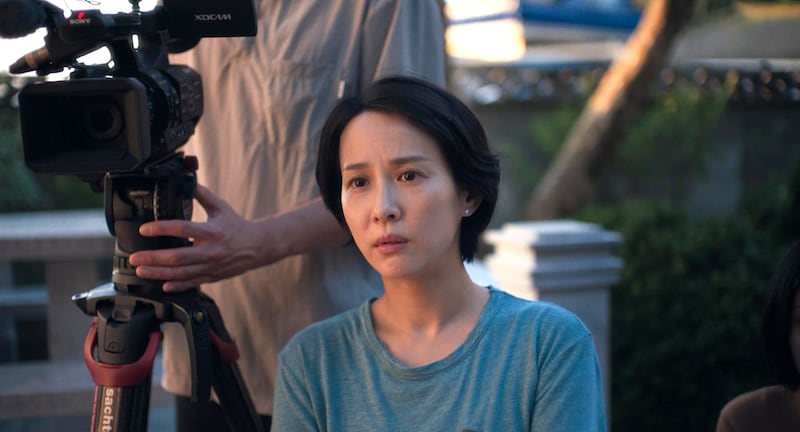
Possible Love refuses to condemn Ye-ji for her endeavor because her attempt to use filmmaking to identify with those unlike herself is an undertaking Lee shares. The director eschews judgment, and once the couples opt to jointly vacation at Sang-woo’s childhood beachfront house, their intersecting interests are treated with generous even-handedness.
Nonetheless, with Mi-ok exhibiting a subtle attraction to Sang-woo and Ho-seok slowly approaching a point where he can discuss the trauma plaguing his heart and mind, it’s obvious that things are destined to come to a head. Lee navigates that minefield with an astute grasp of the disparities separating these men and women, many of which are intertwined with the corporate labor conflicts that have pulled them together in the first place.
Shame, worthlessness, despair, and the fury they breed are omnipresent in Possible Love, evoked with understated grace and intensity by Lee’s excellent cast. The director’s ability to weave a coherent tapestry from so many relevant concerns—about employment and exploitation, financial hardship and autonomy, and love and selfishness—is astounding, such that even the sight of Cheol watering vegetation with the caretaker of Sang-woo’s property is laden with piercing socio-economic import.

That feat is largely the result of his diligent concentration on the messy motives and impulses of Mi-ok, Ho-seok, Ye-ji, and Sang-woo, a foursome whose sorrow and pity, benevolence and remorse, and anxiety and agony make for a volatile stew.
Its unhurried rhythms, shrewdly at odds with its characters’ tumultuous circumstances, Possible Love ruminates—delicately and mysteriously—on the capacity of both people and art to unite despite the contentious and alienating forces that seek to keep them apart. In doing so, this evocative and incisive film gives voice to a particular sort of modern dread and ire, for which, it comprehends, there is no simple cure.