
Russians are being detained and forced to apologize on camera for filming Ukraine’s drone blitz on the country, according to a new report.
Pressure on Vladimir Putin is rising amid escalating drone strikes deep inside his territory, as Kyiv tries to tip the balance in the war, which had largely been confined to Ukrainian territory since 2022.
The attacks have gone as deep into Russia as Siberia, and have crippled key energy and logistics hubs, with huge columns of smoke billowing over towns and cities nationwide.

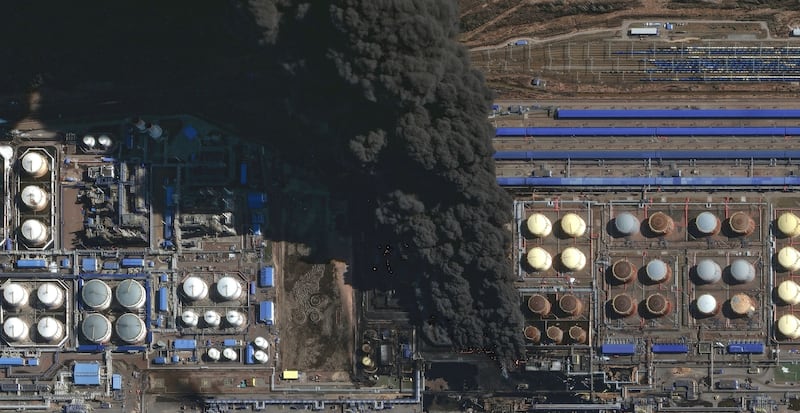
Dramatic images and video of the damage caused by the wave of attacks have circulated widely, but now the Kremlin has made it clear it does not want more of the footage making its way into the public domain. Or worse, the hands of the Ukrainians.
According to independent Russian news site Meduza, most regional authorities in Russia have already banned citizens from filming the destruction, although there is no unifying federal law prohibiting it.
Some of Russia’s regions—such as Kursk and Leningrad—have banned the gathering and dissemination of attack footage since early 2024.
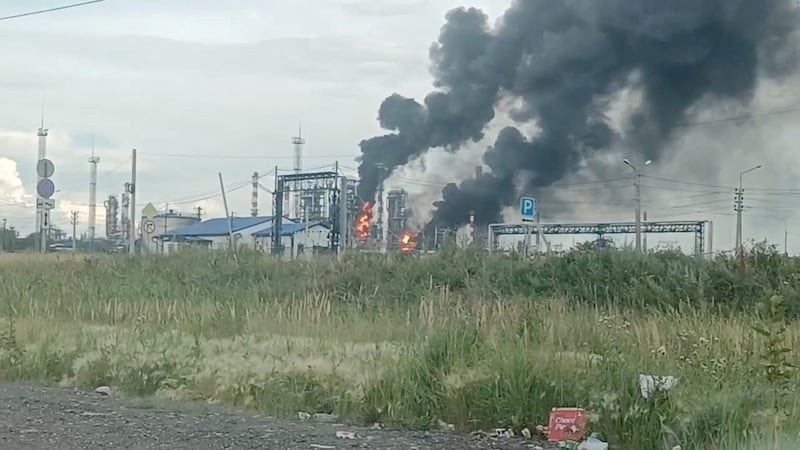
It has been banned too in Volgograd for a year-and-a-half, but when a military location in the region was hit in June, footage soon found its way onto the internet, including Ukrainian Telegram channels, Meduza reports. It notes that by the next day, the Ministry of Internal Affairs had announced that three people had been arrested in relation to the footage.
In an Orwellian twist, the detainees were then made to film an apology for their actions, explaining what had driven them to press record.
One was a new high school graduate, who was taken for questioning after his graduation ceremony.
V1.RU, a Russian news outlet in Volgograd, reports that when police questioned him, he said he disseminated the footage to his Telegram channel with around 60 followers immediately after he’d taken it.
Under police questioning, as reported by the news site which is likely subject to government censoring, when the graduate was asked if he now knew the consequences of his actions, he said “Yes. I don’t need to film anything anymore, no objects. I won’t do that anymore.”
Another detainee, a woman, was also made to post a video apologizing.
“I recorded a video of the missile flying toward the plant. I shared it with close relatives and friends. I didn’t realize it would be viewed negatively, and that I would see my video on various Ukrainian social media pages,” according to V1.RU. “Therefore, I sincerely apologize, ask for forgiveness, and urge anyone not to film, photograph, or share it on social media.”
A third detainee whose apology was also published by V1.RU said that she hadn’t been forced or asked to share the footage.
“Now, of course, I understand,” she said, reported the site. “I understand that these materials could have fallen into the hands of our enemy. And, frankly, I want to urge everyone to never make any videos, never send any photographs, never send any audio messages, never send any video messages anywhere, never fall for anything. Any questions, any money—all of this could easily end up with our enemy.”
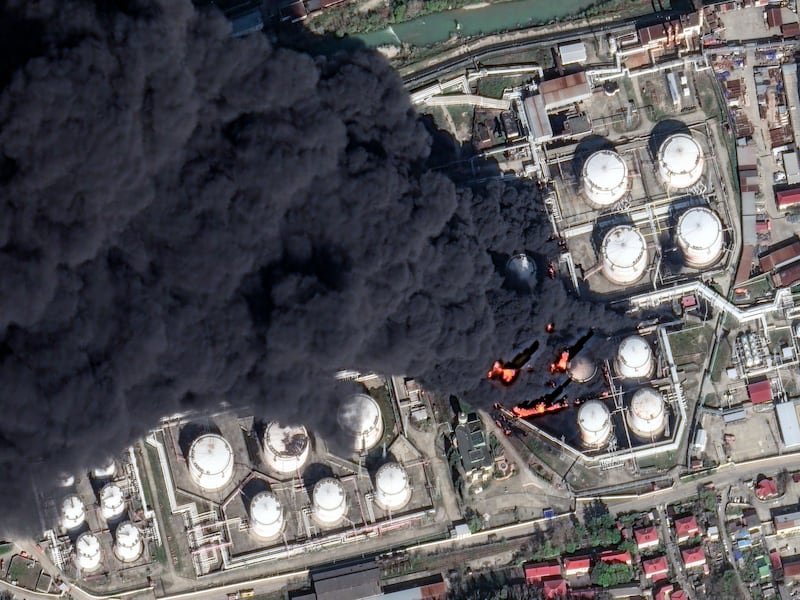
It wasn’t just in Volgograd. In July, a 19-year-old Krasnodar resident filmed an attack on a facility belonging to e-commerce platform Wildberries. Footage of the company’s burning warehouses under huge smoke stacks has been seen worldwide.
She then posted it online with the caption “Cool, Mom’s out of a job,” Meduza reported.
After her arrest, she adopted a familiar tone.
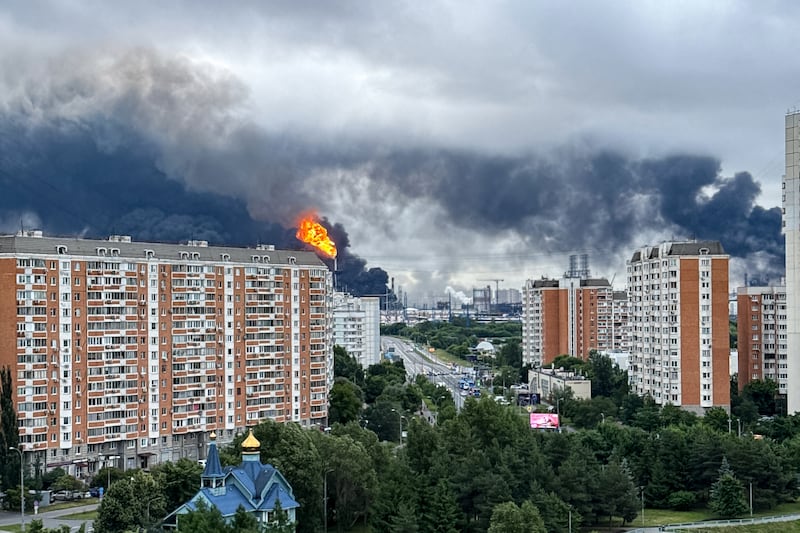
“I posted a video of the drone crash site online on July 22. I admit my guilt and promise it won’t happen again,” she said.
Kyiv’s new strategy has taken the fight to Russia and marks a significant shift in the composition of the war, now well into its fifth year.
“The Russian war economy is heavily reliant on the export of oil to raise the necessary funds to maintain production and its forces in the field,” Matthew Powell, an air power and strategic studies lecturer at the University of Portsmouth, told the Daily Beast.
“The disruption of oil refining will also hamper Russian efforts to utilize its mechanized forces and logistical support in Ukraine.
“This has been combined with drone attacks on the e-commerce company Wildberries, which provides vast swathes of equipment to Russian forces, including fiber-optic cables used in conjunction with drones and bulletproof vests, again reducing the military capabilities of Russia on the battlefield.
“It is clear that Ukraine is utilizing drones in a strategic attack role to degrade Russian capabilities by attacking critical infrastructure.”