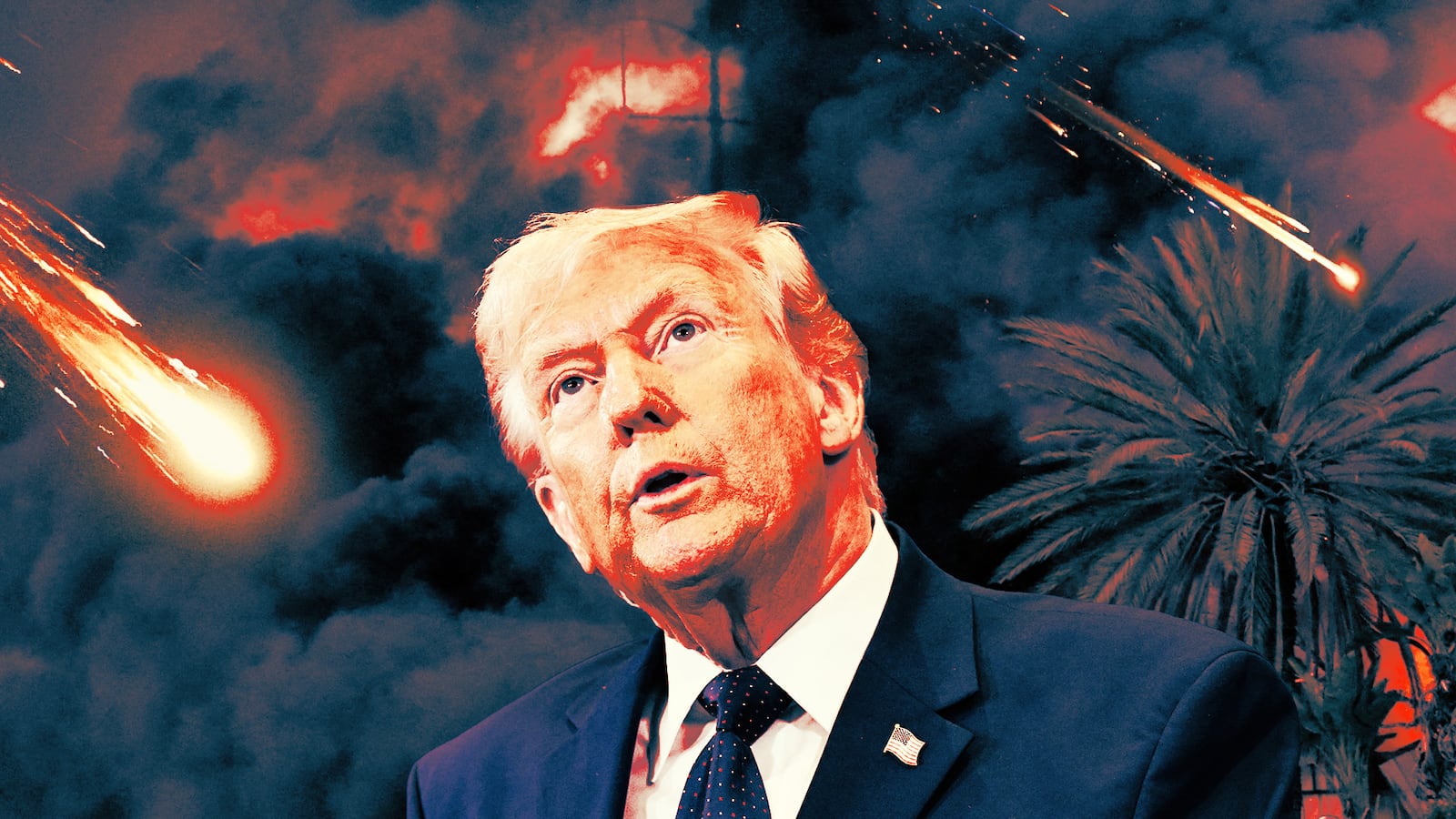
U.S government insiders have expressed dismay over President Donald Trump’s war with Iran, with some stunned over what they describe as a lack of planning, inconsistent messaging, and disregard for allies.
As the death toll rose on Friday, the war’s 13th day, the president did little to tell Americans when things might end. Instead, he claimed that the conflict would be resolved “when I feel it in my bones.”
But across the administration and diplomatic community, sources have told the Daily Beast how they have been left scrambling with the fallout.
One State Department insider pointed to the “chaotic” rush to get Americans out of the Middle East after the strikes began.
“We were giving out a hotline number that had an automated message telling people they couldn’t rely on us to leave because there were no evacuation points at that time,” they told the Daily Beast.
“It was a mess.”
Another government insider noted how the president had oscillated between destroying Iran’s military and nuclear capabilities, to forcing regime change, to simply declaring victory was imminent.
“It’s very hard to produce briefing papers when you’re not sure what the objectives are,” they said.
And a third source described how they had been dealing with ongoing frustrations from Gulf allies who were “caught off-guard” due to inadequate time and not enough coordination to prepare for Iran’s retaliatory attacks.
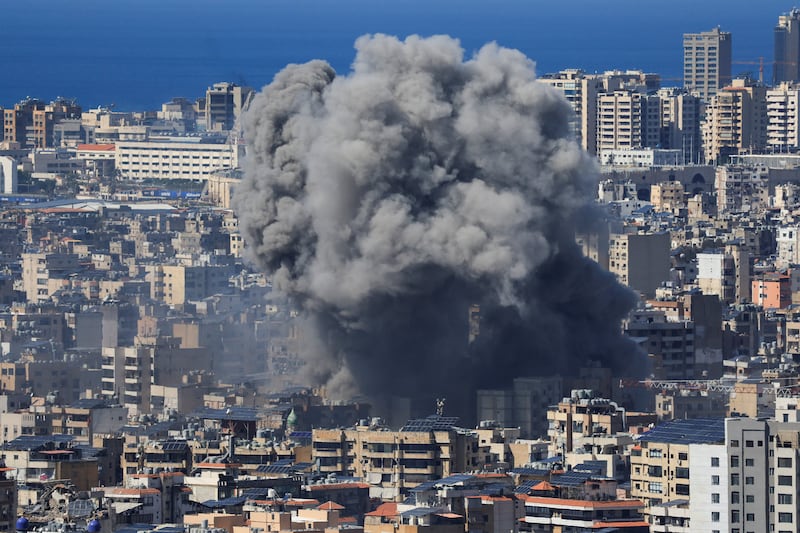
The war in the Middle East has now killed more than 2,000 people over the past two weeks, mostly in Iran and Lebanon, while millions of others have been displaced.
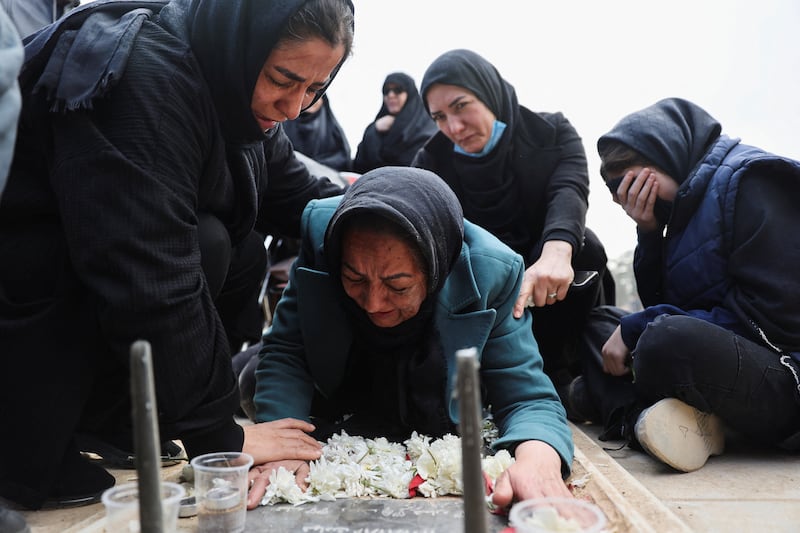
Meanwhile, the number of Americans who have died in the conflict increased to 13 on Friday, after six airmen died when their aircraft crashed in Western Iraq.
With the midterms approaching in November, Trump—a supposedly “America First” president who came to office promising to bring down cost-of-living pressures—now faces a rising U.S. death toll, soaring gas prices, and plunging poll numbers over a conflict no one voted for.
The strikes have effectively shut down the Strait of Hormuz—the world’s most important oil artery, which transports roughly a fifth of the world’s global oil and LNG consumption.
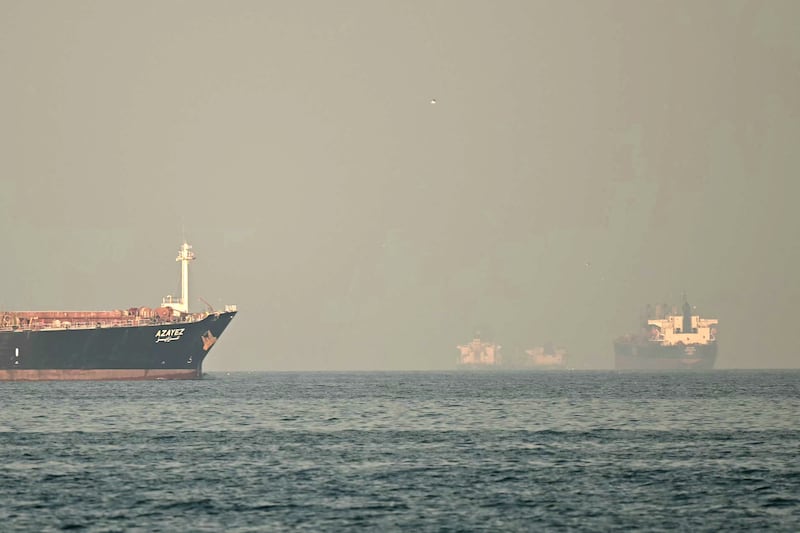
But according to one Trump ally close to the White House, there was an expectation that the more the U.S. escalated its attacks, the more Iranians would be inclined to surrender.
This had been Trump’s objective, with the president declaring last week he wanted “unconditional surrender” from Iran, which meant “they cry uncle, or when they can’t fight any longer.”
“That was a miscalculation,” the source said. “They fear surrender far more than they fear our aircraft carriers.”

Trump also began the war signaling regime change, urging Iranians to rise up and “take back” their country.
The president felt emboldened over the successful capture of Venezuelan dictator Nicolás Maduro and saw an opportunity, based on Israel’s advice and other intelligence, to take out Iran’s Supreme Leader, Ayatollah Ali Khamenei, and members of the Iranian regime on the first weekend of the strikes.
They did, but Iran appears to have dug in nonetheless—appointing Al Khamenei’s son Mojtaba Khamenei, a 56-year-old hardline cleric, as its new Supreme Leader.
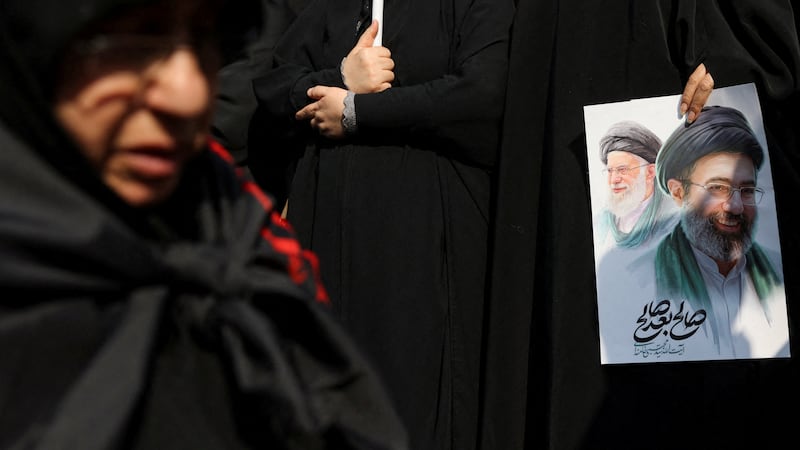
In his first remarks on Thursday, Khamenei vowed to use the Strait of Hormuz as leverage to inflict more oil chaos as he seeks to “avenge the blood” of his assassinated family.
Pentagon chief Pete Hegseth tried to play down concerns about a global oil crisis on Friday, telling reporters: “We have been dealing with it, and don’t need to worry about it.”
In a statement, the White House later added: “America is fully prepared to crush short-term disruption and emerge stronger than ever.”

But inside the West Wing, aides are reportedly now trying to shape a narrative for Trump to declare success or wind down the war before it takes too much political capital.
Still, the message remains muddled, from Hegseth telling 60 Minutes on Sunday that “this is only just the beginning” to Trump later telling Axios that the conflict could end “soon” because there is “practically nothing left to target.”
A few hours later, Trump changed his tune again.
“We aren’t finished yet,” he told reporters.
The Daily Beast has reached out to the White House for comment.
But on Friday, Trump called into Brian Kilmeade’s podcast to assuage concerns.
“I don’t think it’s going to be long” before the war ends, Trump insisted, and “when it’s over, this is going to bounce back so fast.”

“When are you going to know when it’s over?” Kilmeade asked.
“When I feel it,” Trump said. “When I feel it in my bones.”
Just before 7 p.m. on Friday, the president announced via his Truth Social that he had personally ordered “one of the most powerful bombing raids in the History of the Middle East and totally obliterated every MILITARY target in Iran’s crown jewel, Kharg Island.”