Donald Trump didn’t plan for a ticking time bomb at the Strait of Hormuz because he was convinced that his war with Iran would be over in a matter of days, or even hours, the Daily Beast has learned.
The president was warned by his Director of National Intelligence, Tulsi Gabbard, and other advisors that Tehran would almost certainly plug the Strait if the U.S. attacked them.
He was also told America’s Middle East allies might come under fire.
But intelligence sources with knowledge of the war planning said the president ultimately dismissed the concerns because he believed Iranians opposed to the repressive fundamentalist regime would take to the streets and overcome the ayatollah’s henchmen once the bombing began.
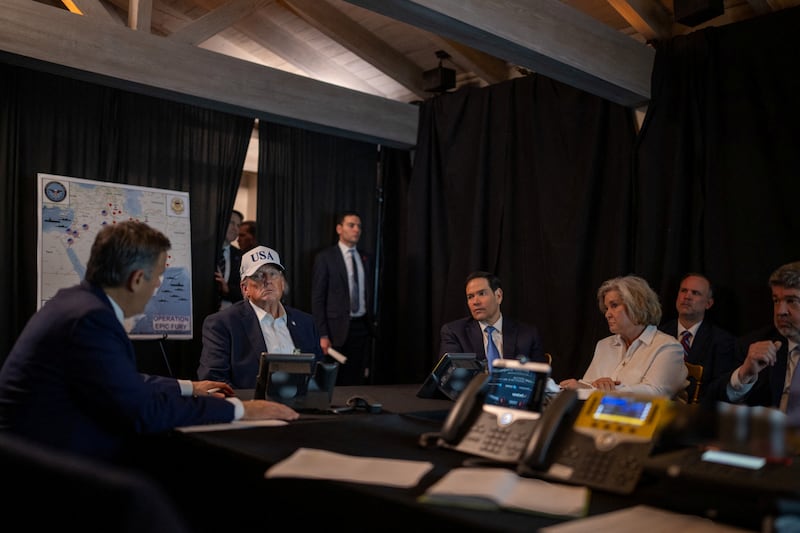
It was never supposed to go on this long. A few hours. A few days. A week at most. Then the Iranian people would do the rest.
But the revolution never happened.
The CIA even launched a covert mission to arm one of the biggest groups of Iranian dissidents in the weeks before Operation Epic Fury was launched. The guns didn’t make it to their destination, Trump later disclosed.
The president was unbowed. “He was absolutely certain there would be an uprising. He’d seen footage of people out in the streets and how it spread across the country before the security forces cracked down,” said the official, who requested not to be named because they feared losing their job.

“There is no question the president knew the repercussions. He just thought it would all be over very quickly and that these other factors would not come into play. He thought it would be a little like Venezuela—they’d take out the leadership and that would be it."
“When we are finished, take over your government,” Trump said in his Truth Social video announcement that the bombings had begun. “It will be yours to take. America is backing you with overwhelming strength. Now is the time to seize control of your destiny and unleash the prosperous and glorious future that is close within your reach.
“This is the moment for action,” he added. “Do not let it pass.”
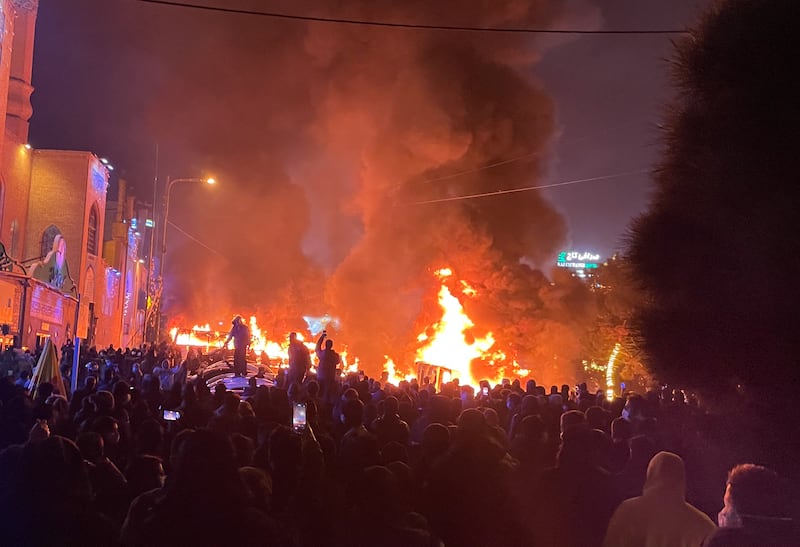
Despite strikes taking out the Iranian leadership, the moment did, indeed, pass, and there were no repeats of the demonstrations that brought the country to a standstill at the beginning of the year.
This massive miscalculation by Donald Trump is the reason the U.S. had zero advance planning to prevent the blockade of the Strait of Hormuz or to foresee rising gas prices.
Trump himself admitted the gun-running operation went awry. “You know we sent some guns,” the president said in an off-guard moment at Monday’s White House Easter Egg Roll. “But the group that was supposed to give, which I said would happen to my people, I said it, I called it exactly.
“We sent guns, a lot of guns,” Trump continued. “They were supposed to go to the people, so they could fight back against these thugs. Know what happened? The people that they sent them to kept them. Because they said, ‘What a beautiful gun. I think I’ll keep it.’ So I’m very upset with a certain group of people, and they’re going to pay a big price for that.”

The White House has been contacted for comment.
Trump is no great student of history, but his military advisors would undoubtedly know how Britain lost control of the Suez Canal in the 1956 Suez Crisis. The British government was forced to withdraw its troops—under immense diplomatic pressure from the U.S.—after Egypt’s President Gamal Abdel Nasser nationalized the canal.
There was a run on the pound, and Britain agreed to a ceasefire, only to later lose control of the waterway to Egypt. The saga effectively ended the UK’s status as a global superpower.
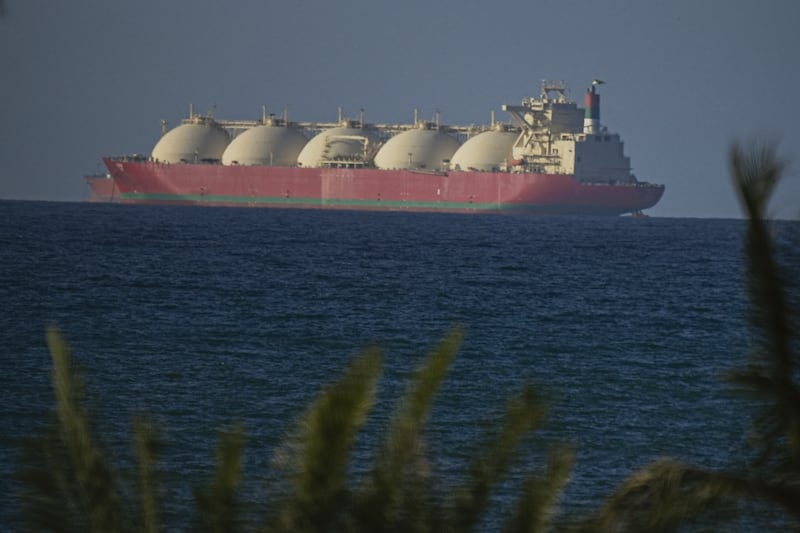
Any emergency modeling for a potential World War Three would include a study of the implications of any conflict on the Strait of Hormuz, the narrow chokepoint through Iran and Oman that carries almost a quarter of the world’s oil.

If Trump dismissed the specter of the Strait, Iran did not.
“For many decades, Iran has worked to develop asymmetric naval capabilities for precisely this sort of scenario,” said MIT professor and Brookings senior fellow Professor Caitlin Talmadge.
“This includes an arsenal of probably 5,000 to 6,000 mines of different types and varying levels of sophistication, along with numerous platforms that could deliver those mines.
“The concern is that Iran also potentially has hundreds of smaller vessels: midget submarines, fast attack craft, even civilian boats of a certain type that could be used to lay small numbers of mines, and that potentially are very hard to find because they’re in all these small ports all along the coast.
“Some of them may be in an extensive tunnel network Iran built along the coast that hides them until right when they enter the water. So, it’s not very hard to tell a story about how, if it chooses to, Iran could conduct a significant mine-laying campaign in the Strait. Just the possibility of this—or at least the inability of the United States to confirm that there are no mines—is a deterrent for tanker traffic."
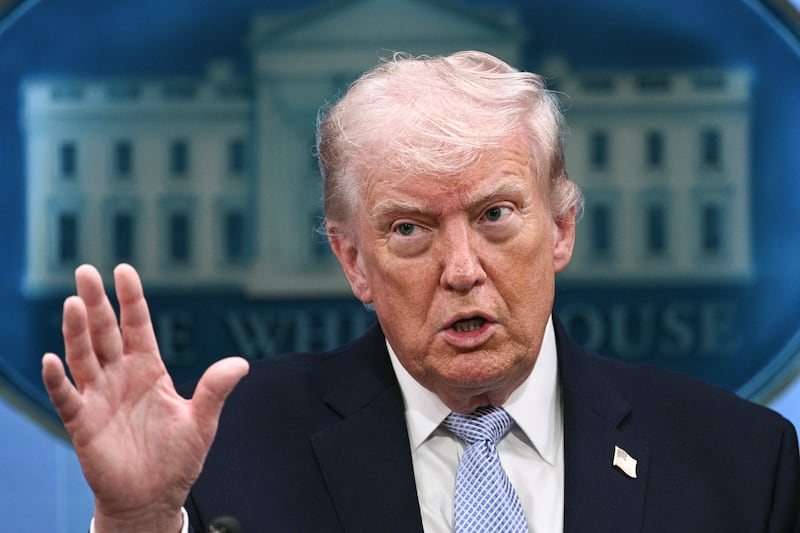
Now the world’s attention is focused on a waterway between the Persian Gulf and the Gulf of Oman. Not the human rights abuses of a hateful regime.
The uprising never happened.
Instead, the Iranian people were told by the U.S. president over the weekend that their entire civilization would be sent back to the Stone Age.
And now they have to worry about their own government and the Americans who were supposed to save them.
As “War Secretary” Pete Hegseth said at his Pentagon press briefing on Tuesday, “We wish them the best.”