Supreme Court Chief Justice John Roberts has lashed out at the hostility being directed towards judges, describing it as “dangerous” and demanding an end to the attacks.
In a forum on Tuesday, the conservative judge took what appeared to be a veiled swipe at President Donald Trump, who has regularly expressed his disdain for judges who rule against him.

“Judges around the country work very hard to get it right, and if they don’t, their opinions are subject to criticism,” he said.
“But personally directed hostility is dangerous, and it’s got to stop.”
Roberts was appointed by President George W. Bush in 2005 and operates as an institutionalist seeking to protect the Supreme Court’s reputation.

His comments come a month after Trump raged against the court over its decision to slap down his signature tariff policy.
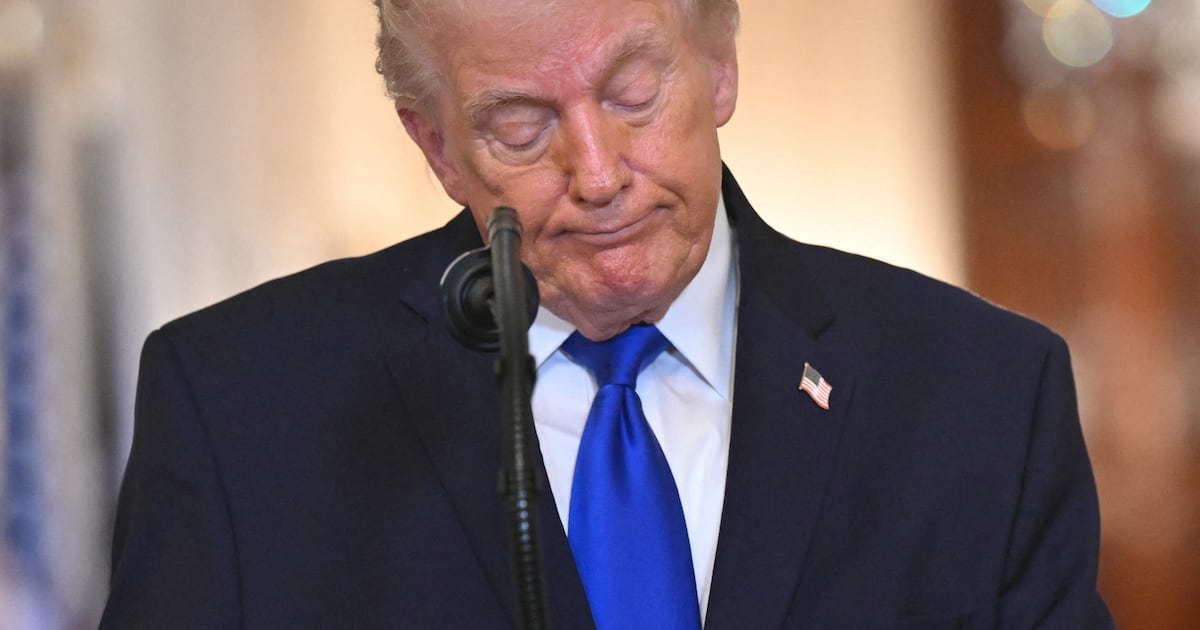
In extraordinary scenes in the White House after the 6-3 ruling, Trump described the judges who voted against him as “lap dogs,” a “disgrace to our nation” and “disloyal to the Constitution”.
“I’m ashamed of certain members of the Court—absolutely ashamed for not having the courage to do what’s right for our country,” he said.
Roberts was one of three conservative justices—alongside Trump appointees Amy Coney Barrett and Neil Gorsuch—who ruled against Trump’s tariffs, undercutting one of his biggest tools to reshape U.S. trade and exert pressure on other countries.
But it was not the only time the president or his MAGA allies have gone after judges for rulings that don’t go in their favor.
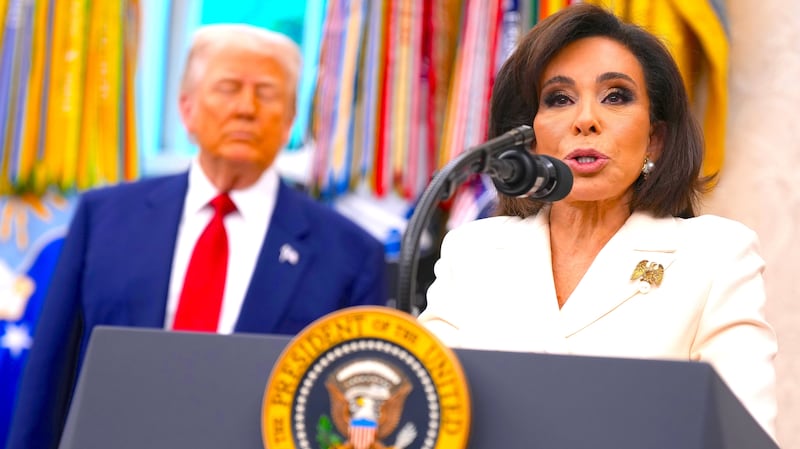
Last week, for instance, U.S. Attorney for the District of Columbia Jeanine Pirro lashed out at a judge over her office’s failed investigation into Federal Reserve Chairman Jerome Powell.
District Court Chief Judge James Boasberg had ruled that Pirro showed signs that she was motivated to launch the investigation due to Trump’s desire to fire the Fed chair to cut interest rates quickly.
Pirro, in turn, called the ruling “outrageous” and “the antithesis of American justice.”

And last year, Trump went so far as to suggest Boasberg should be impeached after he blocked one of his immigration policies.
“I’m just doing what the VOTERS wanted me to do. This judge, like many of the Crooked Judges I am forced to appear before, should be IMPEACHED!!!” Trump wrote at the time.
The tirade prompted a rare public rebuke from Roberts, who said that disagreements with rulings are addressed through appeals, not impeachments.
Speaking at a Baker Institute event on Tuesday, Roberts was asked about his 2024 end-of-year report, in which he wrote that “criticism comes with the territory” for jurists.
“How do you handle criticism of your court?” he was asked on stage.
He replied: “You get used to the criticism right away and it can be very much be healthy. We don’t believe we’re flawless in any way, and it’s important our decisions are subjected to scrutiny—and they are.
“The problem, sometimes, is that the criticism can move from a focus on legal analysis to personalities,” he said.
“And you see, from all over, I mean, not just any one political perspective on it, that it’s more directed in a personal way. And that, frankly, can be actually quite dangerous.”