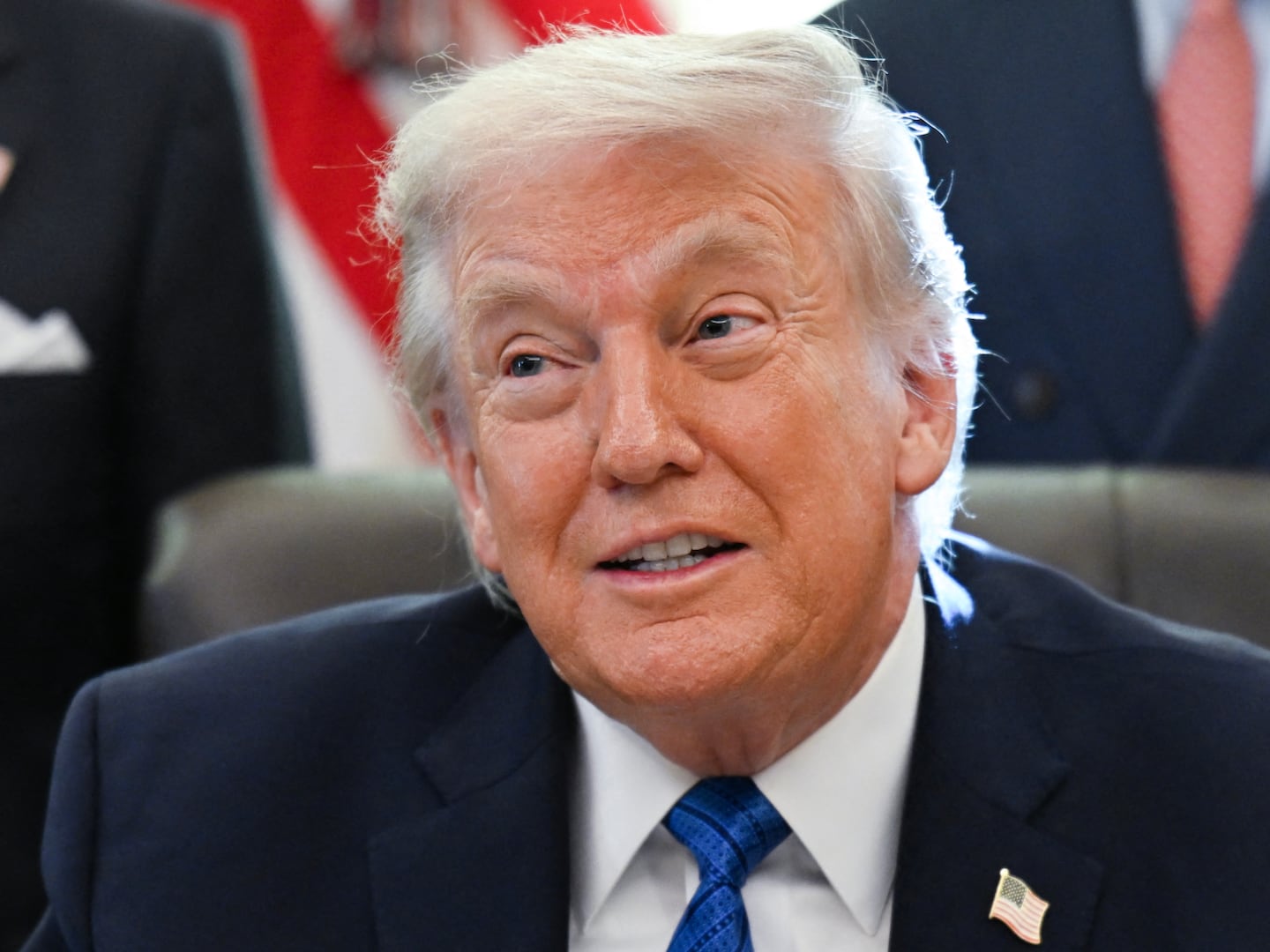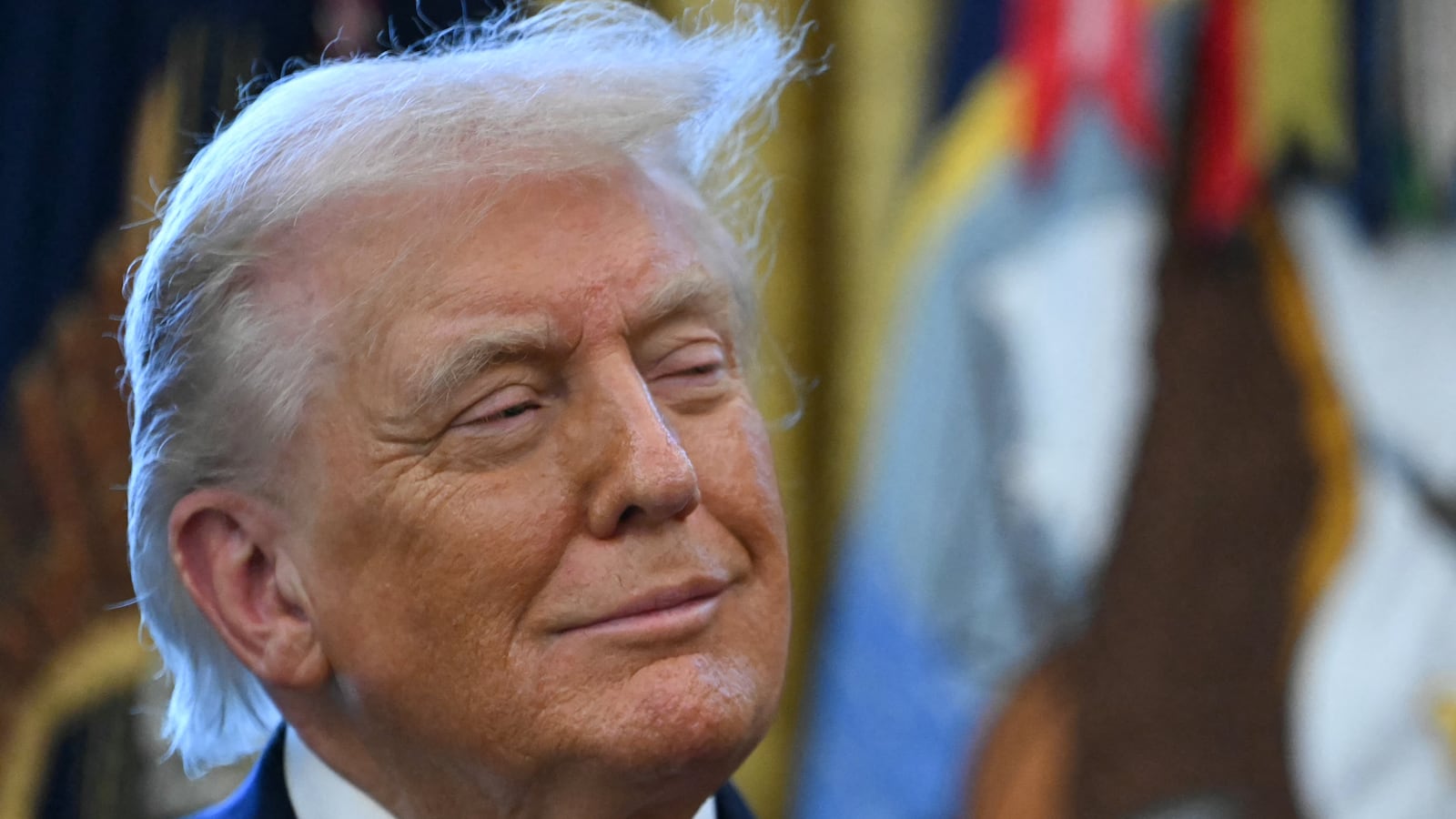
President Donald Trump admitted he judges people by their genes, his chief of staff has revealed in a new account of their years-long political partnership.
Trump, 79, made the remark to Susie Wiles when they first met at Trump Tower in 2015, according to a sprawling two-part profile in Vanity Fair.
Wiles recalled the future president being enthralled that she was the daughter of legendary late NFL kicker and broadcaster Pat Summerall—and then laying out his worldview.
“He’s said it a million times,” she told the magazine. “‘I judge people by their genes.’”
Trump has courted criticism over the years for stating his belief in genetics as a way to judge people, with civil-rights advocates, Jewish leaders, and bioethics scholars warning that Trump’s language and policy echo early 20th-century eugenics rhetoric.
Wiles said of their initial 2015 meeting that she found Trump “interesting and smart” and that she quickly agreed to help him lock down Florida, signing on as co-chair of his Sunshine State leadership team after that Trump Tower encounter. “I had become disenchanted with what we now call traditional Republicans,” she told the outlet.
The anecdote comes from the same Vanity Fair interview in which Wiles described Trump as having “an alcoholic’s personality” and said he operates with a sense that “there’s nothing he can’t do—nothing, zero, nothing.”
She also shared bombshell revelations about the president’s retribution campaign, JD Vance’s conspiracy theory tendencies, and Elon Musk’s alleged ketamine use.
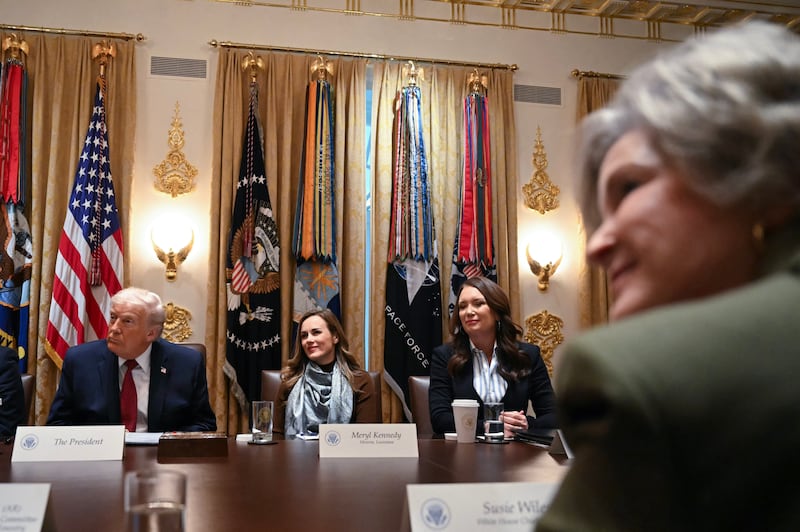
Hours after Wiles’ tell-all was published in Vanity Fair on Tuesday morning, she issued a rare statement on social media trying to walk things back, in what appears to be damage control and a fight for her job.
“Significant context was disregarded and much of what I, and others, said about the team and the President was left out of the story,” she wrote. “I assume, after reading it, that this was done to paint an overwhelmingly chaotic and negative narrative about the President and our team.”
In the article, Wiles likened Trump’s outsized behavior to what she learned growing up with her father’s alcoholism, calling herself “a little bit of an expert in big personalities.”
Vanity Fair’s piece traces how Wiles—described by one former GOP chief as “first with no equals” around Trump—became central to his operation. The partnership almost blew up in the fall of 2016 at Trump’s Miami golf club in Florida, where Wiles says he raged at her for more than an hour over a disappointing Florida poll.
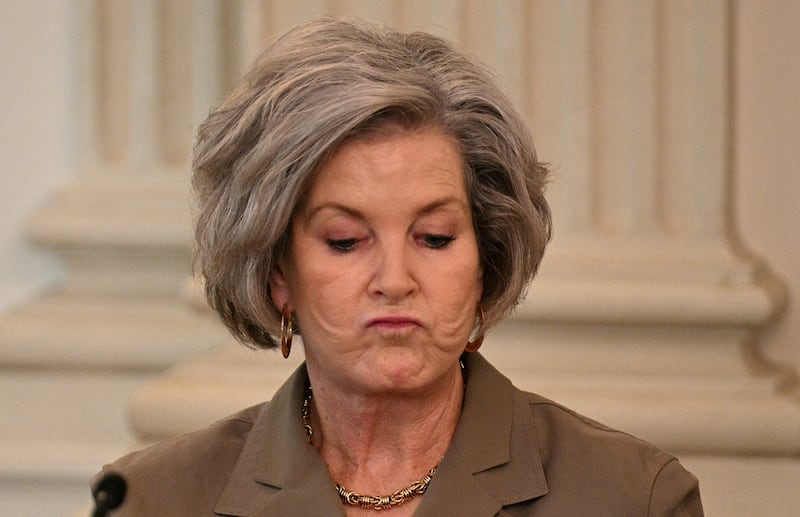
“It was a horrific hour-plus at midnight,” she recalled, saying he was “ranting and raving” as she fought back tears. She finally told him that if he wanted someone to “set their hair on fire,” she wasn’t his choice—but if he wanted to win the state, she was.
After Wiles walked out, she said, he called her every day afterward. Trump carried Florida on his way to defeating Hillary Clinton.
After a stint running Ron DeSantis’ successful 2018 governor race in Florida—an alliance she said soured when DeSantis turned on her—Wiles returned to Trump’s inner sanctum, organizing his 2020 push in Florida and then steering his 2024 campaign.

In the White House, Vice President JD Vance has praised Wiles as a “facilitator” for a president whose impulses she channels rather than constrains, rather than acting as a traditional check on his power, according to Vanity Fair.
Wiles, who now commutes between Washington, D.C., and her home in Ponte Vedra, Florida, told the magazine she does not see herself as an “enabler” and insists history will judge whether she used her influence to good effect.

Her account of Trump judging people by their “genes” adds to a years-long pattern of the president talking about human worth in genetic terms. At a 2016 rally, he said, “I always said that winning is somewhat, maybe, innate. Maybe it’s just something you have; you have the winning gene.”
He went on, “You know I’m proud to have that German blood, there’s no question about it. Great stuff.”
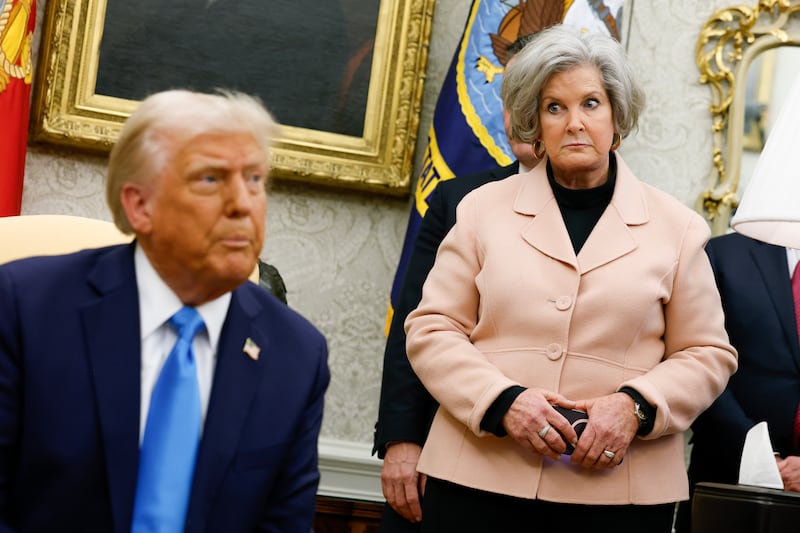
In 2020, while speaking to a predominantly white crowd in Minnesota, Trump told supporters, “You have good genes, you know that, right? A lot of it is about the genes... The racehorse theory.”

Commentators have pointed out that his praise for “racehorse theory” and fixation on bloodlines closely track ideas used to justify racist immigration laws and forced sterilization campaigns.
In a July 2024 conversation with conservative radio host Hugh Hewitt, Trump was asked about violent crime and immigrants. “You know, now a murderer—I believe this: It’s in their genes,” he replied. “And we got a lot of bad genes in our country right now.”
Ethicists at the Hastings Center for Bioethics argued that framing criminality as genetic in this way “has a long and alarming history” tied to pseudoscience and racist policy.
The Daily Beast has reached out to the White House for comment.