Donald Trump claimed he had wiped Iran “off the map” in a social media post, then quickly reversed course, threatening new military strikes just an hour later.
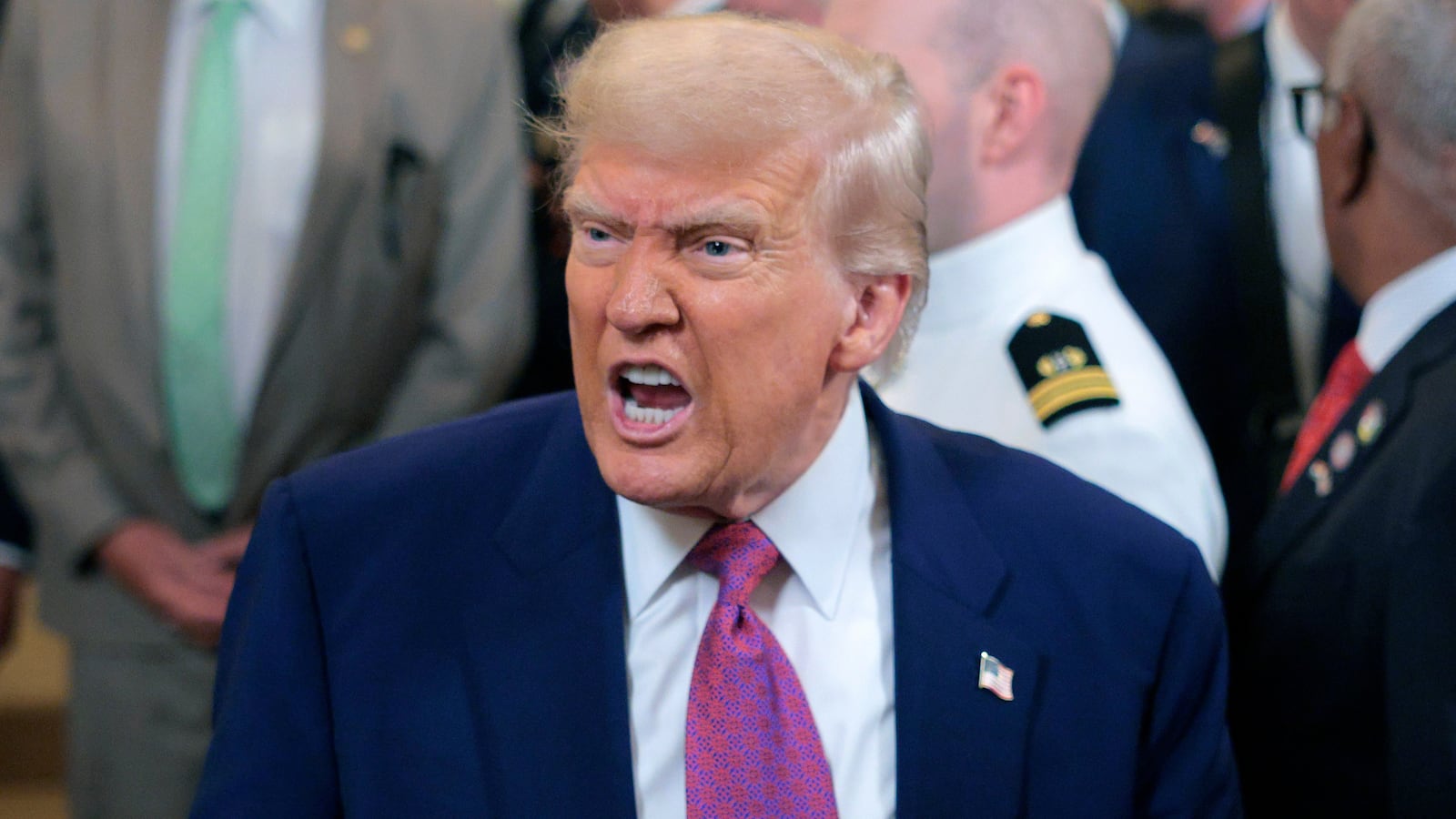
The president first erupted on Truth Social at 6:37 p.m. EST after an analysis by The New York Times questioned whether he was anywhere close to achieving his stated objectives in the military action against Iran.
“Washington has been consumed by the question of when he would call it a day — even if many of his war goals remain unaccomplished," the piece noted.
“There is mounting evidence…that the repercussions of Mr. Trump’s excursion may outlast his interest in it.”

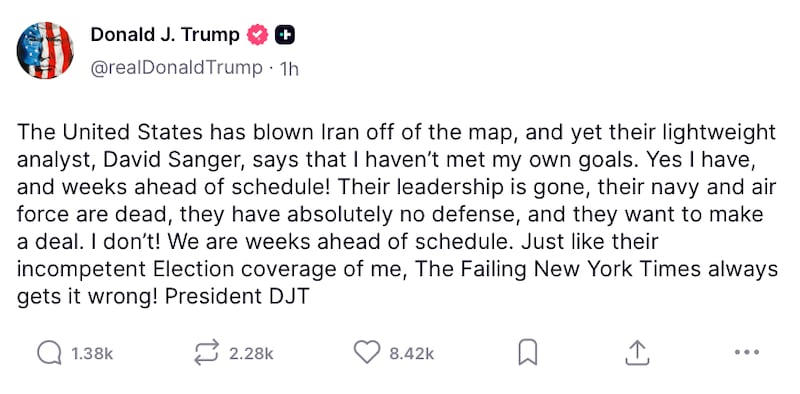
Trump responded with a furious post on Truth Social, insisting the United States had already secured a decisive victory.
“The United States has blown Iran off of the map,” Trump posted, insisting the country’s leadership, navy, and air force were “dead” and that Tehran had “absolutely no defense.”
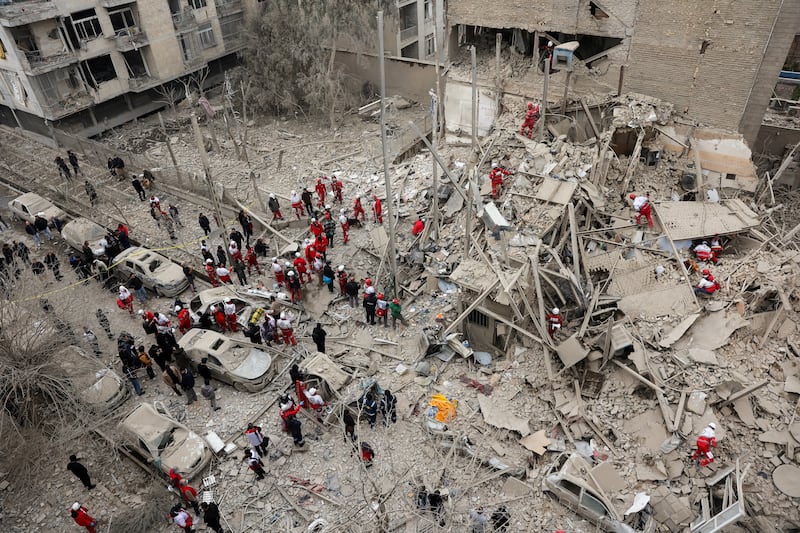
But a little over one hour later, at 7:44 p.m. EST, Trump appeared to undercut his own claims of total victory with a stark ultimatum.
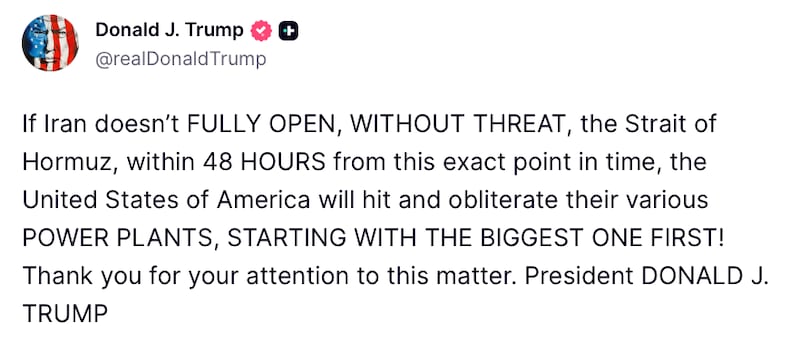
“If Iran doesn’t FULLY OPEN, WITHOUT THREAT, the Strait of Hormuz, within 48 HOURS… the United States… will hit and obliterate their various POWER PLANTS,” he blasted in the second post.
The escalation landed awkwardly alongside his earlier claims of total victory, and also raised legal red flags since targeting civilian infrastructure, like power plants, is considered a war crime under international law.
In recent days, Trump has repeatedly suggested that the U.S. is “very close” to meeting its goals while simultaneously dismissing the idea of a ceasefire, even as thousands more troops are set to be deployed to the region, and strikes continue to escalate.
His definition of victory also continues to shift.
Early demands for Iran’s “unconditional surrender” have faded and been replaced by the far looser goal of keeping Tehran from developing a nuclear weapon—something Trump had already claimed to have achieved last year after U.S. and Israeli strikes on Iran’s key nuclear sites.
“We have completed our very successful attack on the three Nuclear sites in Iran...NOW IS THE TIME FOR PEACE!” he wrote on Truth Social last June.
And yet, nearly a year on, Trump is still threatening new strikes, and redefining what victory looks like in a desperate scramble to find an off-ramp from the escalating conflict.
Trump has begun publicly signalling he may “wind down” operations, according to the Times, but the military action shows few signs of slowing.
Earlier this week, troops were moved to the Middle East amid preparations for a potential ground operation in Iran.

The mixed signals point to competing pressures pulling Trump in opposite directions. On the one hand, he has sought to project total victory. On the other, the ongoing economic and political fallout is becoming harder for the administration to ignore.
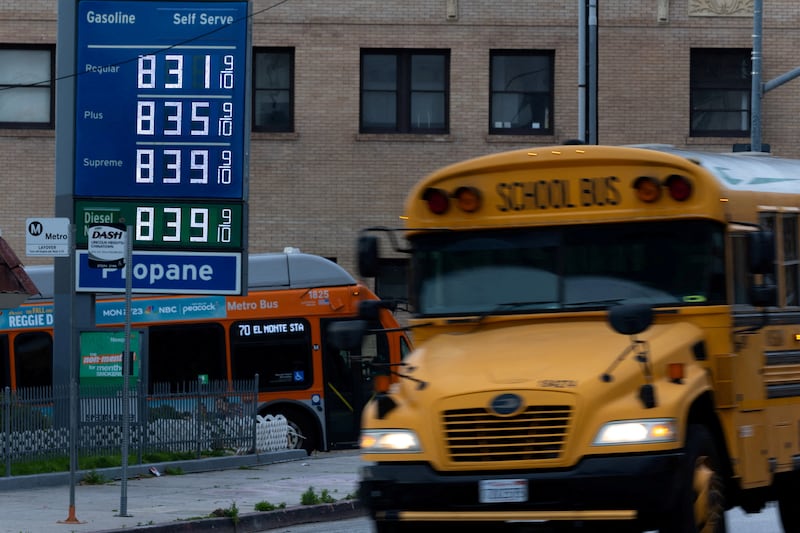
Instability in the Strait of Hormuz, a major shipping lane for global energy supplies, has rattled oil markets and pushed up prices. While U.S. allies, largely sidelined from the conflict, have shown little appetite to step in.
The White House and The New York Times didn’t immediately respond to requests for comment.