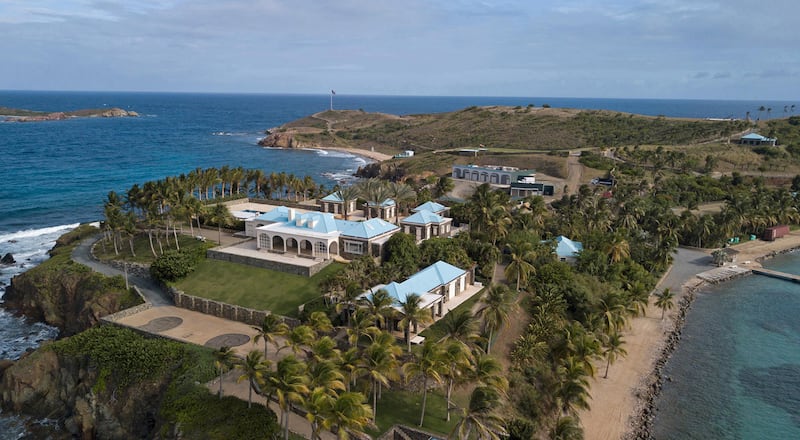
Sex offender Jeffrey Epstein’s notorious “Pedophile Island” was part of the last land purchase struck between the U.S. and Denmark, as President Donald Trump tries to barter a deal for one of the nation’s autonomous constituents.
Little St. James in the U.S. Virgin Islands was bought by the disgraced financier a decade before he was given a sweetheart deal that saw him avoid federal sex trafficking charges in 2008.

The island, two miles off the coast of the larger St. Thomas, has multiple nicknames owing to the horrors alleged to have taken place there. These include: “Pedophile Island, “Isle of Babes,” “Island of Sin,” and “Epstein Island.”
Epstein, through a company of which he was the sole member, paid $7.95 million for the island in 1998, AP reports. He also later bought the nearby Great St. James Island in January 2016 for $17.5 million through another shell corporation.
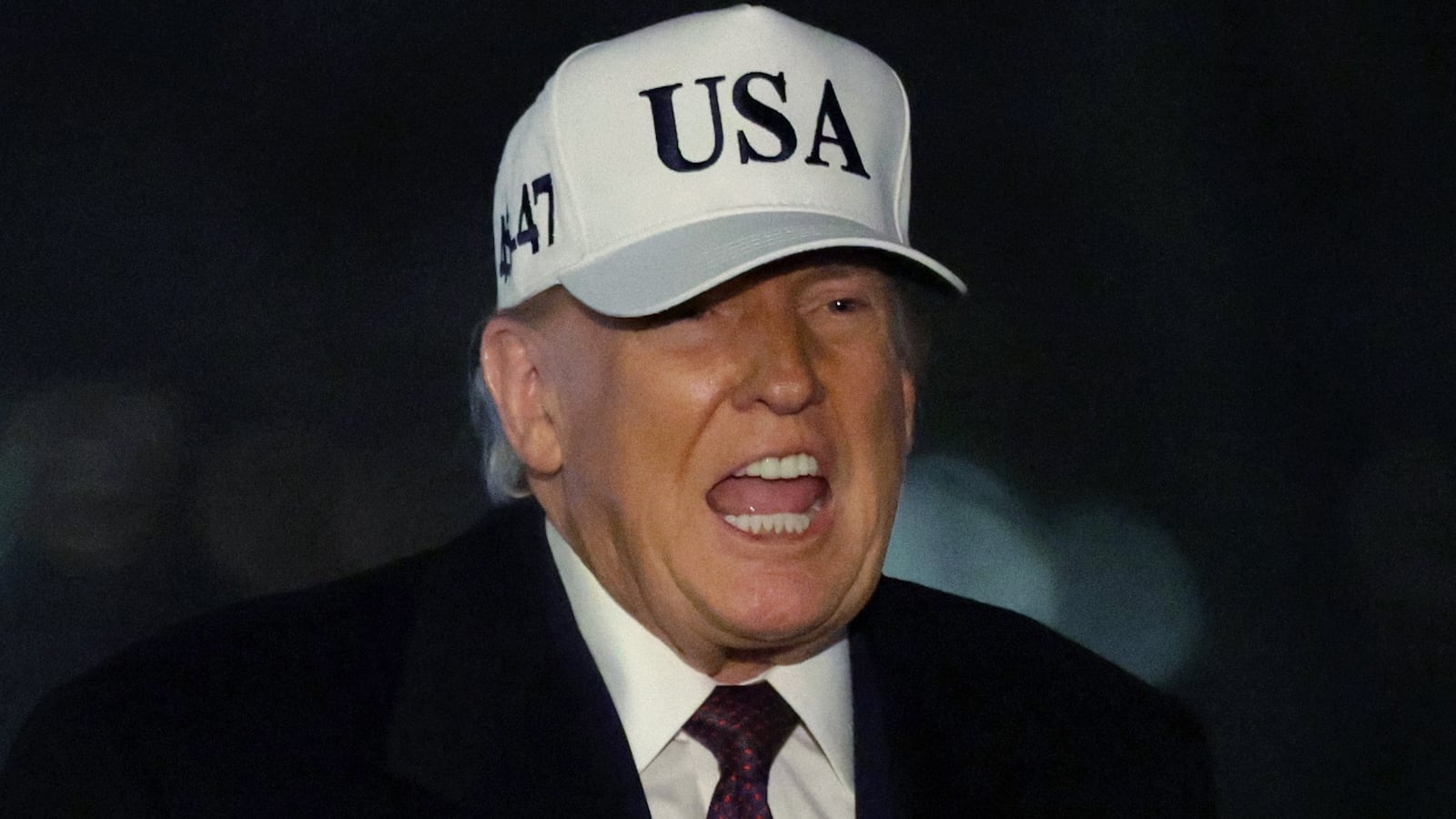
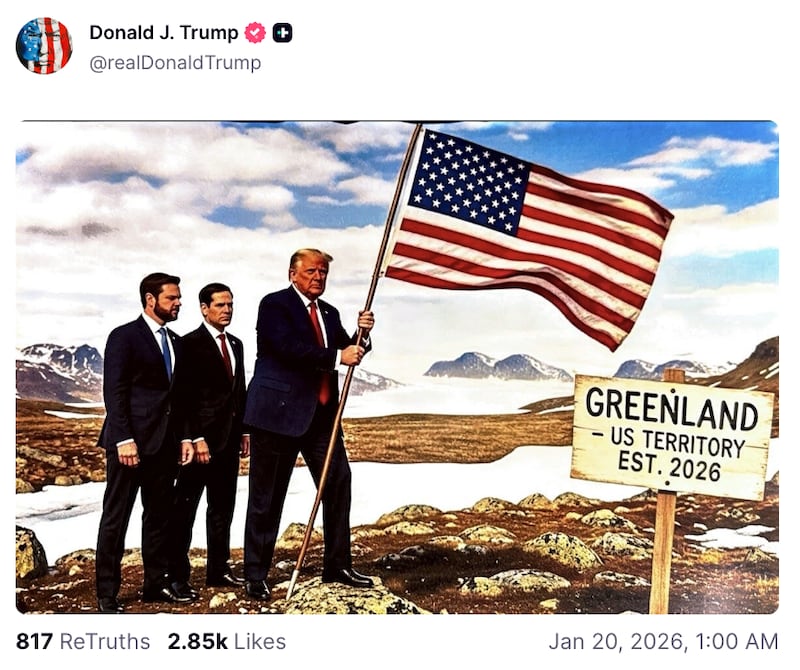
Little St. James was also part of the last sale of land between the U.S. and Denmark, more than 100 years ago. President Donald Trump has publicly declared his willingness to purchase the Arctic island of Greenland from Denmark, not ruling out using the military to force a deal.
The saga bears a striking resemblance to the 1917 deal that saw the United States purchase the Virgin Islands from Denmark.
The president looked at a sparsely populated Danish territory and saw strategic value for the United States. He worried the island could fall into the hands of hostile powers expanding their naval reach. His solution was straightforward: buy it. When Denmark resisted, U.S. officials hinted that refusal could carry consequences, including the possibility of force.
This was not Donald Trump and Greenland. It was President Woodrow Wilson in the early 20th Century.
Trump has said that Greenland is imperative to America’s national security. Woodrow Wilson, the 28th U.S. President, saw the Danish West Indies as strategically important during World War I.
Wilson worried that Germany would steamroll Denmark, who were trying to remain neutral, and take its Caribbean islands. Denmark was hesitant about a deal with the U.S., and when it came around to the idea slightly, it included provisions that rankled Wilson’s administration.
It was implied that if Denmark was unwilling to sell, the United States might occupy the islands to prevent their seizure by Germany. Denmark folded soon after.
The U.S. shipped Denmark $25 million worth of gold coins, and on March 31, 1917, the Danish flag came down, and the U.S. flag went up.
Fast forward 100 years or so, and both islands were sold to a buyer in 2013. Businessman Stephen Deckoff said he hoped to turn them into a luxury resort, according to Bloomberg.
Additionally, both Greenlanders and Danes resent the idea of Trump stretching his so-called “Donroe Doctrine” to their part of the Arctic. Thousands of people in the autonomous Danish territory and in Denmark itself have taken to the streets in protest in recent days, as politicians from both nations, and NATO members, tell Trump to cool on the idea of storming the Arctic and planting the U.S. flag.
“We can negotiate anything,” Danish Prime Minister Mette Frederiksen told the Danish parliament on Tuesday. “But we cannot negotiate our very fundamental values, sovereignty, the identity of our countries and our borders. Our democracy.”