Trump Takes a Blowtorch to International Visitor Numbers
International tourist numbers dropped 4.2 percent in Trump’s first year back in the White House.

Saul Loeb/AFP via Getty Images
International visitors are ditching the U.S. in favor of other destinations during President Trump’s divisive second term.
Numbers were down some 4.2 percent in 2025, the first annual decline since the Covid-19 pandemic decimated international travel, International Trade Administration figures showed. The U.S. Travel Association said there has been a decline of about 11 million international tourists, the equivalent of $50 billion in lost spending.

To add insult to injury, the rest of the world continues to rally in a post-pandemic era. Global international travel increased 4 percent in the same 12-month period, according to the U.N.’s tourism agency.
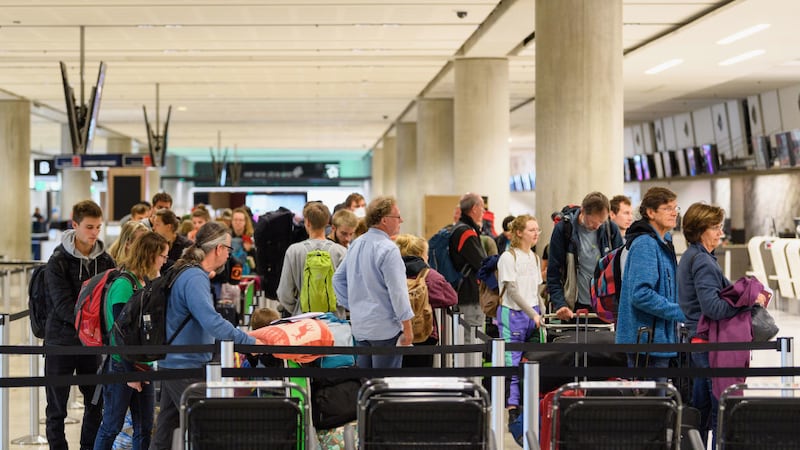
Tourists are opting for other destinations.
Kai Schwoerer
“The U.S. is the only major destination in the world that is tracking a decline in international visitor spending,” said Erik Hansen, a senior vice president at the U.S. Travel Association.
“It’s a tremendous impact,” he added. “Even a single percentage point that we lose means billions of dollars, it means hundreds of thousands of jobs.”
Sign Up for The Swamp Newsletter
By clicking “SUBSCRIBE” you agree to our Terms of Use and Privacy Policy.
The Trump administration has made it markedly more difficult to enter the U.S., while the president’s policies have also arguably made it an unattractive prospect. The deadly ICE crackdown in Minnesota continues to attract negative headlines globally, as does Trump’s lusting after Greenland.
The White House has blocked entry to visitors from more than a dozen countries, citing national security concerns. It has also suspended visa issuance to a whopping 75 countries.

U.S. Customs and Border Protection, the agency which oversees Trump’s immigration task-force ICE, has also worried potential visitors by requesting access to personal data. The agency admitted that border searches of phones and personal computers were up 18 percent in the 2025 fiscal year. In June last year, Norwegian tourist Mads Mikkelsen, 21, claimed he was pressured into granting access to his phone at Newark Airport.
Agents then uncovered a popular meme of Vice President JD Vance that saw the young man denied entry, he claimed. “It felt like I was a terrorist suspect where I was sitting,” he said. “I tried to pull myself together several times, but in the end, I just wanted to get home again.”

There have also been multiple instances of Western tourists running into issues upon entering the U.S. since Trump returned to office in January last year. An American citizen and her German fiancé were detained near San Diego last February when they tried to re-enter the United States after visiting Mexico.
A Welsh backpacker was also held for nearly three weeks at a U.S.–Canada land crossing last spring, and another German was detained for a month and a half, including eight days in solitary confinement, under suspicion of intent to work. None of the tourists involved in those incidents was charged with a crime.

Republican voters lamented the heavy-handed approach of ICE.
Charly Triballeau/AFP via Getty Images
This, and Trump’s bullish rhetoric and behavior towards traditional allies, has also dissuaded visitors. Adam Sacks, president of Tourism Economics, wrote in a report on 2025 travel trends that the country “is losing market share as links between travel and trade weaken and perceptions of reduced openness deter visitors.”

Canada, a frequent target of Trump’s ire, is a good example. Its people, one of the main tourist groups for the U.S., have started looking elsewhere for trips, to the tune of 10.2 percent less compared with 2024, according to ITA data.
The number of visitors from Europe and the Middle East declined, too, by 3.1 percent and 3 percent, respectively, according to ITA data.
Experts hope the soccer World Cup this summer can rally numbers and fix the country’s reputation. “We’ve got a lot at stake,” the U.S. Travel Association’s Hansen said.
See more of our coverage in your search results.

Got a tip? Send it to The Daily Beast here.
Register below to read this article for free or subscribe
to unlock unlimited access to The Daily Beast.
Monthly
$1
First month then $5.99/month
Annual
$35
First year then $59.99/year
Premium
$79
First year then $119.99/year
*Substack access provided by the next business day, using your subscription email. Choosing the Premium plan constitutes your permission to share your subscription email with Substack and your agreement to Substack’s Privacy Policy.
Already have an account? Sign In
Looks like you already have a subscription!
You're all set!
Thanks for subscribing.
Sign in or create an account
Login dialog
Loading comments…