

Medical professionals are warning of the “red flags” that show President Donald Trump is not the man who should have the nuclear codes.
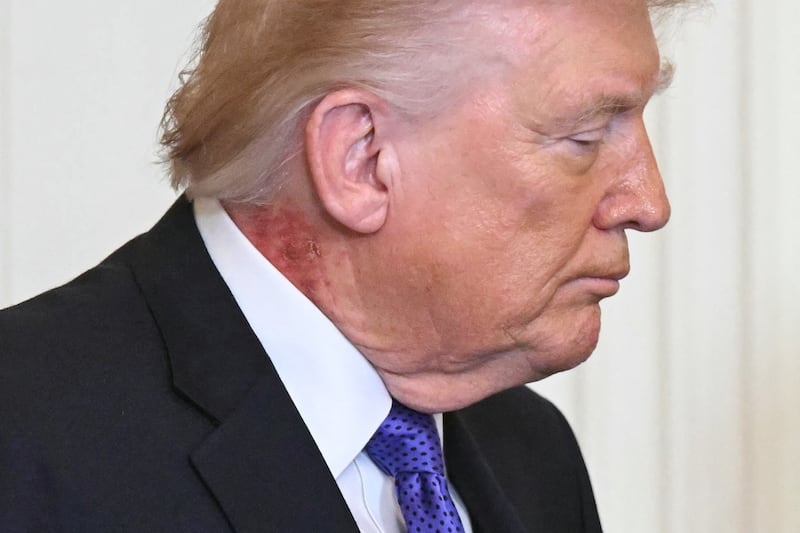
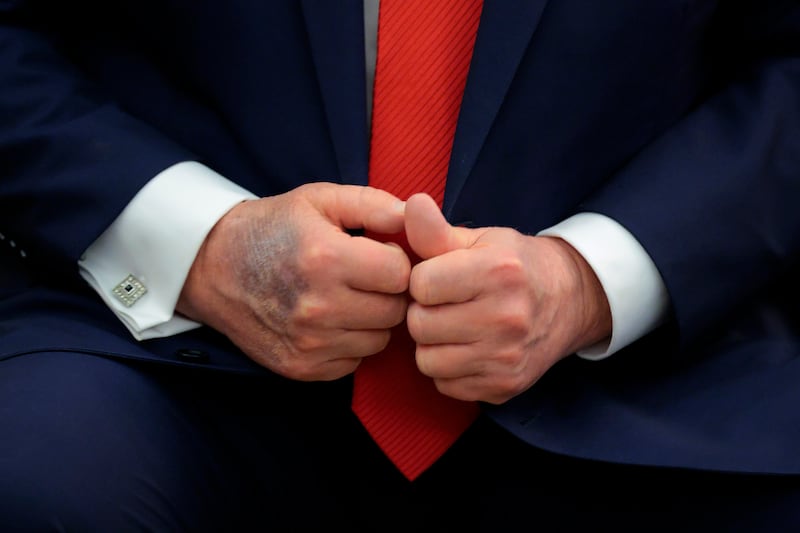
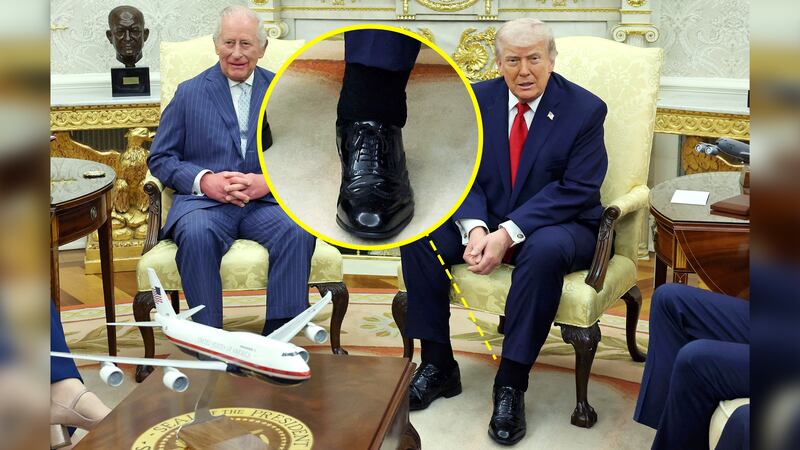
Over the past year, photographs of Trump’s bruised hands, swollen ankles, and a rash on his neck have fueled public speculation about his health. But several prominent physicians say the more troubling indicators are behavioral, not dermatological.

“It’s not that he’s 80, but let’s not ignore the red flags on the field,” Dr. Henry Abraham, a Nobel Prize-winning professor of psychiatry emeritus at Tufts University School of Medicine, told The Independent. “There are people in their 80s and 90s who have all their marbles.”
Abraham was careful to stress he has not examined the president and is not offering a diagnosis. What he is offering is alarm.
“If you just look at everything that he’s said and done, and has been observed doing over, really, decades, certain signs and symptoms emerge which are warning flags regarding the conduct of his presidency going forward,” he said. “Poor impulse control, poor control over his rage, sleeplessness at night, unrelenting aggression toward his perceived enemies. Well, put all that together and give him the nuclear football, and you can see why we’re worried.”
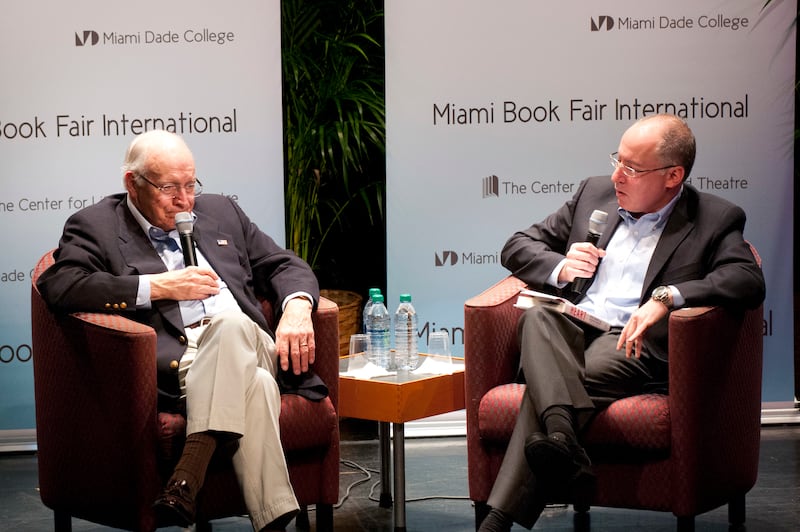
The White House did not address questions about the president’s health. Instead, spokesman Davis Ingle recycled a statement he had previously given to the Daily Beast about Dr. Jonathan Reiner, who was Vice President Dick Cheney’s cardiologist and is critical of Trump’s fitness for office.
“If it quacks like a duck, it may actually just be a Democrat hack doctor,” Ingle said. “President Trump is the sharpest, most accessible, and energetic president in American history and any so-called medical professionals engaging in armchair diagnosis or false speculation for political purposes are clearly breaking the Hippocratic Oath they’ve sworn to.”
Trump was examined by 22 specialists at Walter Reed National Military Medical Center in Bethesda, Maryland, last month for his annual check-up and declared the results “perfect.”
Dr. Rosanne Leipzig, professor emerita of geriatrics and palliative medicine at the Icahn School of Medicine at Mount Sinai—who also stressed she has not examined the president—was not entirely reassured. “His medical evaluation is a somewhat superficial way of looking at whether he is competent to hold an office,” she told The Independent.
“I think it’s pretty clear from the test that they did that physically he appears to be—if you believe everything that’s in here—in reasonable shape,” Leipzig said. “The stuff that I most worry about here is the mental status exam.”
Trump has also claimed to have aced cognitive testing. In May, he said he had taken the Montreal Cognitive Assessment three times and “aced each one,” claiming a doctor told him it was the first time they had seen a perfect score.
The president walked listeners through the early questions with characteristic confidence. “The first question is very easy,” he said. “You have a lion, a bear, an alligator, and a, what’s another good...? A squirrel. Which is the squirrel?” He then insisted that the test gets considerably harder. “By the time you get to the middle, they’re very tough.”
The test’s creator, Canadian neurologist Ziad Nasreddine, pushed back on the bragging. “It wasn’t designed to be a test of IQ,” Nasreddine said. “It was designed to assess normal cognitive performance.”
Leipzig and Abraham were among 36 medical professionals who signed a letter last month warning that, in their opinion, Trump was “increasingly a danger to the public.”
Abraham says he wants to see the full picture. “The 22 doctors who examined this man, where are they? What have they found? What did they say?” he said. “Who gets three or four [assessments] in 18 months? That’s clinically not indicated. We should follow it up with much more careful, exhaustive neuropsychological evaluations, and if they’ve been done, great. Let the horse out of the barn, and let’s see what color the horse is.”

Leipzig agreed. “If you’re really concerned about cognition, you need a more in-depth set of tests,” she told The Independent, noting that a thorough assessment would also capture a patient’s appearance, behavior, eye contact, posture, speech, and mood—details she said the official medical memo largely glossed over.
Abraham pointed to another concern. Looking back at footage of Trump from three decades ago, he said he was using sophisticated language and multisyllabic words. “None of that is present now,” he said.
He also flagged what he described as potential confabulation—the unintentional creation of false memories—during Trump’s long, meandering speeches. “Is the president delusional, or is he confabulating?” Abraham said. “I can’t answer that question, but I do know that it’s a red flag.”
The president’s sleep habits drew scrutiny from both doctors. Leipzig noted that while sleep patterns do change with age, staying up into the early hours posting on social media is not typical for an 80-year-old.
“People are not usually up all night and falling asleep during the day in important meetings where people are looking at them,” she said. The recommended sleep time for a man of Trump’s age is seven to eight hours per night.
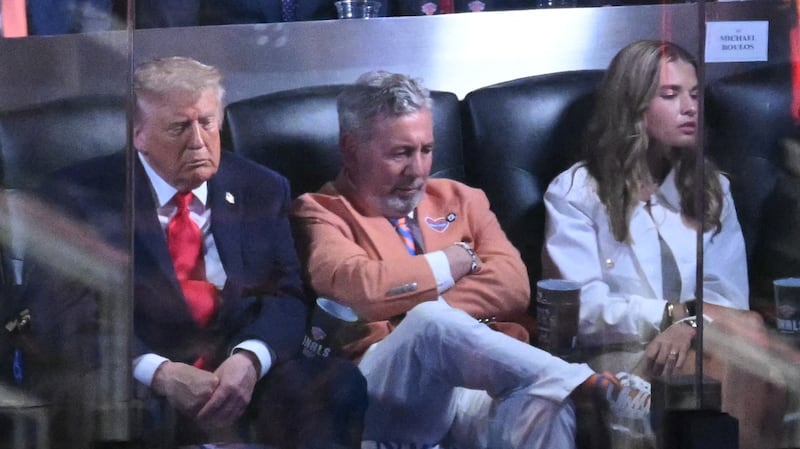
Abraham, however, called the lack of sleep “understandable” given the demands of the job—before adding his own concern. “The first question that comes to my mind, besides the fact that he’s normally aging and maybe being up at night physiologically, is does he have a sleep disorder? Does he have sleep apnea?”
Above all, Abraham said what concerns him most is what he described, borrowing from playwright Tom Stoppard, as “a degree of self-absorption that would have glazed over the eyes of Narcissus.” He added, “‘I can do anything I want,’ he said. Well, that includes starting a nuclear war.”
When Trump was asked Wednesday what he would like for his 80th birthday, he paused before answering. “Peace for the world, OK? Peace for the world,” he said—the same day he threatened to “bomb the s--t” out of Iran.


