Vladimir Putin’s military holiday was overshadowed by grim battlefield news: Russian forces had suffered their deadliest month of the year so far in the war he started.
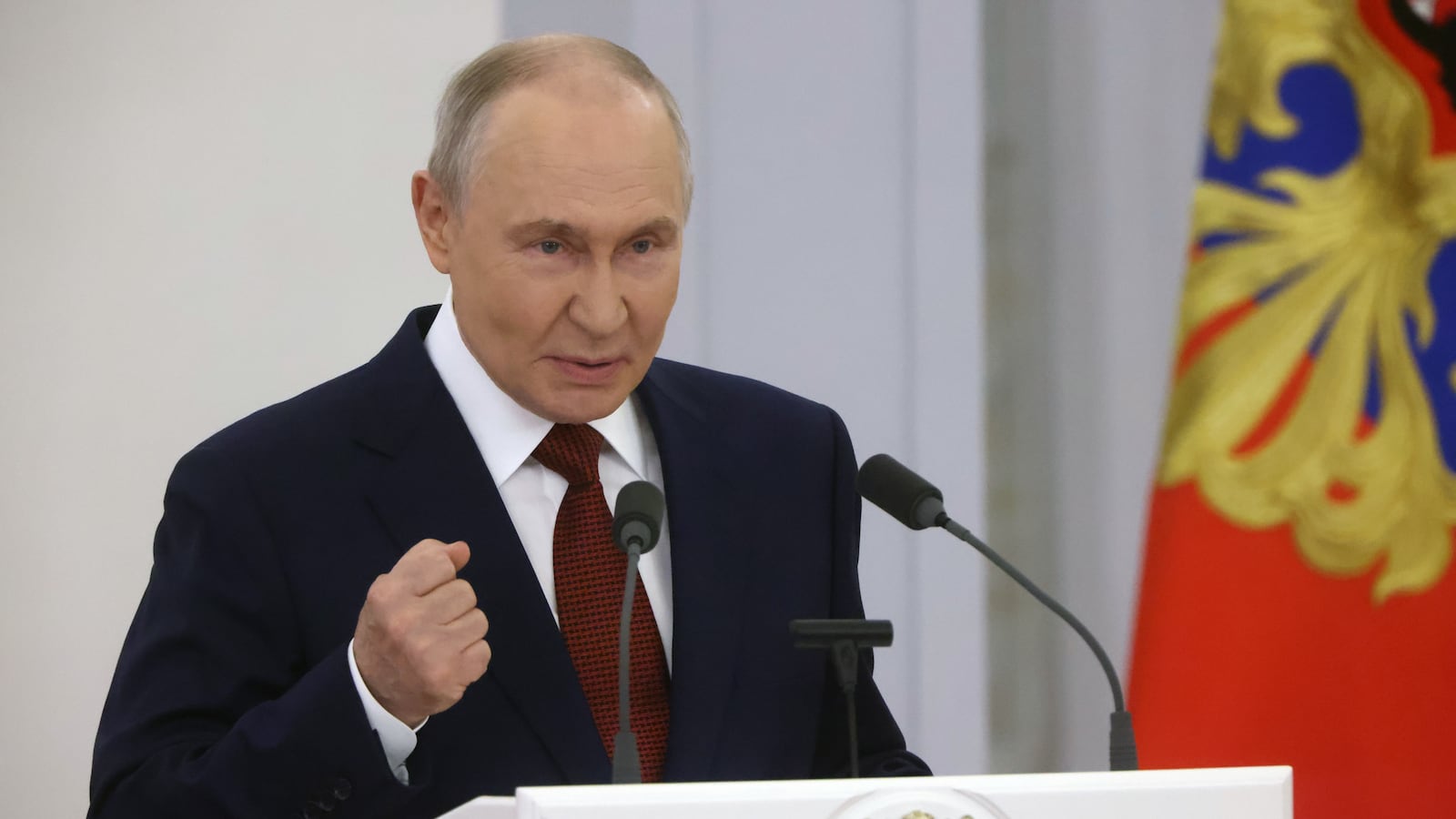
On Sunday, the Russian leader praised current and former Airborne Forces personnel on their professional holiday for their “unwavering resolve,” but the celebrations were overshadowed by mounting casualties and continued Ukrainian strikes that painted a far darker picture than the one Putin, 73, sought to project.
According to the Ukrainian General Staff, Russian forces suffered 42,860 casualties in July alone—the highest monthly toll reported so far this year in the ongoing war.
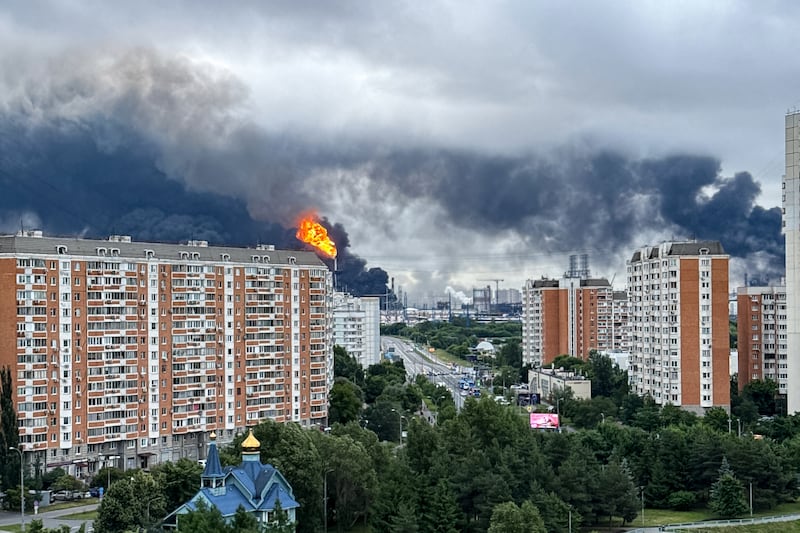
The toll extended beyond the battlefield. On the very day Russia was honoring its airborne troops, Ukrainian drone strikes killed at least eight people across Russian regions, according to Reuters.
And just before the overnight strikes, a bomb blast tore through an upscale restaurant near the Kremlin in Moscow, killing at least three people and wounding more than a dozen in what was officially deemed a terrorist attack. State-controlled media largely played down the attack, and Putin himself has yet to comment on it. But local reports said a top Russian general accused of war crimes in Ukraine was the intended target.

Overnight drone strikes spread further into Russia’s regions, hitting another warehouse belonging to “Russian Amazon,” online retailer Wildberries, which has found itself targeted for selling military supplies and drone parts on its site.
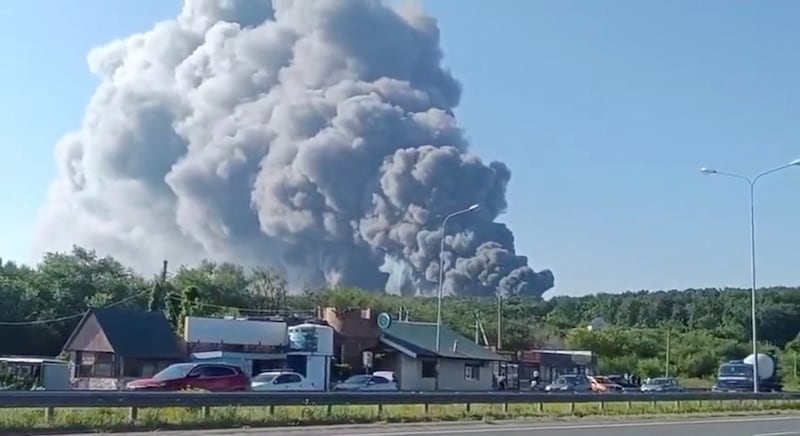
Residents of the Samara region shared videos on social media of the latest damage, a Wildberries warehouse in Novosemeykino that appeared fully engulfed in flames Sunday. Locals were reportedly warned to monitor themselves for signs of illness from the resulting smoke and air pollution.

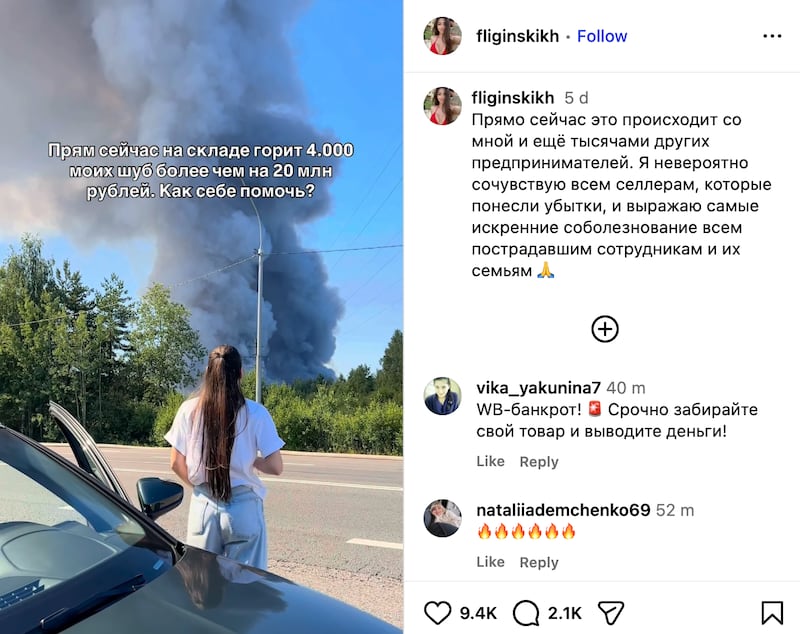
The repeated strikes on Wildberries facilities have continued for weeks, sparking fury among Russians. “We’re already getting screwed over from every direction as it is,” cosmetic brand founder Svetlana Dodo said in an Instagram video, revealing that the attacks had cost her the equivalent of $12,800.
A Financial Times analysis highlighted the growing impact of the punishing months-long Ukrainian drone campaign targeting critical Russian oil infrastructure and logistics hubs, reporting that oil and natural gas production capacity has been hit by 35 to 40 percent, pushing Russia toward its worst energy crisis since the collapse of the Soviet Union.

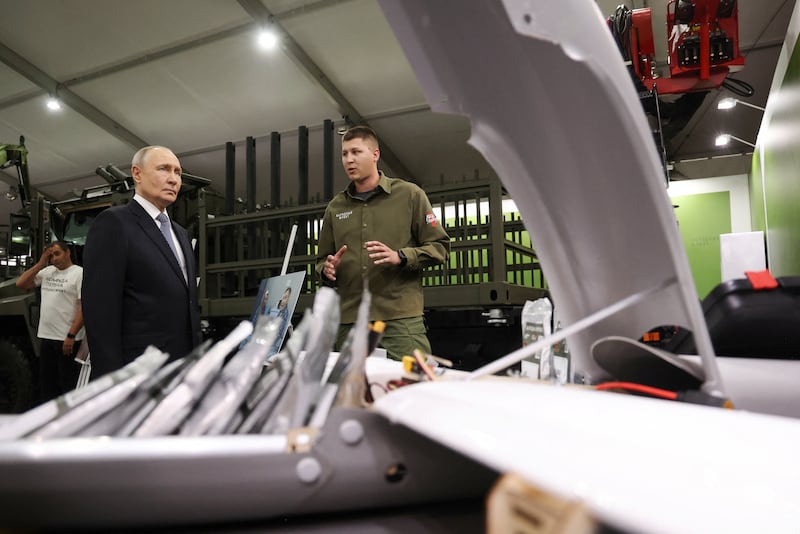
Still, even as frustration grows among some of the war’s staunchest supporters and Ukrainian attacks reach as far as Siberia, Putin has continued to project an image of control, refusing to acknowledge the scale of the losses his military and country are facing—even as Russians witness the destruction unfolding around them.
Instead, the Russian leader has tried to keep the damage out of public view, cracking down on citizens who film the destruction, with some reportedly detained and forced to apologize for simply recording what happened.
As parts of his country burn and Russians pay the price of the war, Putin has turned his attention to the threat he appears to fear most, which is betrayal from within. The Russian leader has grown increasingly paranoid that members of his own inner circle could be plotting against him.
Abbas Gallyamov, a former Putin speechwriter turned critic, said the Kremlin went into a tailspin after Putin canceled Russia’s Navy Day parade last week over fears of Ukrainian strikes—a decision that reportedly angered the public.

The parade, which was expected to feature 200 warships on the Neva River in St. Petersburg, was replaced by an awkward televised meeting with Navy personnel, fueling frustration inside the Kremlin. Putin then allegedly began searching for a scapegoat after former FSB director Nikolai Patrushev, one of his closest advisers, convinced him that liberal figures who had infiltrated his inner circle were to blame.
Meanwhile, Russians are facing problems beyond Ukrainian drone strikes and the war their leader launched. Residents of the Siberian city of Tyumen told independent outlet Meduza this week that they were being ignored as their city faced an “apocalypse” of polluted water, with residents falling ill and too afraid to bathe, shower, or wash food.
“All the financing is going towards those three famous letters,” one resident told the outlet, referring to the Kremlin’s term for the war in Ukraine: the SVO, or “special military operation.”