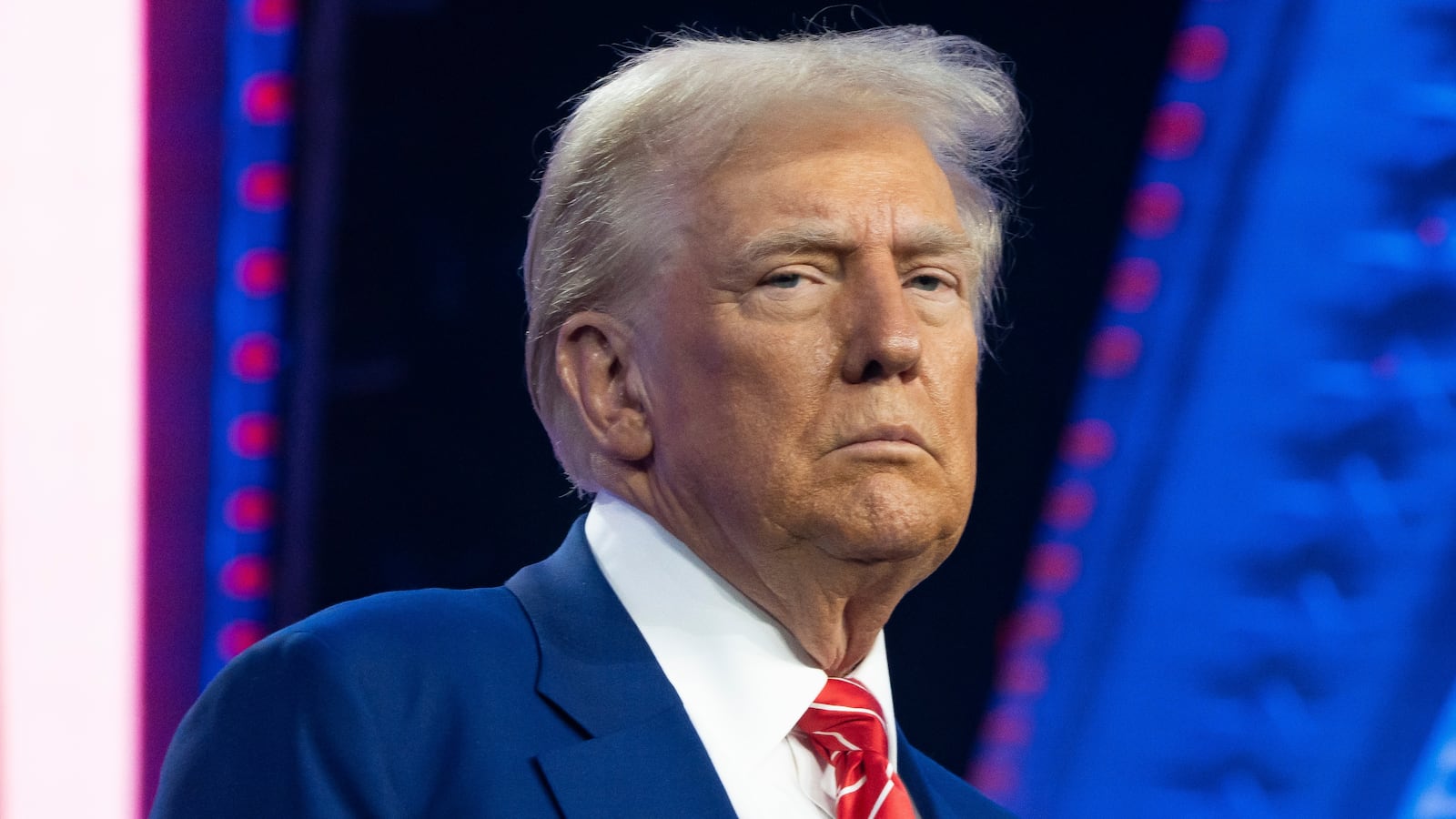
President Donald Trump’s latest scam against the American taxpayer is brazen even by his usual, shameless standards.

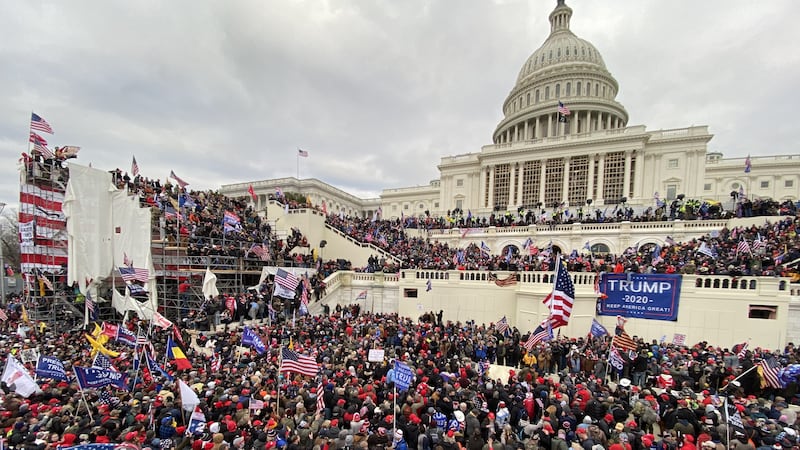
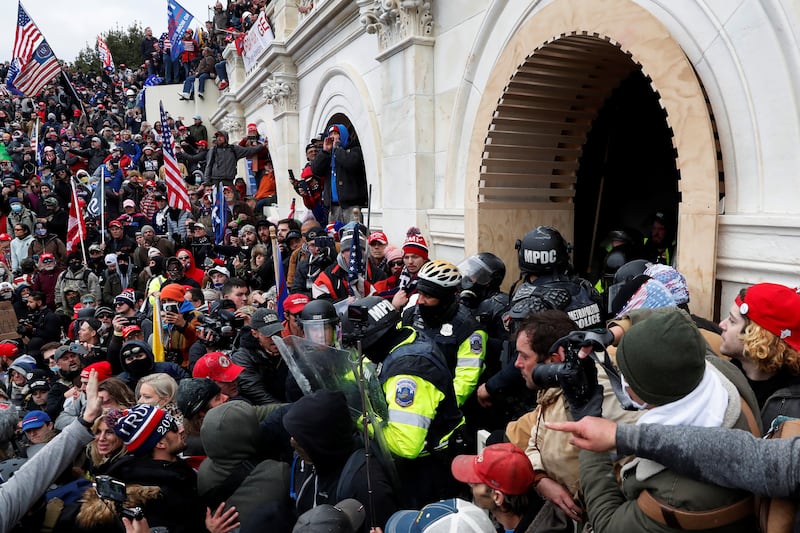
The president’s Department of Justice this week announced a $1.776 billion fund that will make secret payments to Jan. 6 defendants and other Trump allies who say they were wrongly prosecuted by the Biden administration, without any legal or congressional oversight.
That fact alone is so blatantly corrupt that it almost seems like things can’t get any worse, and yet, scratching the surface reveals yet another layer of grift.
It turns out that both Trump and the DOJ—led by his former personal attorney Todd Blanche—are working hard to surround the fund with a bogus aura of legal legitimacy that obscures its inherent lawlessness.
The fund was created by a supposed “settlement agreement” resulting from a $10 billion lawsuit brought this year by Trump against the Internal Revenue Service over tax returns that were leaked to the press by an independent contractor.
The DOJ has also compared the fund to legal settlements reached during the Obama administration.
But this $1.8 billion slush fund was not a court-approved settlement. In fact, it didn’t even arise from a court-sanctioned lawsuit.
Given that Trump oversees the IRS, the judge in the case, Kathleen Williams, had expressed doubts that the suit addressed a genuine case or controversy involving actual adversaries.
She ordered both sides to submit briefs by May 20 laying out the legal arguments for why they were really on opposing sides, and scheduled a May 27 hearing on the issue of whether the case involved a genuine conflict.
Rather than respond to the judge’s inquires and face the very real prospect of the case being thrown out, Trump withdrew the suit under a rule of federal procedure that is self-executing, meaning it doesn’t require judicial approval.
In her order dismissing the case, Williams made a point of writing that Trump’s notice of withdrawal did not “reference any settlement or include a stipulation of settlement.”
“There is no settlement of record,” she wrote.
She also noted that the DOJ—which has an obligation to “uphold the ‘public’s strong interest in knowing about the conduct of its Government’ … and the ‘fair administration of justice’”—had not submitted any settlement documents or filed any documents “ensuring that settlement was appropriate where there was an outstanding question as to whether an actual case or controversy existed.”
Blanche has nevertheless tried to cloak the so-called “anti-weaponization fund” in legal language.
The “settlement agreement” describes the fund as the “sole and complete relief for allegations” in Trump’s Jan. 29 suit against the IRS, with Trump agreeing to “release, waive, acquit, and forever discharge” the IRS of its alleged wrongdoing.
That’s ironic considering a memo leaked to The New York Times revealed the that IRS’s lawyers believed they had provided the DOJ with enough ammunition to successfully move to dismiss the suit if it was allowed to proceed.
The “settlement agreement” really just amounts to the president promising not to bring any more meritless claims in a case that a judge hadn’t even ruled could continue.
In exchange, according to the terms of the fund, Blanche will be responsible for appointing a five-member commission that will decide unilaterally whose claims get paid out.
The recipients will remain anonymous, along with the amounts they receive, and Trump can personally remove any of the commission’s members for any reason he feels like.
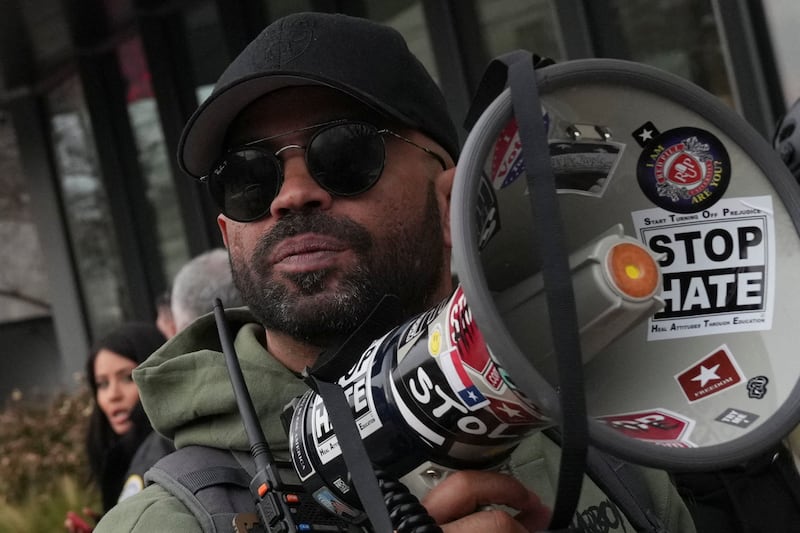
Not surprisingly, violent felons who stormed the Capitol on Jan. 6, 2021, are already lining up to demand millions of dollars from the fund.
The DOJ wrote in a press release that the fund follows a legal precedent established in Keepseagle v. Vilsack, a class-action lawsuit brought by Native American farmers alleging discrimination on the part of Barack Obama’s Department of Agriculture.
The case resulted in a landmark $760 million settlement that included the creation of a private fund to provide grants to Native American farmers.
It’s an absurd comparison considering Keepseagle was a valid case with a settlement that was approved by a judge—and Obama wasn’t a Native American farmer suing his own government.
But it’s telling that the DOJ is going to such great lengths to pretend the fund is legitimate, as it cites fake legal precedence and describes the agreement as a “settlement.”
In fact, it’s nothing more than a shady backroom political payoff.
Call it a deal, a pact, an arrangement, or even a swindle or a con. But let’s not call it a “settlement.” Doing so risks lending a blatant scam an air of legitimacy that it clearly does not deserve.
Janna Brancolini covers law, politics, and foreign policy for the Daily Beast. She has a law degree from Loyola Marymount University in Los Angeles and was previously awarded a Fulbright fellowship in law.