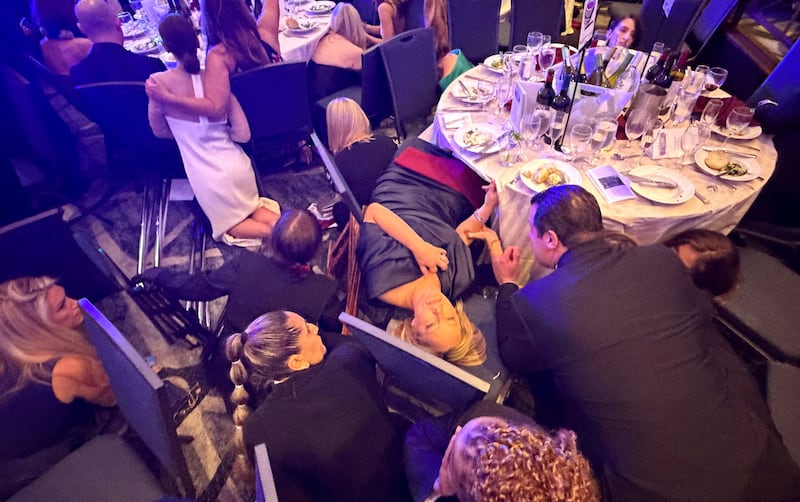
It’s not quite on par with re-opening the Strait of Hormuz, but it’s what people in Washington are talking about: Will the White House Correspondents’ Association dinner be reenacted? And when? You know, the one that was so rudely interrupted by the sound of gunshots this past weekend, forcing the curtailment of a mentalist’s act (who could have known!?) and the evacuation of the guest of honor while celebrants of the First Amendment dove for cover under tables.
Watching the mayhem from the safety of my living room couch, and knowing little of what was happening, I cheered at the initial announcement that the program would resume shortly. The shooter had been taken down. Everybody was safe.
Now, though, I’m second-guessing my response.
That resumption didn’t happen. The ballroom had become a crime scene, and law enforcement, understandably, wouldn’t approve a return to business as usual. President Trump, back at the White House in an unusually magnanimous mood, told reporters he’d like to reschedule it within the next thirty days.
I don’t think there’s much appetite for that. If things had restarted that same evening, it would have been like letting congressional proceedings on January 6, 2021 go forward after the insurrection—a brave statement. But a deja vu-style dinner with men in tuxes and women in ballgowns hailing press freedoms with a president who calls the media “enemy of the people” strikes me more as the band playing on aboard the sinking Titanic. And to be clear, Trump views journalists as steerage class, at best.

Trump has many reasons—valid from his perspective, if you will—to hate the press. One night of toasting the First Amendment and pretending it’s kumbaya is not going to change his trajectory.
That seismic contrast between the WHCA and Trump’s attacks on press freedoms is now again emboldened. CBS News correspondent Norah O’Donnell read aloud from the alleged shooter’s writings during an interview with the president on Sunday night’s “60 Minutes.” The “manifesto” describes a particular target as “a pedophile, rapist and terrorist,” prompting a furious Trump to say, “I am not a rapist. I never raped anybody.”
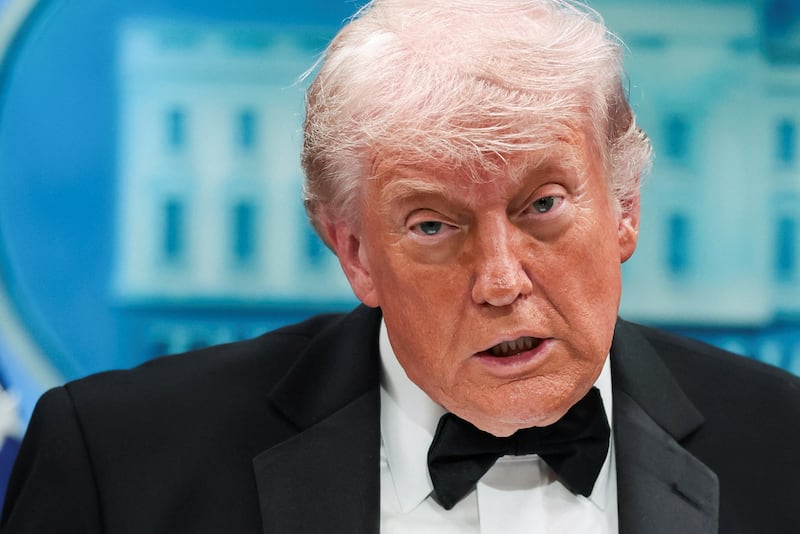
He then unloaded on O’Donnell, calling her a horrible person. “You read that crap from some sick person? I got associated with all stuff that has nothing to do with me. I was totally exonerated,” Trump ranted, perhaps referring to his indictment for sexual assault in New York, which he continues to maintain was wrongly decided by a jury. Or maybe to the “Epstein files,” where there is evidence of underage girls being trafficked.
Clearly, the White House is in no mood to take a joke. After the late-night talk show host Jimmy Kimmel said last week that Melania has “the glow of an expectant widow,” both Trumps called on ABC once again to fire him. “People like Kimmel shouldn’t be allowed to enter our homes each evening to spread hate,” the First Lady posted on social media.

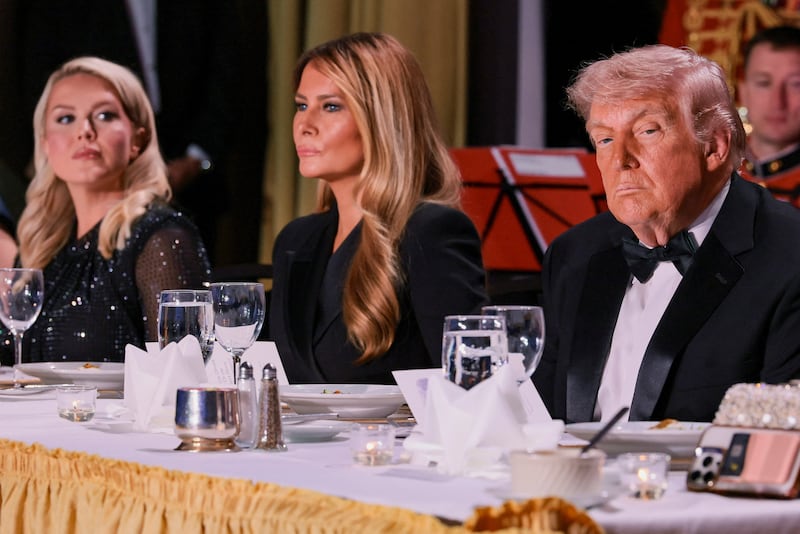
The WHCD’s schedule had already been adjusted to ensure Trump’s comfort. Instead of speaking last, as is the custom, he was up first with remarks aides said would run an hour long, more than twice what is customary. And certainly what is palatable. The awards to journalists would follow, allowing Trump the opportunity to duck out early if he chose, rather than shake the hand of the Wall Street Journal reporter who broke the story about Trump’s risque signature on a birthday wish to Jeffrey Epstein.
The event has been controversial for years, raising uncomfortable questions about the unseemly chumminess of reporters with the officials they cover. It has also evolved from a “nerd prom” to Washington’s version of the Oscars, with all the glitz and glamour that makes regular people outside the Beltway question who exactly our government and our media represent.
I have attended many of these dinners in the past, though not in recent years. They seemed innocent enough, a chance for a reporter to invite a source for a night on the town. It didn’t mean we were best friends, or that I wouldn’t hold said source accountable should that become necessary. But things got out of hand with the competition for A-list guests and red carpet moments, like we were Hollywood on the Potomac. As print media lurched into decline and new digital publications proliferated, I wasn’t bringing valued sources to the dinner anymore. Instead, I was sitting at a table with advertisers, there to sell them on buying ads in Newsweek. There are the suits, the media executives, corporate sponsors, and funders.
For a few brief hours after the gunshots rang out at the Hilton Hotel, there was a sense that the president and the reporters who cover him had a mutual interest in safety, democracy, and in upholding the principle of a free and independent press. But that party was over before it really began, and just as the musicians kept performing after the Titanic hit an iceberg, the media keeps dancing to Trump’s tune.