Good for SCOTUS on pushing back against Trump on tariffs, but do they really deserve much credit? And why did it take so long?
The justices took just weeks in 2024 to grant “presumptive” immunity for acts committed as president—surely a much thornier issue—including insurrection and election subversion, clearing the path for Trump to be on the presidential ballot and win a second term. So if the Constitution is so clear that tariffs are a tax, and that Trump’s extortionary leverage thereof is illegal, why the months since oral arguments?
The majority opinion written by Chief Justice John Roberts was a crisp 21 pages, not that complicated or bogged down by legalese. By simply calling a tariff what it is, SCOTUS upended Trump’s economic policy, and lifted (even if temporarily) the burden placed callously on small businesses and giant corporations alike while the president claimed foreign countries were footing the bill.
What happens next, though, is where the good news of a democracy’s “checks and balances” can go bad.
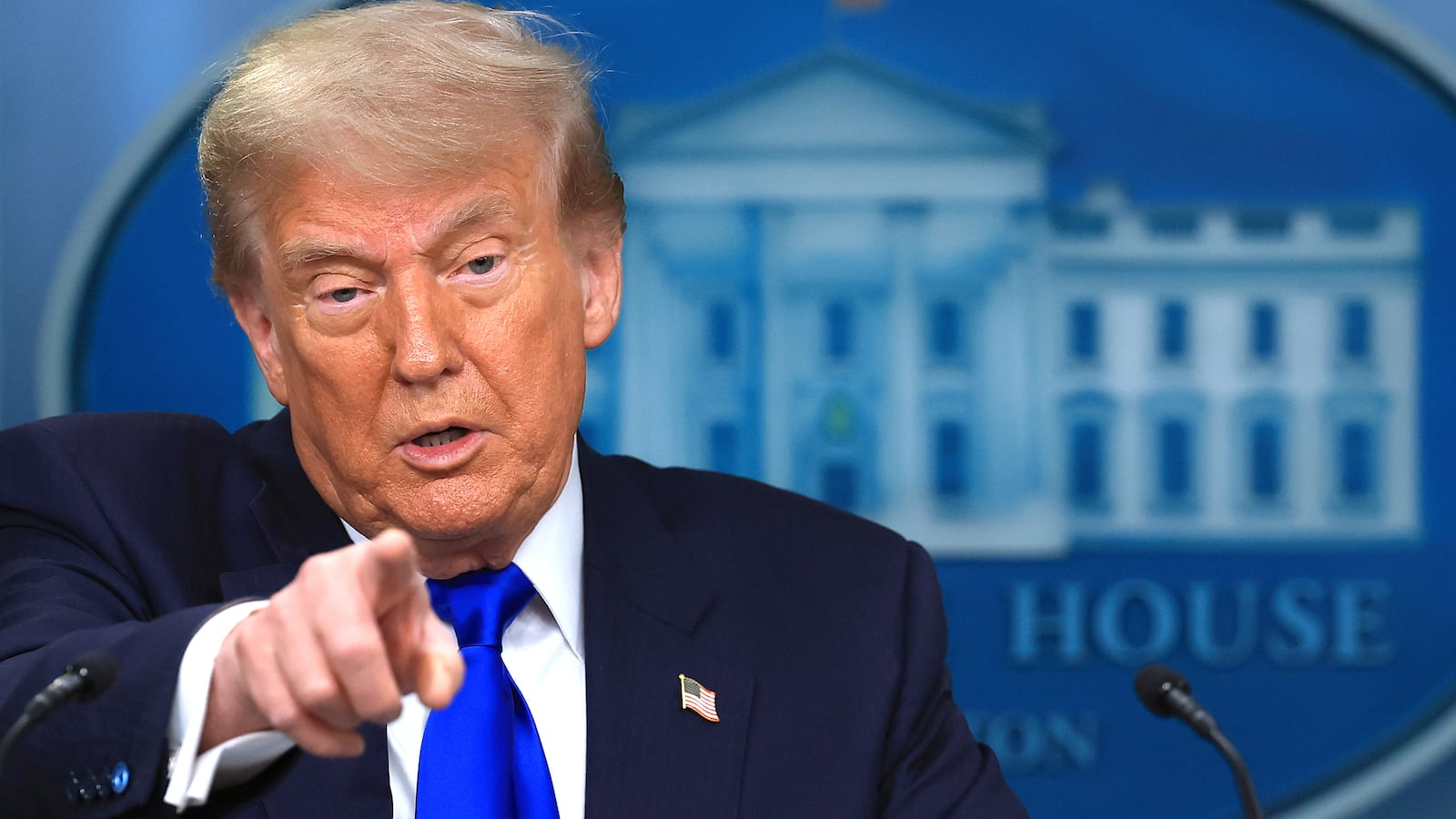
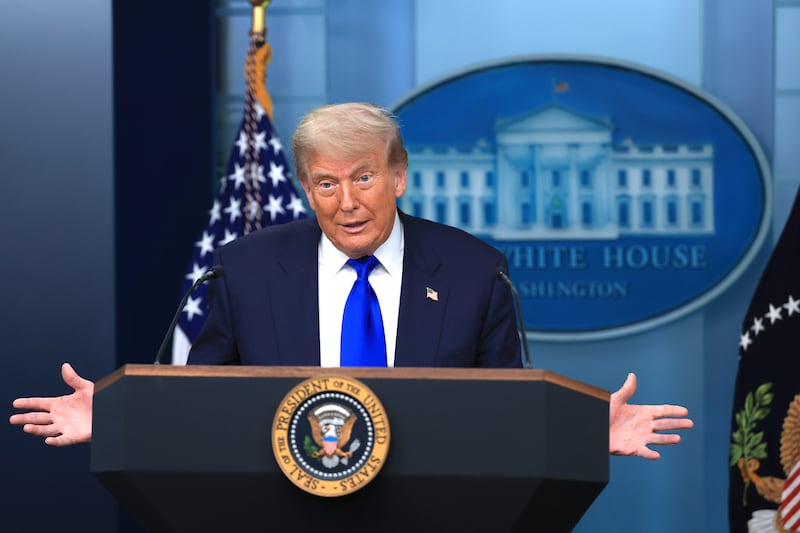
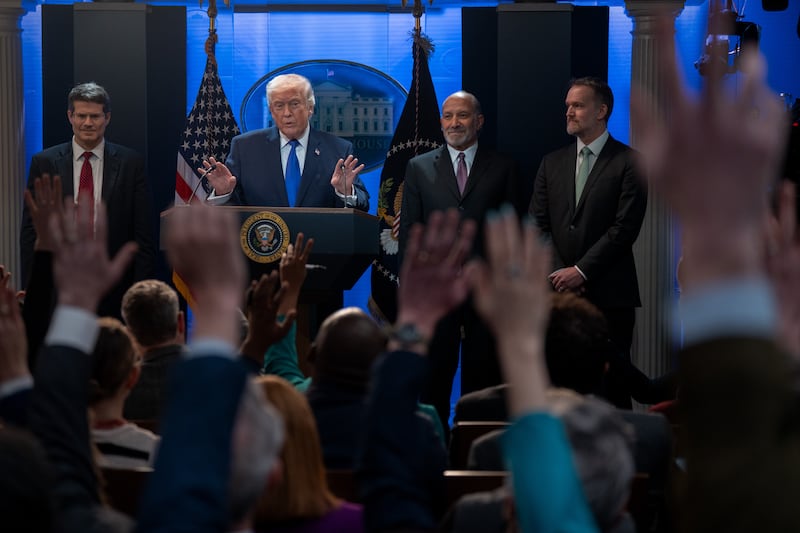
However good it feels, the court’s ruling heralds more chaos in the global markets and makes an already dangerous president more unpredictable. In the tantrum on Friday, he threw in the White House pressroom, Trump asked plaintively why the justices didn’t include a ruling on the money raised through tariffs, and what to do with it. Truth is, it’s already mostly spent and spoken for. (And those $2000 checks Trump promised every citizen won’t be going out anytime soon.)
That’s the least of it. We’ve already seen the president striking out and calling the three conservative justices who voted against him “fools and lapdogs,” claiming further that they were “under foreign influence.” There are reports that Trump has called foreign leaders to tell them not to pay attention to the Court’s ruling, and to show who’s in charge, he has slapped a new 15 percent tariff across the board that, according to law, he has the power to enforce for 150 days before having to consult Congress.
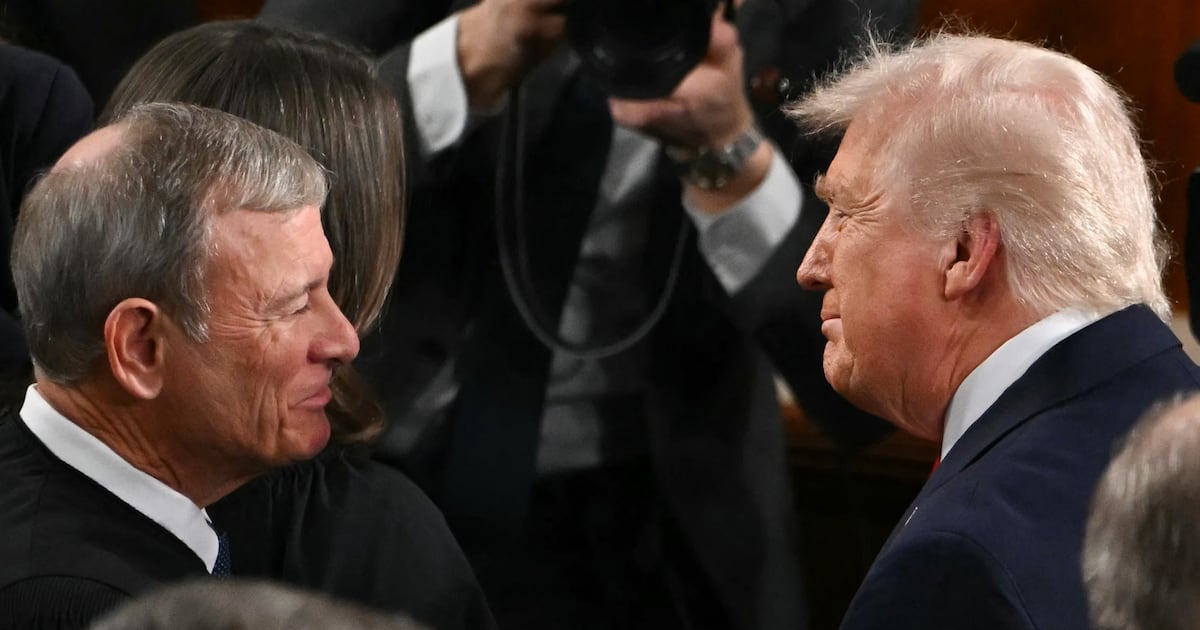
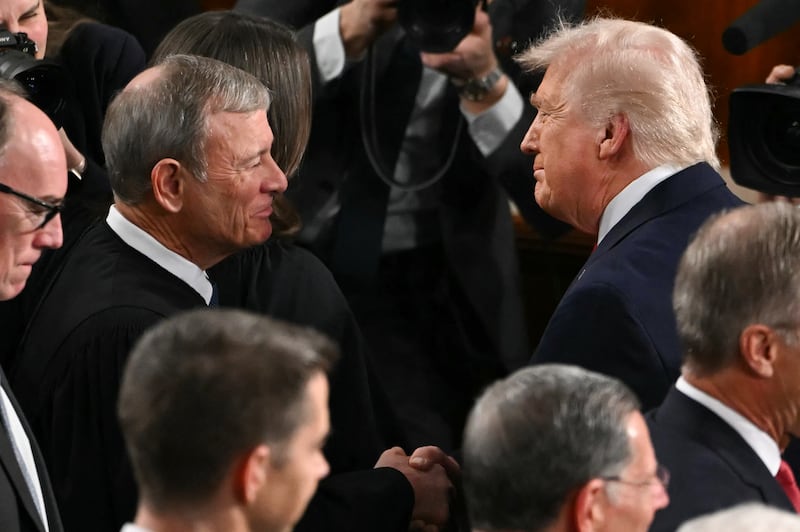
Trump greeted with no apparent show of emotion each of the four justices who attended the State of the Union last night before taking the podium, where he called their ruling on tariffs “very unfortunate.” It was quite measured—muted, even—by comparison.

And maybe more fiery meltdowns is what the court’s majority would have wanted. Every instance in which they’re seen as standing up to Trump, after all, gives them cover for making decisions—messy, controversial ones—that are more to his liking.
This is a more nefarious reason to consider when asking why SCOTUS took its sweet time with the tariffs case. Devon Ombres, senior director for Courts and Legal Policy at liberal thinktank the Center for American Progress (CAP) told the Daily Beast that it has to do with Roberts and the reputation of the court he leads. “Robert is the consummate actor. He gives on the one hand and taketh away with the other,” Ombres warned.
What’s the take? Well, court-watchers expect SCOTUS to soon hand down a decision in a pivotal voting rights case, Louisiana v Callais, which addresses the issue of race in drawing a second majority-Black congressional district in the state. Based on the tone of questioning in oral arguments, SCOTUS seems poised to gut what’s left of the 1965 Voting Rights Act with its ruling, overturning precedent that has long served as a guardrail to prevent “packing” Black voters into one district to limit their power, or “cracking” the Black vote into multiple districts to a similar effect.
If the Court acts as predicted, it will serve as a death knell for an era of racial progress and respect for diversity.

So while Trump critics can revel in this rare win, “it was a temporary declaration of independence,” added Larry Sabato, founder and director of the Center for Politics at the University of Virginia. “The conservatives will [now] feel even more liberated to vote with Trump.”
“They can point to this,” Sabato continued, just like the way Roberts did when voting to save the Affordable Care Act, to show they’re not just—or not always—not a rubber stamp for the White House.
The court gets to play the “resistance hero” in moments like this, yes. But it is still working to reshape America—and American values—in pivotal and dangerous ways. And while Trump’s temper tantrums are a reminder that the president’s mood and agenda is often slapdash and reactive, we must remember the SCOTUS majority has a bigger picture view, if not an outright agenda. They can grin and bear his meltdowns—welcome them, even—because they’re playing the long game.