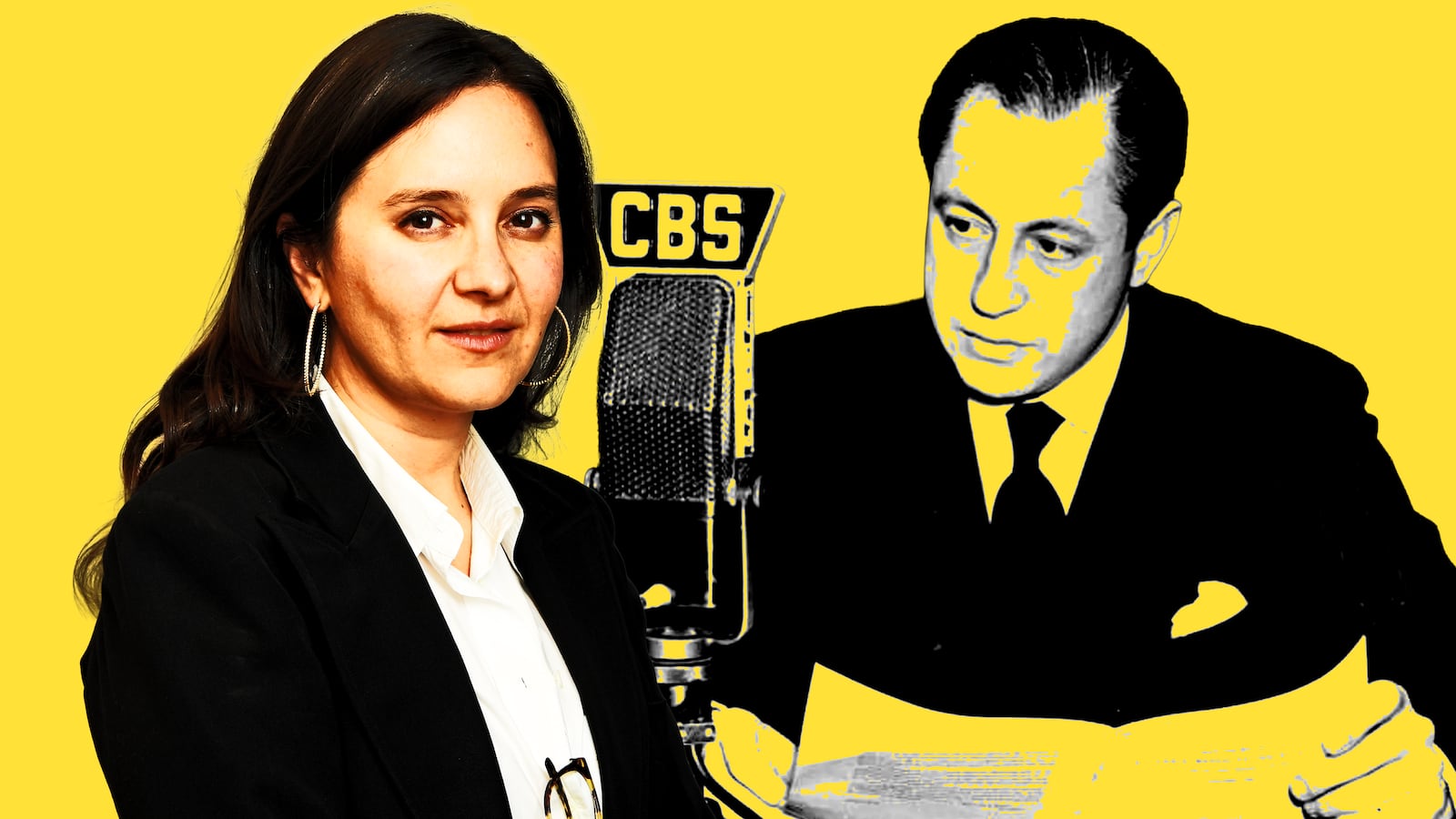
Bari Weiss’s rightward transformation of CBS would have horrified the man who built the once-revered news division, according to his granddaughter.
Nearly a century ago, William S. Paley took a fledgling radio network, the Columbia Phonographic Broadcasting System, and transformed it into the behemoth known today as CBS. His magnum opus, according to those who knew him, was building a news division revered internationally for its elite and informative coverage as war loomed in the 1930s.
But had Paley been alive to see the Tiffany Network’s Trump-tinged turn—driven by editor-in-chief Bari Weiss and Trump-loyalist owner David Ellison—he would have been devastated.
“I think that my grandfather would be sad,” Brooke Byers, the granddaughter of the CBS patriarch, said in an interview with The Daily Beast, citing the network’s “unrecognizable” transformation.
CBS has weathered a flurry of controversies since Weiss, a former conservative blogger with no broadcast experience, was parachuted in to lead CBS News in October. Most have centered on accusations that coverage has been skewed to appease the Trump administration.
Thursday brought a bloodbath at the network’s flagship show, 60 Minutes, with executive producer Tanya Simon and correspondents Sharyn Alfonsi and Cecilia Vega ousted after combatting Weiss’s editorial stance.
Through all of this, the Paley scion remained diplomatically silent—until now.

CBS News Radio aired its final broadcast last week, a “gut punch” to Byers, according to her husband, Eugene Goldman.
“I grew up with network news that was completely objective, and obviously we’re in a different place today,” she wrote in a statement to the Beast.
While Weiss cited “economic realities” and a “shift in radio programming strategies” as the main factors behind the shutdown, Byers isn’t convinced.
“While I do not pretend to know how much it costs for these stories to be reported on the hour, I have a hard time believing the network’s bottom line will be much improved with this cutback,” Byers wrote.
Instead, she sees the move as “emblematic” of the end of the era her grandfather helped usher in—one defined by fact-driven broadcast news.
Representatives for CBS did not reply to a request for comment.
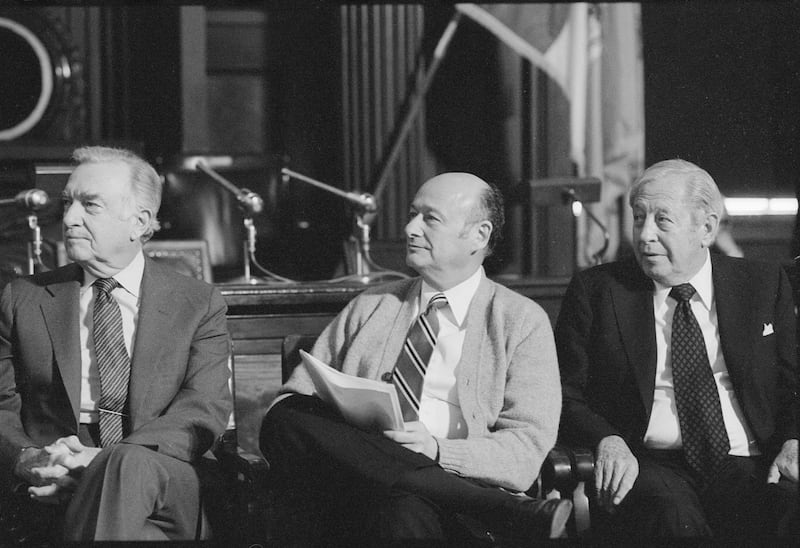
“I believe it happens to be the most convenient and unassailable source of the objective version of broadcast news reminiscent of the days of Walter Cronkite,” she wrote of CBS radio. But now, she added, “CBS is increasingly unrecognizable for this child of network news.”
In October, billionaire David Ellison’s Skydance—backed by his father, Oracle founder and Trump ally Larry Ellison—acquired Weiss’s blog, The Free Press, for $150 million. Weiss was subsequently installed as head of CBS.
The move was widely viewed as an appeasement to the Trump administration, as Ellison pursued a bid to acquire Warner Bros. Discovery—a company that owns Hollywood studios, CNN, HBO, HGTV, and a vast film and television library—while touting his relationship with the president.

In turn, CBS’s editorial independence has increasingly been called into question.
In November, Weiss, a former New York Times opinion columnist, pulled a 60 Minutes segment detailing the conditions at an El Salvador megaprison where Venezuelan men deported by Donald Trump were being held. Her decision was met with fierce opposition, with correspondent Sharyn Alfonsi telling staffers in an email that it was “not an editorial decision” but a “political one.”
This week, Alfonsi announced she had been ousted from the newsmagazine, a move she described as “a deliberate choice to penalize a journalist for refusing to sanitize accurate reporting.”
Vega and Simon soon followed. Simon, who spent three decades at the show before being promoted to executive producer last year, was replaced by tech columnist Nick Bilton, who has never worked in traditional broadcast news.
“It’s sad,” Byers said, also citing CBS Evening News’s plunging ratings and mounting criticism of Tony Dokoupil’s tenure.
Appointed by Weiss last year, the anchor has struggled to reverse a ratings decline at CBS Evening News, with viewership data showing competitors at NBC and ABC remain far ahead.
His ratings struggles have coincided with criticism that he has, at times, sounded more like a White House surrogate than an objective news anchor—from repeating a false claim made by Trump as fact, to his both-sides coverage of the Jan. 6 attack on the Capitol, to his bizarre fawning over Secretary of State Marco Rubio.
At the same time, Weiss’s tenure is not the only moment in which CBS has faced scrutiny over its editorial independence. In 1972, Paley ordered CBS Evening News to pull a two-part series on the Watergate scandal under pressure from then-President Richard Nixon.
But even under duress, CBS journalists held the line.
The difference is that today, the journalists who held that line were shown the door.