JPMorgan CEO Jamie Dimon fears the devastating impact of Donald Trump’s Iran war could reshape the global economic order.
The top banker warned in his annual letter to shareholders that the Middle East conflict could further exacerbate the global oil crisis and cause “stickier” inflation and higher interest rates than markets currently expect.
“The skunk at the party—and it could happen in 2026—would be inflation slowly going up, as opposed to slowly going down. This alone could cause interest rates to rise and asset prices to drop,” Dimon wrote.
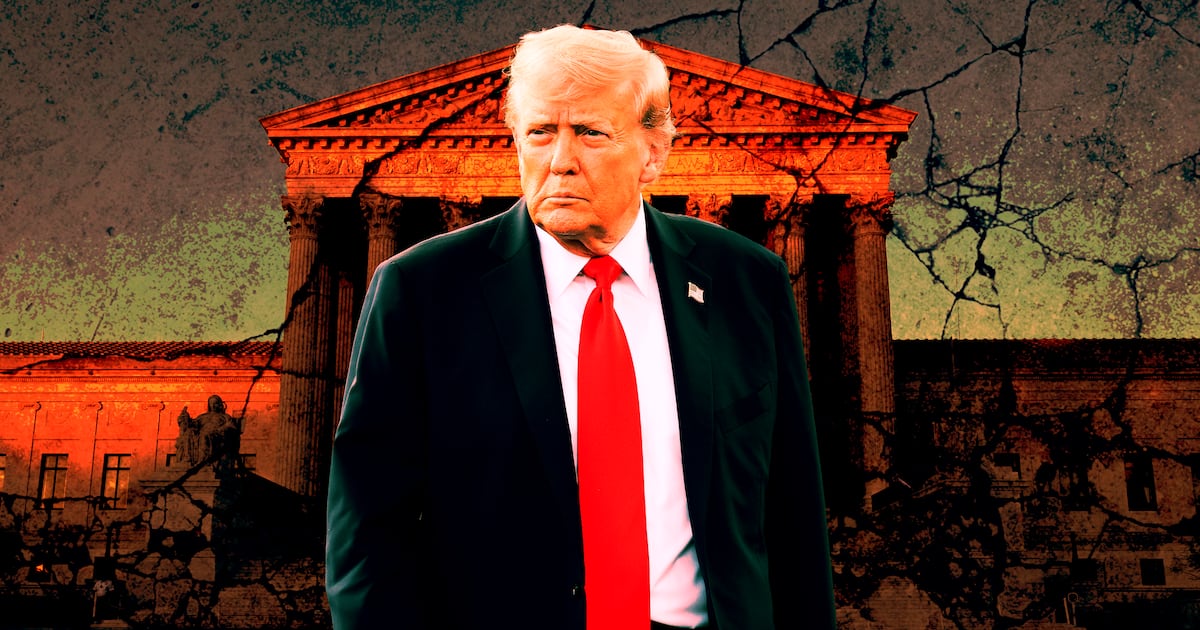
Trump is becoming more and more desperate as the Iran war drags on with no real end in sight. The conflict—and Iran’s closure of the Strait of Hormuz—has sent oil prices soaring well above $100 a barrel and caused gas prices to soar across the U.S.
Over the Easter weekend, the president delivered an unhinged threat to Iran to “Open the f---in’ Strait, you crazy b-----ds, or you’ll be living in Hell.” Trump had previously given Tehran another seemingly arbitrary deadline of Tuesday to reopen the narrow shipping route through which one-fifth of the world’s oil supply passes.

Trump’s threats to escalate the war in Iran by targeting its energy plants and bridges came after he’d spent weeks insisting that the conflict would be over soon, while offering no real indication of how this would be achieved.
In his 46-page letter to shareholders, Dimon said it is unclear if the U.S. will achieve its “short-term and long-term” objectives in the Middle East and “at what cost.”
“We should not turn a blind eye to the role the current regime in Iran has played in fostering terrorism and killing thousands of people, including Americans and many of its own citizens, over many years,” Dimon added.
“And that threat must be addressed in an appropriate manner (by those who have more intel and knowledge than I do) — and urgently if Iran ever acquires a nuclear ballistic missile.”
Dimon added that the wars in Iran and Ukraine are not only affecting energy prices across the world but also having knock-on effects on the global supply chains, causing issues for industries such as shipbuilding, food, and farming.
“The outcome of current geopolitical events may very well be the defining factor in how the future global economic order unfolds,” Dimon wrote. “Then again, it may not.”
In response to a request for comment on Dimon’s economic concerns, White House spokesman Kush Desai said: “President Trump has always been clear about short-term disruptions as a result of Operation Epic Fury, but strong retail sales growth and the expectation-smashing March jobs report prove that America remains on a solid economic trajectory. As the Administration’s proven economic agenda of tax cuts, deregulation, and energy dominance continues taking effect, and as new trade deals and trillions in investments continue materializing, Americans can rest assured that growth is set to keep accelerating when the objectives of Operation Epic Fury are achieved.”