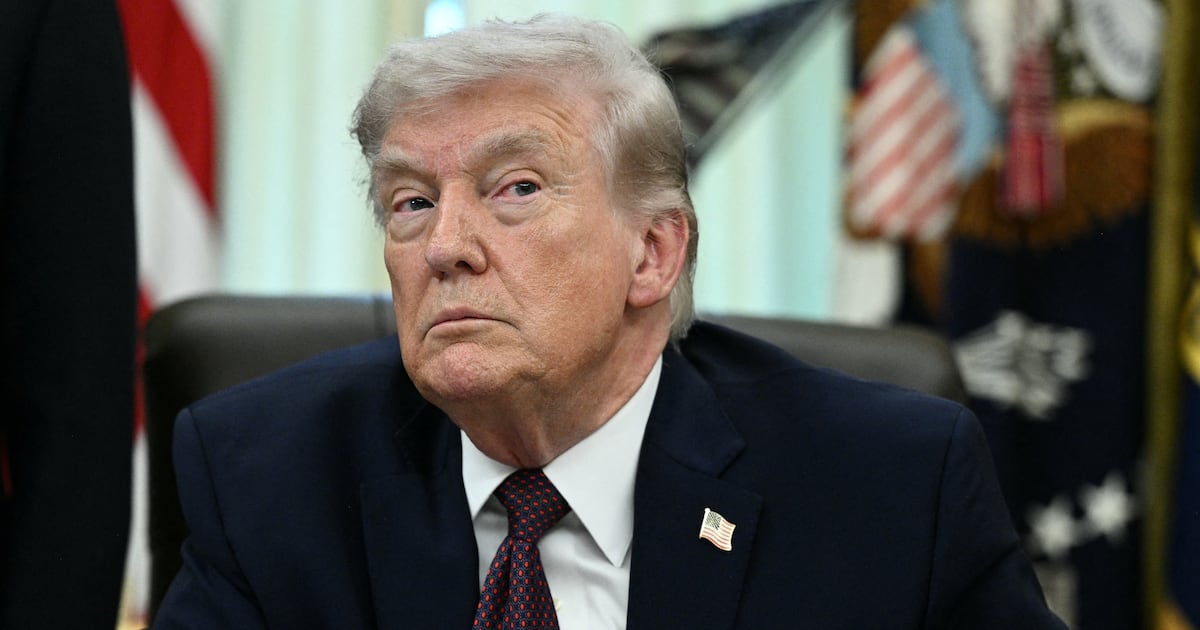
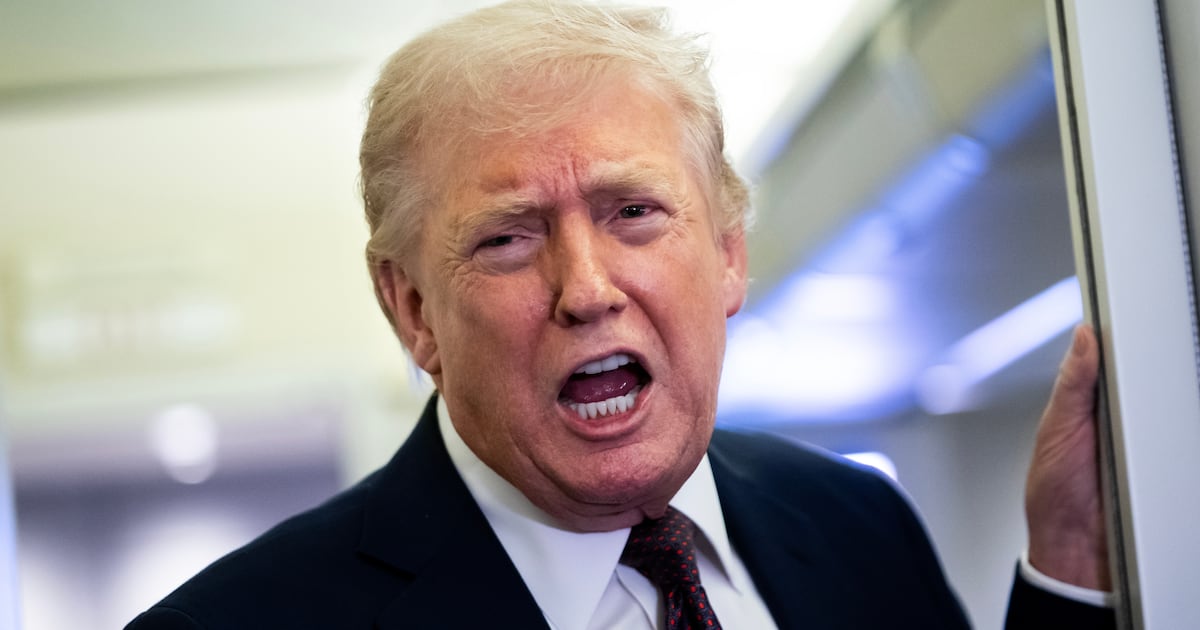
President Donald Trump appeared to become irate at a journalist who cornered him on his Iran war brag.
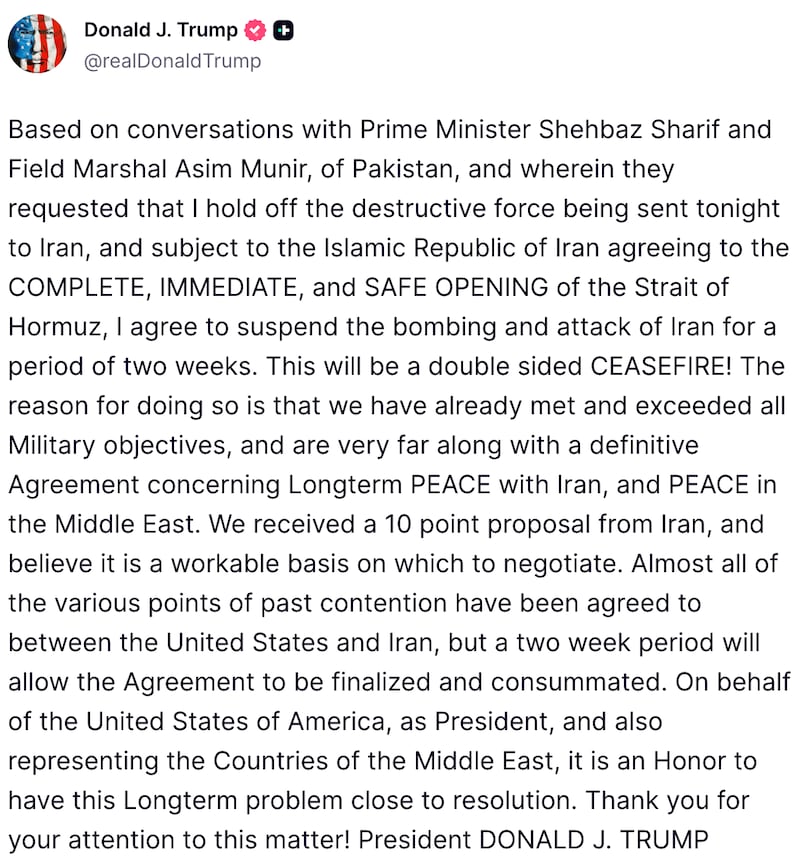
After Trump declared that a two-week ceasefire had been reached with Iran, confusion immediately spread over the details of the deal. Following the expiration of a deadline Trump set for an agreement, the president shared a statement from Iran’s minister of foreign affairs on Truth Social.

In it, Abbas Araghchi said that the ceasefire was based on the American 15-point proposal, as well as Iran’s 10-point plan. Trump told Sky News reporter Mark Stone late Tuesday that the development marks a “complete victory.”
Trump said the proposal from Iran “is a workable basis on which to negotiate.”
However, the two proposals appear to have contradictory elements, something Stone pressed Trump on during their 90-second phone call. This caused Trump to grow irate.
“You don’t know what the points are. You don’t know what they are,” he told Stone, according to the journalist, adding, “I do know what they are.” The president insisted that “they’re very good points” and that “most of them have been fully negotiated already.”
Iran, for example, had called for all U.S. troops, new and old, to leave the country. Yet Trump indicated on his call with Stone that U.S. forces would be “ready” to act if the deal unraveled. “If it isn’t good, we’ll go right back to it very easily,” the president said.
Both sides agreed that the Strait of Hormuz would reopen, a major sticking point of the conflict. However, Iran, as part of its plan, wants to control the Strait. It had also called for sanctions relief and nuclear recognition.
Trump, on Wednesday morning, was forced to clear up the U.S. position on the latter after the English-language version of Iran’s ceasefire plan did not include a provision for nuclear recognition, despite the fact that the Farsi one did.
“There will be no enrichment of Uranium, and the United States will, working with Iran, dig up and remove all of the deeply buried (B-2 Bombers) Nuclear ‘Dust,’” he said, referring to the nuclear debris left at sites hit by U.S.-Israeli strikes in June.
He added that his Cabinet would negotiate tariff and sanctions relief, and said that “many of the 15 points have already been agreed to.”

Other reported elements of the Pakistani-mediated Iran proposal included a guarantee that Iran will not be attacked again, a permanent end to the war, not just a ceasefire, an end to Israeli strikes in Lebanon and against Iranian allies, the introduction of a $2 million fee per ship transiting Hormuz to be shared with Oman and funds to be used for reconstruction of war-damaged infrastructure.
Iranian media suggested that the establishment of safe passage protocols through Hormuz and a broader framework to end regional hostilities were also included in the proposal.
The U.S. indicated that the reopening of the Strait of Hormuz was a non-negotiable first step, followed by a two-phase deal structure starting with a temporary truce and transitioning into permanent settlement talks. It also included requirements for broader regional de-escalation, including conflicts linked to Iran.
However, as Trump told Stone, no one but he truly knows the terms of the deal, and they could fluctuate if the situation changes. Even still, on Tuesday night, he hailed the moment as “a big day for World Peace!”
The tone shifted during a press conference at the Pentagon on Wednesday morning. “Let us be clear, a ceasefire is a pause, and the joint force remains ready, if ordered or called upon,” Gen. Dan Caine said.