Donald Trump’s $1.8 billion “compensation” fund for allies has caused such an uproar that even the president’s closest advisers are reportedly looking for ways to get rid of it.
Sources cited by The Wall Street Journal said senior White House aides were discussing “killing” the fund as a way to get Congress to pass an immigration enforcement bill that got held up amid bitter infighting over it.
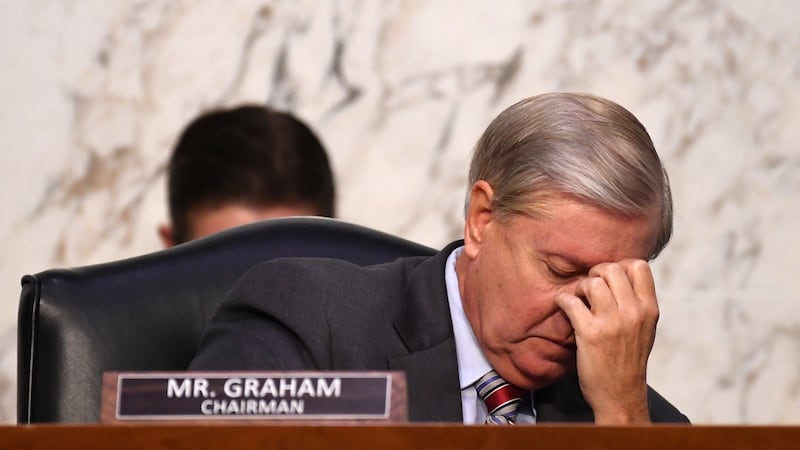
More than a dozen Republican senators have also urged the president to drop the fund since it was first announced, including Sen. Lindsey Graham, typically a Trump ally, the report noted.
Trump’s “anti-weaponization” fund took Republicans in Congress by surprise when it was announced as part of a broader deal to end Trump’s lawsuit against the IRS and “settle” his claims seeking compensation for past investigations into him. The Journal reports that Trump’s top aides in the White House were also kept in the dark on the fund until a few days before it was announced earlier this month.
Only a few officials from the Department of Justice were privy to the talks on setting up the fund, including Acting Attorney General Todd Blanche, his top aide, Trent McCotter, and the department’s Office of Legal Counsel. The fund was first proposed during talks over the president’s IRS lawsuit with Trump’s personal lawyer Boris Epshteyn, who reportedly proposed establishing a five-person body to award payouts to those seeking to access the fund.
During those talks, according to the Journal, officials explored ways to handle Trump’s lawsuit and concluded they couldn’t pay him directly because of how voters might react. Ultimately, it was agreed that Trump himself would not receive any “monetary payment or damages” from the fund, and it would instead provide payouts to “victims” of overreach by the government under the Biden and Obama administrations.
Concern spread quickly that if the fund were to go ahead, it would provide payouts to Jan. 6 insurrectionists, all of whom have now been pardoned by the president.
Blanche was privately grilled over the planned slush fund by unhappy senators during a meeting that even Sen. Ted Cruz described as “one of the roughest meetings” he’d seen.
“There were fireworks at an epic level,” Cruz said.
The IRS lawsuit brought by Trump, 79, was in response to his tax returns being publicly released by a whistleblower during his first term.
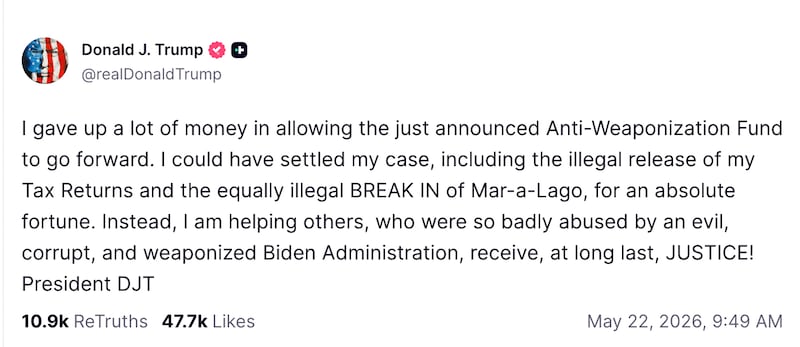
Typically, presidents and presidential candidates release their previous tax returns to the media as part of their campaign. Trump has always refused to do so, and was furious when his returns were leaked.
It is highly unusual for the person who is suing to also be the head of the body being sued, but in this case, Trump is both.
On Friday, a federal judge barred the administration from taking any further actions to create or operate the fund, including transferring money to it, or considering claims for payouts until a hearing on June 12.
Trump has so far resisted calls to drop the fund entirely, but is reportedly aware of the political headache it has created.
The White House did not immediately respond to a request for comment.