Mike Johnson Plots Major Rule Change After His Epstein Humiliation
For months the House speaker had tried to block a vote on the Epstein files.

Roberto Schmidt/Getty Images
House Speaker Mike Johnson wants to make it harder for members of Congress to defy leadership after members of his own caucus turned on him to force a House vote on the release of the Jeffrey Epstein files.
Despite months of opposition from Johnson and President Donald Trump, a group of bipartisan lawmakers successfully brought a discharge petition that overrode Republican leadership and brought the Epstein Files Transparency Act to the floor.

The bill, which instructs the Department of Justice to release all of its investigative files related to the late sex offender, passed the House 427-1 on Tuesday before being unanimously adopted by the Senate and signed into law.
Now, however, Johnson is saying he wants to “see a higher threshold” for privileged motions and discharge petitions, he told Axios.

Republicans Reps. Thomas Massie (center) and Marjorie Taylor Greene, and Democratic Rep. Ro Khanna were instrumental in forcing a vote on a bill to release the Epstein files.
Heather Diehl/Getty Images
Discharge petitions have long been seen as a Hail Mary; since 1935, just 42 of 673 petitions have received the necessary 218 signatures, according to Axios. Only seven discharge petitions, less than 1 percent of the total, have led to legislation ultimately being signed into law.
But with the White House increasingly adopting deeply unpopular positions and Republican members of Congress worried about their political futures after Trump leaves office, Johnson’s caucus has been more brazen about breaking rank.
Get the best of The Beast delivered right to your inbox
By clicking “SUBSCRIBE” you agree to our Terms of Use and Privacy Policy.
Polling conducted over the summer found that just 21 percent of respondents approved of how Trump had handled the Epstein investigation. The disgraced financier—who was close friends with Trump for more than a decade—died in jail in 2019 while awaiting trial on sex trafficking charges.
Since last year, Democrats have supported two Republican-led efforts force votes on bills to provide tax relief for victims of natural disasters and strengthen Social Security benefits for public sector employees. Both pieces of legislation became law.

This week, a discharge petition led by Democratic Rep. Jared Golden of Maine also received enough votes to bring to the floor a bill that would restore union rights for thousands of federal workers.
Republican Rep. Thomas Massie of Kentucky, who co-sponsored the Epstein discharge petition with California Democrat Ro Khanna, told Axios that he and his Democratic colleagues were “brainstorming” ideas for more discharge petitions.
Calling the petitions the “last vestige of democracy,” he said he worried about their future now that they’ve become a viable tool for challenging the House leadership.
“The Speaker, because he’s not giving an outlet for legislative pursuits, the things we got elected to do, he’s probably going to see more of these discharge petitions,” Massie told Axios.
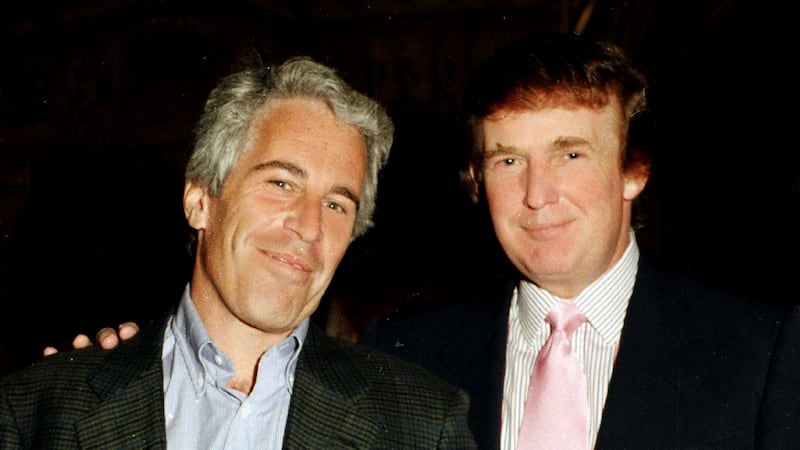
A poll conducted over the summer found that just 21 percent of respondents approved of how President Trump had handled the investigation in Jeffrey Epstein.
Davidoff Studios Photography/Davidoff Studios/Getty Images
For now, though, Johnson appears locked into the current rules, which can only change at the start of a new Congress. Changing the rules mid-Congress require a two-thirds vote.
In the meantime, though, the petitions are not a fail-safe.
Despite Republican Rep. Anna Paulina Luna of Florida bringing a successful discharge petition for a bill that would have allowed proxy voting for new parents in Congress, Johnson managed to still block the vote using other procedural maneuvers.

Now, she’s trying to bring a bill that would ban members of Congress from trading individual stocks.
Luna told Axios that she agreed with Massie that leadership would try to prevent members from bringing the petitions “because it takes power away from them.”
See more of our coverage in your search results.

Got a tip? Send it to The Daily Beast here.
Register below to read this article for free or subscribe
to unlock unlimited access to The Daily Beast.
Monthly
$1
First month then $5.99/month
Annual
$35
First year then $59.99/year
Premium
$79
First year then $119.99/year
*Substack access provided by the next business day, using your subscription email. Choosing the Premium plan constitutes your permission to share your subscription email with Substack and your agreement to Substack’s Privacy Policy.
Already have an account? Sign In
Looks like you already have a subscription!
You're all set!
Thanks for subscribing.
Sign in or create an account
Login dialog
Loading comments…