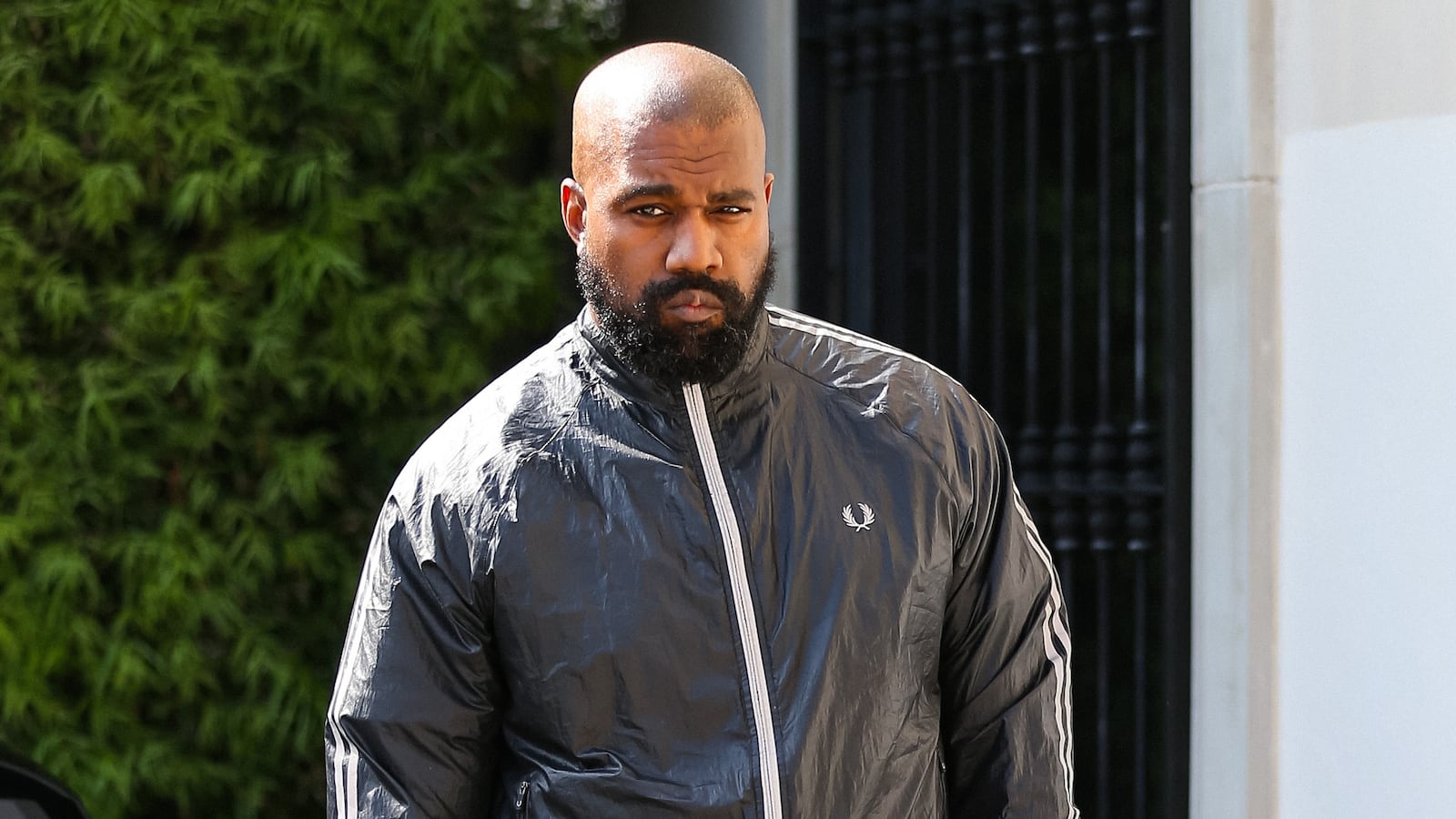
Kanye West’s planned performances in Russia have been canceled.
The rapper, now known as Ye, was set to perform on October 10 and 11 at the Gazprom Arena in St. Petersburg. Now, the stadium denies ever organizing the concerts and says no rental agreements were signed.
“Gazprom Arena was not and is not the organizer of this event. This was handled by the Moscow-based concert agency Say Agency,” reads a statement, written in Russian, on the stadium’s official Instagram account. “Gazprom Arena did not sign any stadium rental agreements for the event. There is no such agreement. Accordingly, the concert cannot take place at our venue.”
The stadium previously boasted about Ye on its social media account, calling him “the most influential musical artist of our time.”
Say Agency said that the concerts were scheduled based on “an official letter that was approved by” Gazprom Arena, according to the BBC. The Russian entertainment agency said it learned about the cancellation through social media.
The concerts were sold out. Fans are now condemning Gazprom Arena on Instagram. One wrote, “You were the first to announce the event and sell tickets on your official website, and now you brazenly lie in your post.” Another said, “They announced the event on their website and social media, thereby convincing people that it would actually take place. People come from all over the country, bought tickets, paid for hotels, and then you just cancel it.”

Ye would have been the first major Western artist to perform in Putin’s Russia since the war in Ukraine began in 2022.
Ye has seen several of his gigs canceled this year following backlash over his acts of antisemitism, which included a track release, “Heil Hitler,” and peddling Nazi paraphernalia such as swastika T-shirts.
Say Agency acknowledged the disgraced rapper’s history of antisemitism in a Telegram post last week when announcing his concert in St. Petersburg, writing, “Not everything Kanye West said should be forgotten.” The agency added that “it’s easy to judge” and “more difficult to listen to a person who has been changing the industry for decades.”
In January, Ye pulled out a lengthy apology in the form of an ad in The Wall Street Journal, citing his bipolar type-1 diagnosis as a catalyst for “poor judgment and reckless behavior.”
“I regret and am deeply mortified by my actions in that state, and am committed to accountability, treatment, and meaningful change,” he continued. “It does not excuse what I did, though. I am not a Nazi or an antisemite. I love Jewish people.”
In July, London’s largest music festival was canceled after Ye, its headliner, was banned from traveling to the U.K. His application to enter the country was denied on the basis that his presence “would not be conducive to the public good.” Before the festival, Ye requested to meet with members of the Jewish community in the U.K. and promised to “present a show of change, bringing unity, peace, and love through my music.”
This past year, Ye has also had concerts canceled in Poland, Italy, and France.