
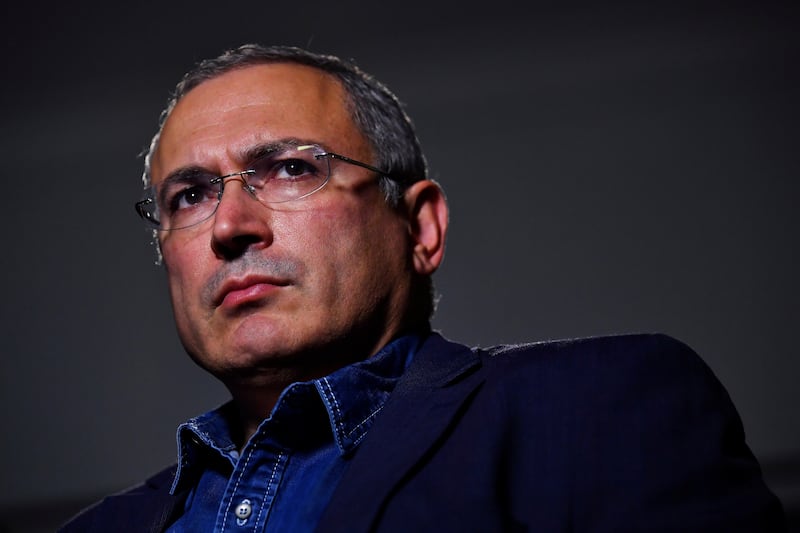
One of Vladimir Putin’s most prominent foes has warned that Ukraine’s relentless drone attacks are pushing Russia’s battered oil industry toward a potentially catastrophic “breaking point.”
Mikhail Khodorkovsky, 63, the self-exiled former oligarch who was once Russia’s richest man before he fell foul of Putin, said repeated Ukrainian strikes on oil refineries had caused damage that Moscow could no longer properly repair while keeping the facilities running.
“I ran Russia’s largest oil company and my answer is yes,” Khodorkovsky wrote in a blog post on Wednesday, addressing questions from Western analysts about whether Ukraine’s campaign against Russian refineries is working.
His warning comes as lengthy lines have returned to gas stations in Moscow, as the country struggles to produce enough fuel to meet domestic demand more than four years into the Russian president’s invasion of Ukraine. Meanwhile, major fuel suppliers have reimposed limits on gasoline purchases, undermining assurances from the Russian president and other Kremlin officials that the country’s fuel crisis was easing.
“The situation will gradually improve,” Putin said in mid-July, weeks after admitting that Ukraine’s attacks on his oil refineries have resulted in Russia facing a “certain shortage” of fuel.
Deputy Prime Minister Alexander Novak offered a similarly upbeat assessment later that month, saying “the balance is now better, and the situation at gas stations is significantly better.”
But Reuters witnesses reported Wednesday that long lines had returned to some fuel stations in Moscow and the surrounding region as major operators again restrict purchases. Shortages began in May and, by July, had spread to most regions across Russia.
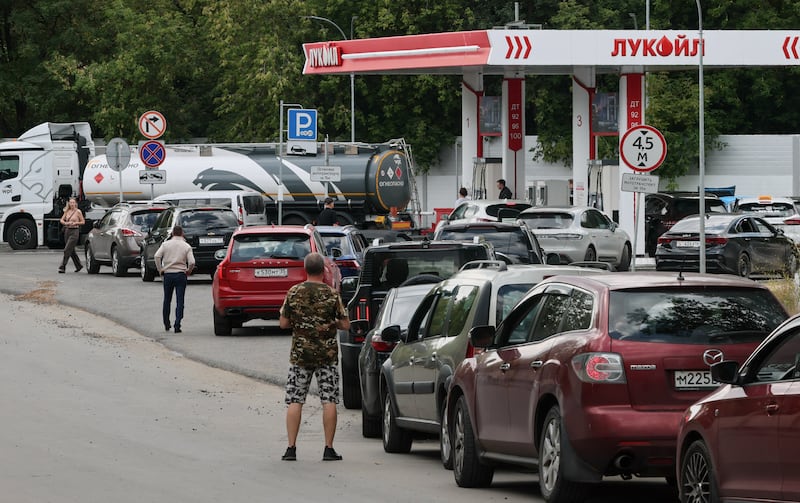
Gazprom Neft limited gasoline purchases to 40 liters per customer at its automated Moscow stations and 60 liters per vehicle at other filling stations, while Rosneft, Russia’s largest oil producer, capped gasoline purchases nationwide at 30 liters per vehicle, Reuters reported.
Tatneft imposed a 50-liter gasoline limit per vehicle, while Lukoil also introduced restrictions in Moscow and the surrounding region.
“The gasoline lines are back in Russia,” Khodorkovsky wrote. “The fuel situation had only just begun to stabilize when new strikes hit the refineries and brought back the shortages at gas stations.”
Khodorkovsky headed the oil giant Yukos before spending a decade in a Russian prison on charges that critics called politically motivated. One of the earliest prominent advocates of democratic change in Russia, he confronted Putin over endemic corruption during a televised meeting in 2003.

Putin pardoned Khodorkovsky in 2013. The former oil executive, whom the Kremlin later designated a “foreign agent,” subsequently settled in London and remains a leading critic of Putin’s regime.
Drawing on his experience running Russia’s largest oil company, Khodorkovsky argued that the Kremlin had kept damaged refineries operating instead of shutting them down for the extensive repairs required after Ukrainian attacks.
“Scheduled maintenance is being stopped, and by that means the plants squeeze out somewhat more fuel,” he wrote. “The quality fuel they can no longer produce is being replaced with low-quality fuel, which duly ruins car engines.”
“This relieves some of the tension on the gasoline market, and on the fuel market generally. But it’s not equal to repairing the plants, even if they’re kept operational and there’s no immediate shortage, they are dramatically degraded compared to baseline,” Khodorkovsky said.
Khodorkovsky warned that prolonged fires around refinery units could weaken their structural integrity, potentially causing refinery equipment or storage tanks to collapse and spill fuel into surrounding areas.
He warned: “If a catastrophe like that comes, the responsibility will lie with the man who started this war and works and lies every day to hide its consequences from his citizens.
“No one can name the day when the patches give out — not in Kyiv, not in Washington, and not in Moscow,” Khodorkovsky wrote. “But the question is no longer whether Ukraine’s campaign is working, it’s what happens as the breaking point approaches.”