Prince Harry’s appearance in court this week—in his case against Associated Newspapers Limited (ANL), the publisher of British newspapers The Daily Mail and Mail on Sunday—has, for me at least, reignited questions about privacy and hypocrisy.
I have long argued that Harry and Meghan’s active decision to make their two children part of their highly-visible commercial narrative is a mistake and opens them up to charges of hypocrisy. That charge, I think, has new resonance in the light of Harry’s evidence.
At the heart of his emotional case was his argument that he never had agency over how his life was used by the media when he was younger, describing himself as having been “commercialized” without consent.
“I have never believed my life is open season to be commercialized by these people,” he told the court. “My life has been commercialized in this way since I was a teenager.”

Just a day earlier, Brooklyn Beckham—a friend of Meghan and Harry—had shared an Internet-breaking statement expressing strikingly similar grievances: About growing up without control over his own narrative, claiming that his parents, David and Victoria Beckham, had controlled press coverage and that public expressions of a perfect family life on social media had been a constant, performative fixture.
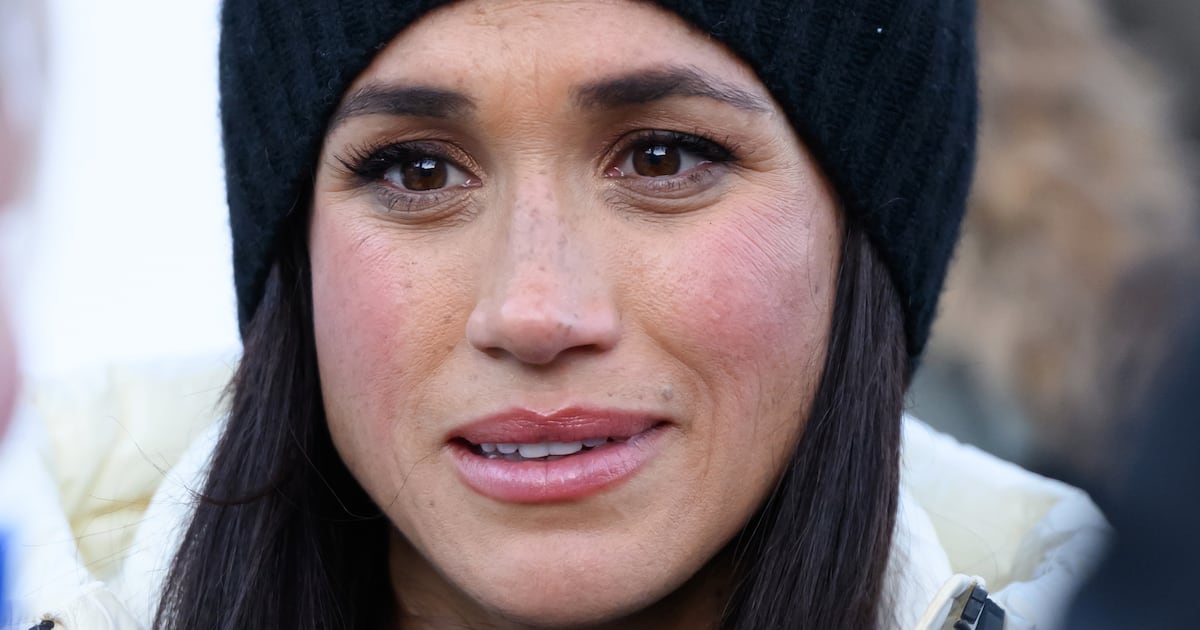
And the day before that, Harry’s wife, Meghan, the Duchess of Sussex, posted a series of images and videos of their children, Prince Archie, 6, and Princess Lilibet, 4, at a zoo and swimming in a pool with their grandmother, Doria.
Critics like me argue that these images, even when faces are partially obscured or shown in profile, are part of the construction of a broader commercial brand and that Archie and Lilibet cannot meaningfully consent to. While Meghan has sought to suggest that some content is initiated by the children themselves, with one recent video credited to “our daughter,” it’s obvious that any and all real decisions about the children’s public presence rest entirely with their parents.
The result is that Harry, who in court yesterday was attributing much of his lifelong trauma to being commercialized without consent by an institution masquerading as a family, is now presiding over an eerily similar process.
This has fueled allegations of hypocrisy and complicated public sympathy for Harry’s case. While there is widespread recognition that what he endured as a teenager and young man, from phone hacking to the harassment of past girlfriends, was “creepy” and “disgusting,” critics are entitled to question why those experiences have not led to a more restrictive approach to his own children’s exposure.
Despite Harry’s attacks on the media, Meghan and Harry run a significant PR operation. That complicates principled opposition to media intrusion.

There is also skepticism about the litigation itself. Supporters say Harry is right to confront abuses of power and challenge figures who remain influential in the media. Others argue he is relitigating the past at enormous personal cost, financially and emotionally, for what may at best be a Pyrrhic victory.
My discomfort around Harry’s case stems less from the merits of individual allegations, and more from the contradiction at its core. Because the very behaviors Harry condemns—the construction of a family brand, the management of “happy family” narratives and the exposure of children without their consent— are now being repeated within his own household in front of our eyes.
Want more royal gossip, scoops and scandal? Head over to The Royalist on Substack.