
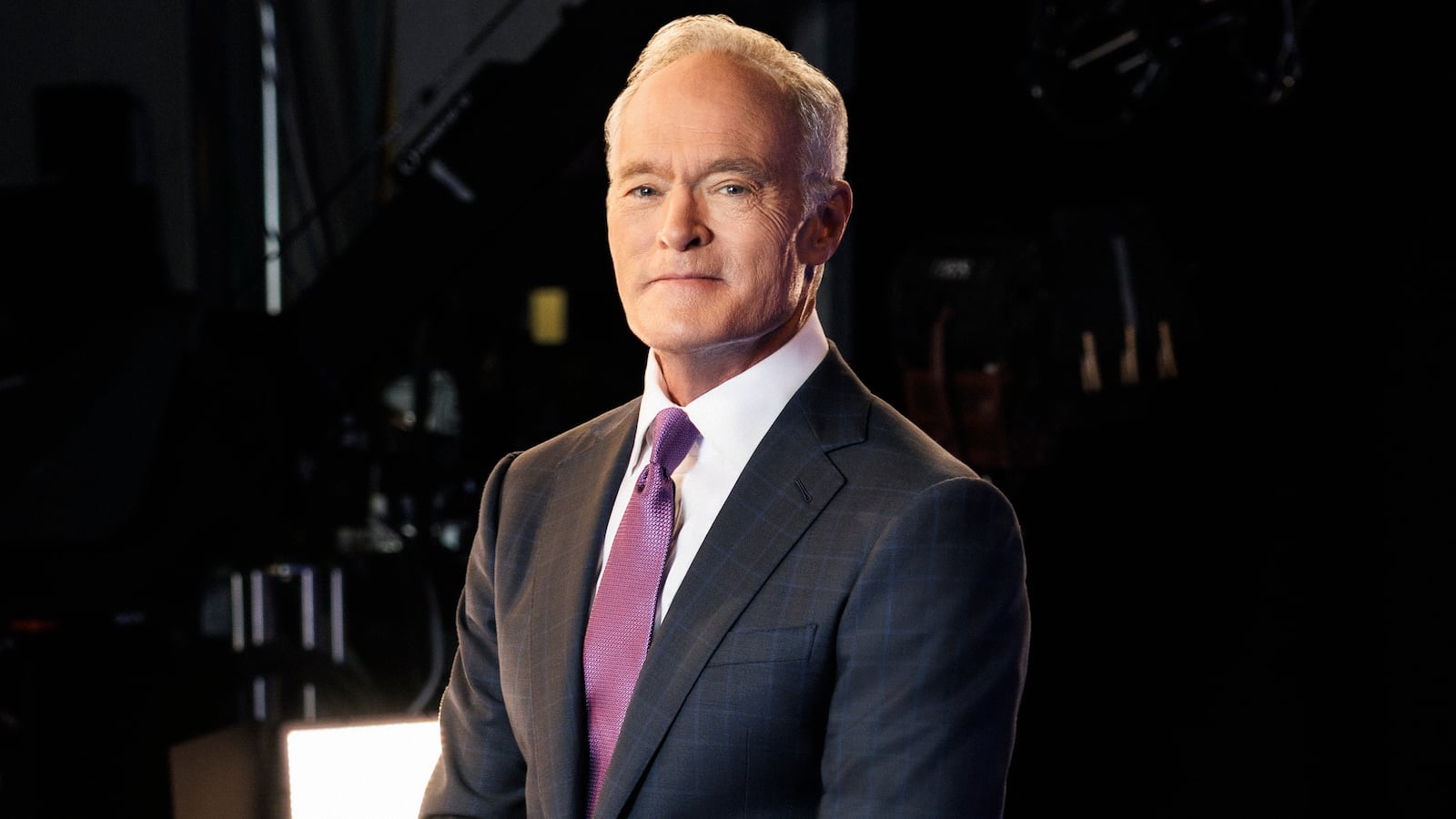
Veteran 60 Minutes journalist Scott Pelley took aim at the previous owners of his parent network, CBS, for settling a lawsuit with President Donald Trump to the tune of $16 million.
Appearing at the National Press Foundation’s annual journalism awards on Thursday evening, Pelley introduced former 60 Minutes chief Bill Owens, who was honored with the 2025 Benjamin C. Bradlee Editor of the Year Award.
While introducing Owens, who resigned from his role as executive producer of CBS News’ 60 Minutes in April amid growing pressure from both Paramount and the Trump administration, Pelley referenced the circumstances that precipitated Owens’ departure.

“Our previous owners at CBS faced political pressure and crumbled‚” Pelley told attendees, according to The Guardian’s Jeremy Barr.
The Daily Beast has contacted CBS for comment.
Much of the pressure stemmed from the president’s lawsuit against the network. Trump demanded $20 billion after claiming CBS edited an interview with his rival presidential candidate Vice President Kamala Harris to favor her, even though she ultimately lost the 2024 election. The lawsuit was eventually settled in July for $16 million.

It’s not the first time Pelley has made his feelings known about how Paramount handled the lawsuit with Trump. During an April broadcast, Pelley criticized Paramount for its close scrutiny of 60 Minutes’ output, claiming that it was trying to secure the Trump administration’s approval of its merger with David Ellison’s Skydance Media. The merger was eventually approved in July.
“Bill resigned Tuesday. It was hard on him and hard on us, but he did it for us and you,” Pelley told viewers. “Stories we’ve pursued for 57 years were often controversial, lately the Israel-Gaza war and the Trump administration. Bill made sure they were accurate and fair—he was tough that way.”
“But our parent company, Paramount, is trying to complete a merger. The Trump administration must approve it. Paramount began to supervise our content in new ways,” Pelley continued. “None of our stories has been blocked, but Bill felt he lost the independence that honest journalism requires.”
“No one here is happy about it, but in resigning, Bill proved one thing—he was the right person to lead 60 Minutes all along.”
Pelley is far from the first of the network’s stars to make their dissatisfaction known. Evening news anchor John Dickerson delivered a critical monologue on an episode of CBS Evening News Plus following news of the settlement, telling viewers, “We pride ourselves on our BS detector, so it ought to work on ourselves, too. When it doesn’t, the stakes are real: a loss of public trust, the spread of misinformation.”

“The obstacles to getting it right are many,” he continued. “The Paramount settlement poses a new obstacle: can you hold power to account after paying it millions? Can an audience trust you when it thinks you’ve traded away that trust? The audience will decide that.”
60 Minutes correspondent Sharyn Alfonsi, whose segment on El Salvador’s notorious CECOT prison was initially shelved by Ellison-appointed CBS News editor-in-chief Bari Weiss, has also expressed her frustrations. She reportedly clashed with Weiss, telling colleagues in an email that the White House’s refusal to be interviewed for the story—which Weiss cited as the reason for shelving the segment—was “a tactical maneuver designed to kill the story.”
The network has been hemorrhaging staff since Weiss’ installation as chief, including correspondent Anderson Cooper, who declined to renew his 60 Minutes contract and will instead focus on his work with CNN.

CBS justice correspondent Scott MacFarlane announced his surprise departure from the network on Monday, writing in a LinkedIn post, “For the next phase of my career, I look forward to some independence and finding new spaces to share my work in line with my personal goals.”
Amid layoffs across the network, a producer for CBS Evening News who took a buyout said farewell to her colleagues in an impassioned letter about the importance of impartial journalism.
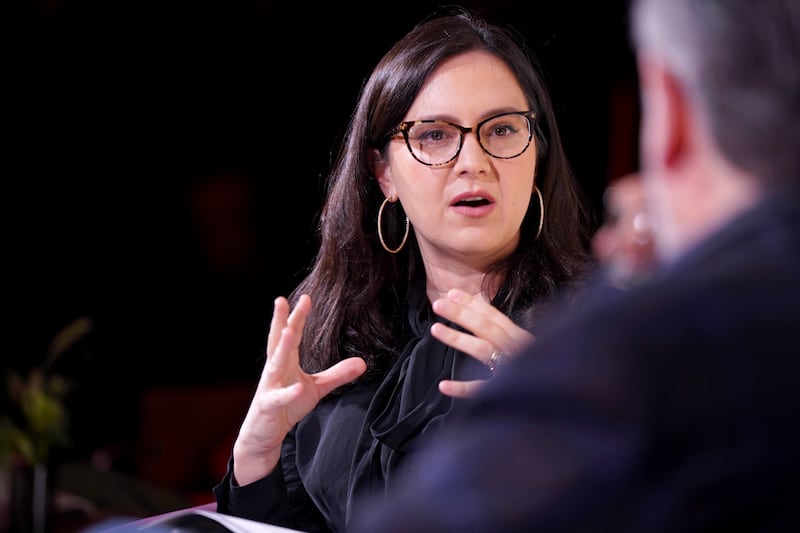
“I am proud of the work that’s been done in my time here,” Alicia Hastey wrote before noting, “the truth is that commitment to those people and the stories they have to tell is increasingly becoming impossible. Stories may instead be evaluated not just on their journalistic merit but on whether they conform to a shifting set of ideological expectations.”
“I’ve always taken comfort in the belief that if we hold fast to those first ideals, trust follows. But those ideals cannot stand on their own. They require vigilance. They require courage.”
In accepting his award on Thursday night, Owens urged the journalists in the room to display some of that courage and continue with their coverage of the Trump administration.
“We are still in the early rounds of a fight that is going to be talked about for ages,” he told attendees.


