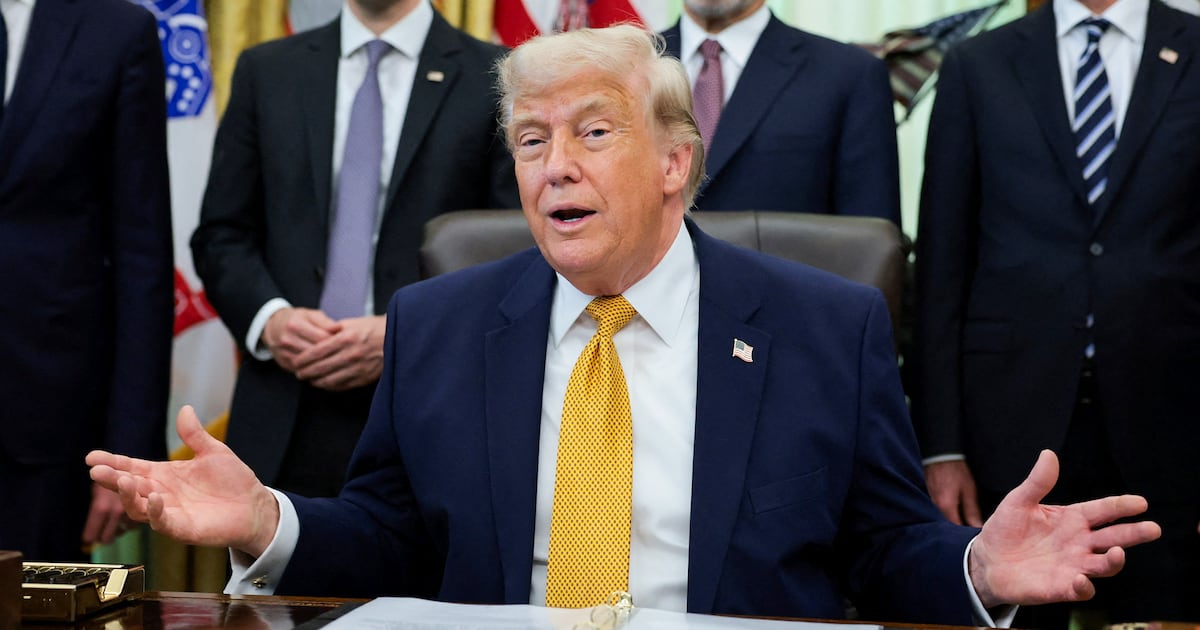
The New York Times journalists responsible for one of the most explosive books of 2026 revealed who is really running things in the Trump White House during a Monday night television appearance.
Speaking to MS NOW’s Lawrence O’Donnell, New York Times reporters Maggie Haberman and Jonathan Swan discussed some of the revelations in their book, Regime Change: Inside the Imperial Presidency of Donald Trump, which was published on Tuesday.
They include details of the president’s bizarre nighttime habits, such as snacking and leaving trash and debris around the White House for staff to deal with, as well as the fact that Trump reportedly resorted to DIYing some of his golden Oval Office embellishments with super glue.

Swan concluded the interview by highlighting one remarkable takeaway.
“The thing that was really notable about this White House, compared to the first one, is they keep talking about how they’re the most transparent White House in history,” Swan explained. “It’s a canard. They’re actually incredibly good at keeping secrets.”
“Take the war, for example,” he continued, referring to Trump’s war with Iran. “You have a tiny group of people that are running this country, five or six people and Donald Trump.”
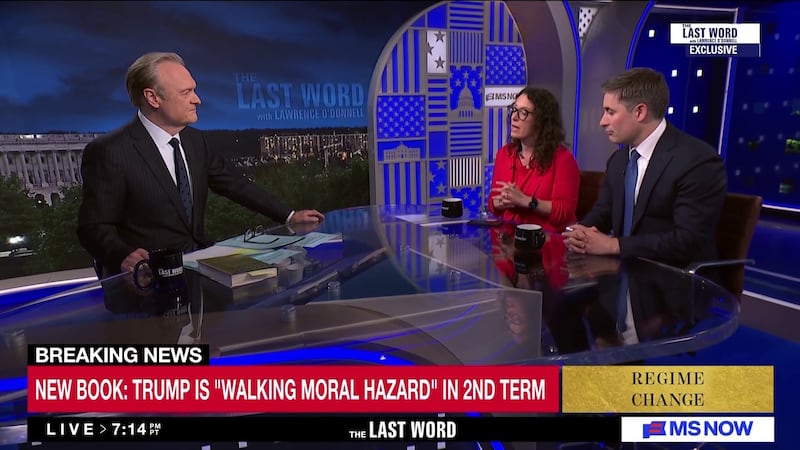
“The treasury secretary of the United States, the energy secretary—the two people who would have to handle the biggest oil shock in world history—they weren’t in the room. They weren’t in the meetings,” he added.
“Tulsi Gabbard not in the room,” O’Donnell interjected. Gabbard was the director of national intelligence when Trump declared war on Iran, but has since been replaced by acting Director Bill Pulte.
“Not in the room. You are talking about a tiny group of people,” Swan replied.
Haberman and Swan’s book stirred up significant controversy in the weeks before its publication, particularly after news broke that some of their reporting was based on Situation Room meetings that had been secretly recorded and leaked.

In the book, the two Times journalists describe the final meeting that took place on Feb. 26, two days before the U.S.-Israeli bombing of Iran began.
“By now the positions of everyone in the room had crystallized. Everything had been discussed in prior meetings; everyone knew everyone else’s stance. The President was the President, and they would back his decision,” the book says.
In attendance were Trump, Vice President JD Vance, Trump’s chief of staff Susie Wiles, CIA Director John Ratcliffe, White House Counsel David Warrington, White House Communications Director Steven Cheung, Press Secretary Karoline Leavitt, Defense Secretary Pete Hegseth, State Secretary Marco Rubio, and Chairman of the Joint Chiefs of Staff Dan Caine.
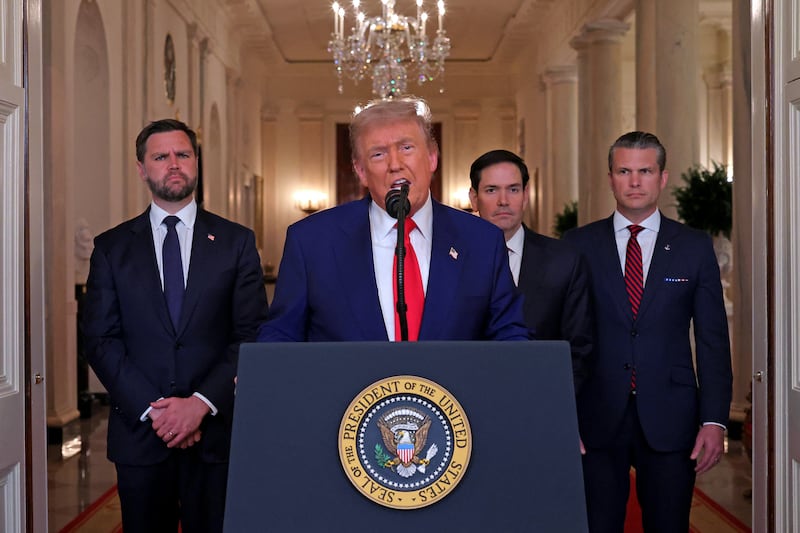
“The war-planning group had been kept so tight that the two key officials who would need to manage the largest supply disruption in the history of the global oil market—Treasury Secretary Scott Bessent and Energy Secretary Chris Wright—were still not in the loop, one day before the launch of the war,” Haberman and Swan note. “Nor was the director of national intelligence, Tulsi Gabbard.”
The Daily Beast has contacted the White House for comment.
As Haberman and Swan note, the absence of Wright and Bessent is significant, considering the impact the war with Iran would have on global markets and oil supply. The closure of the Strait of Hormuz sent global oil costs skyrocketing, and countries around the globe grappled with panic buying and supply shortages.
Regime Change goes on to detail how the final conversation before the start of the war played out, with Vance, whose opposition to the war was known, reminding the president of his position but ultimately agreeing to support him, while Wiles told Trump “if he felt he needed to proceed for America’s national security, then he should go ahead.”
What followed was a 108-day war that cost the U.S. an estimated $113 billion and resulted in thousands of deaths, particularly in Lebanon and Iran. 16 Americans were killed, and hundreds more were injured.
Experts agree that despite the U.S. asserting that the Strait of Hormuz is open, the shipping industry believes that the crucial passage remains effectively closed, with traffic through the strait yet to return to pre-war levels.