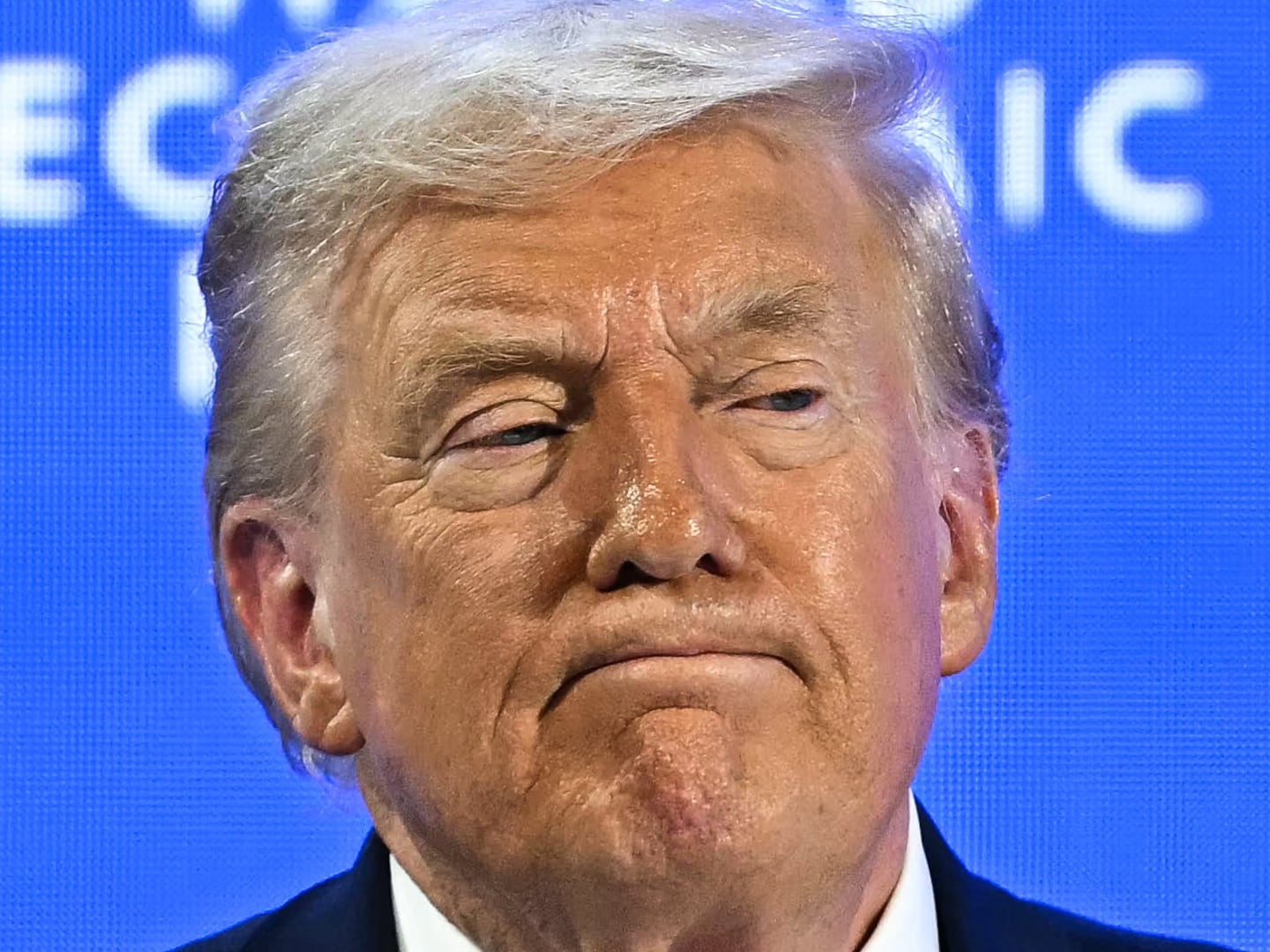
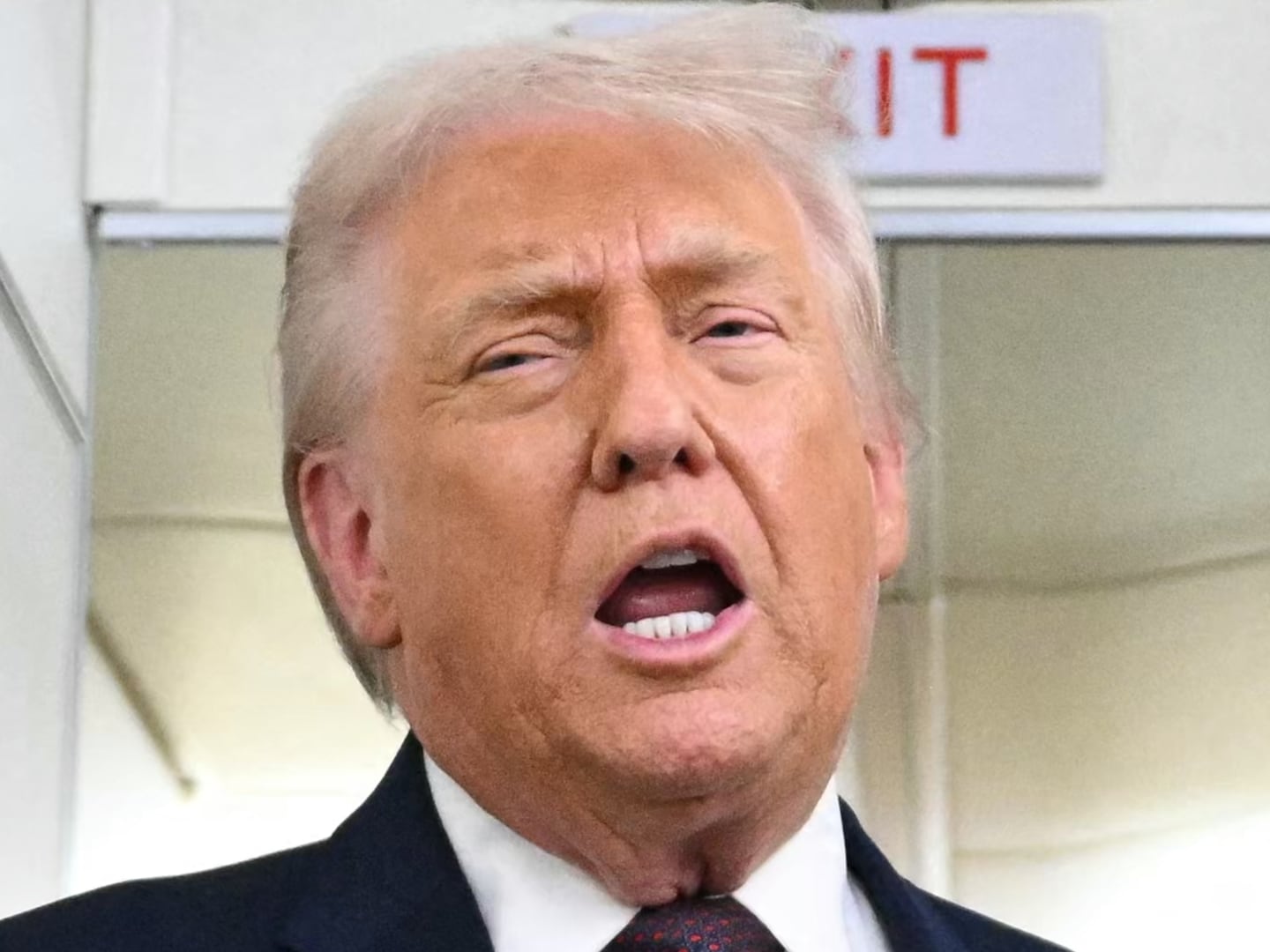
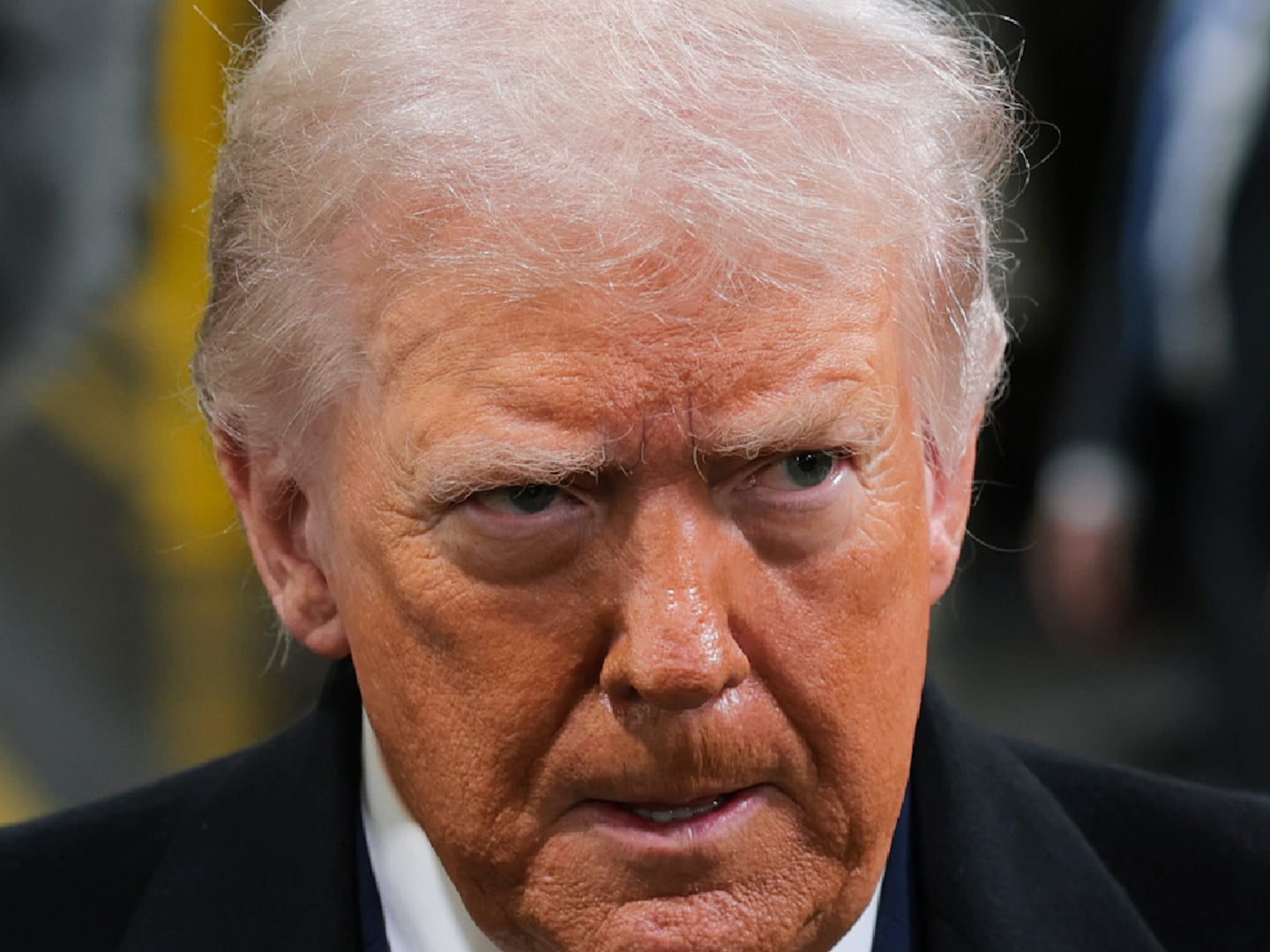
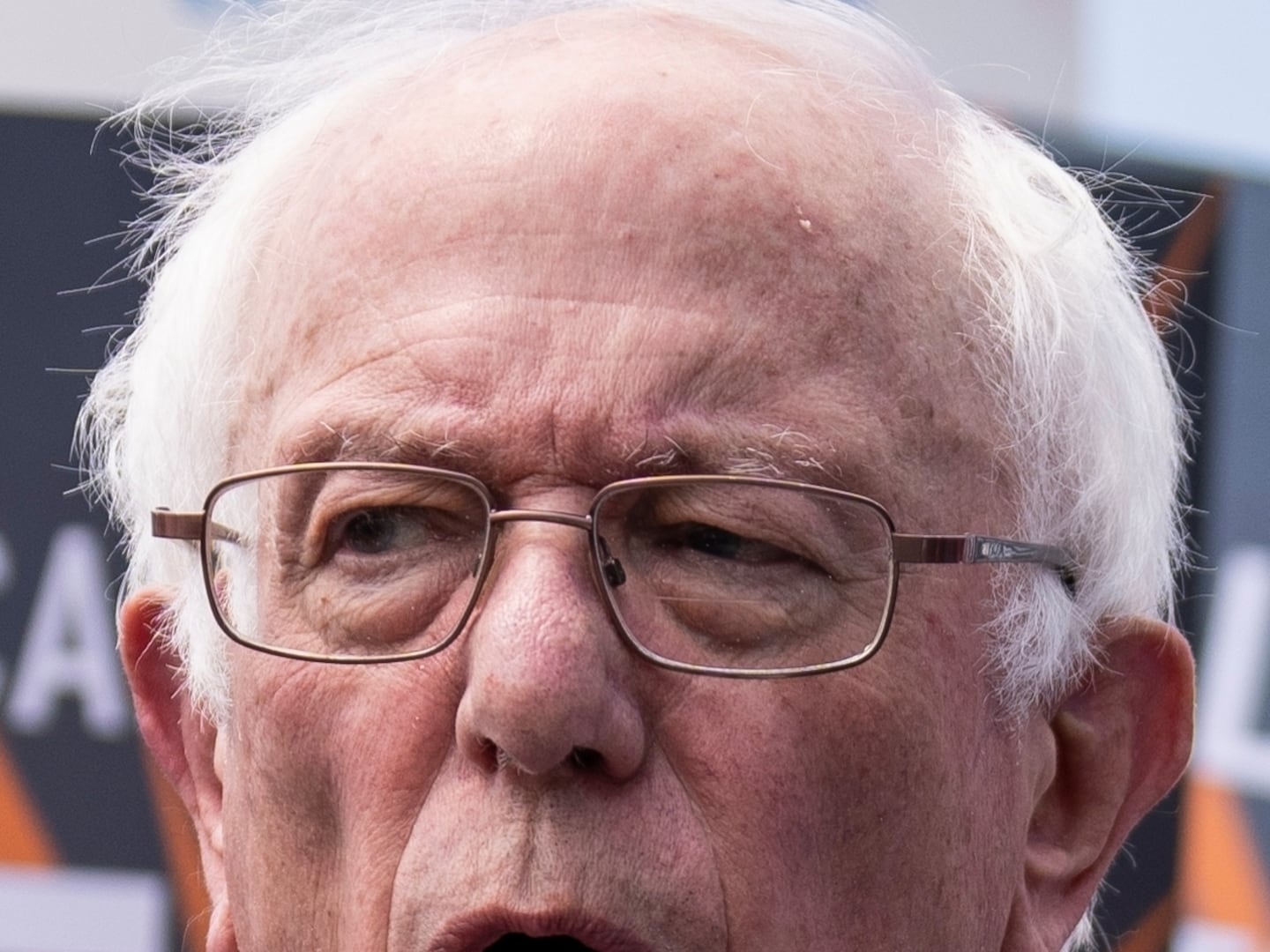
Donald Trump gave his standard answer to a tricky question after being pressed point-blank for details of his latest big foreign policy “plan.”
The exchange came on Thursday, as the 79-year-old president was asked to “elaborate” on what his unexplained proposal for Greenland actually meant—and whether the U.S. would “take ownership” of the Danish island, as he had previously promised before abruptly changing course this week.
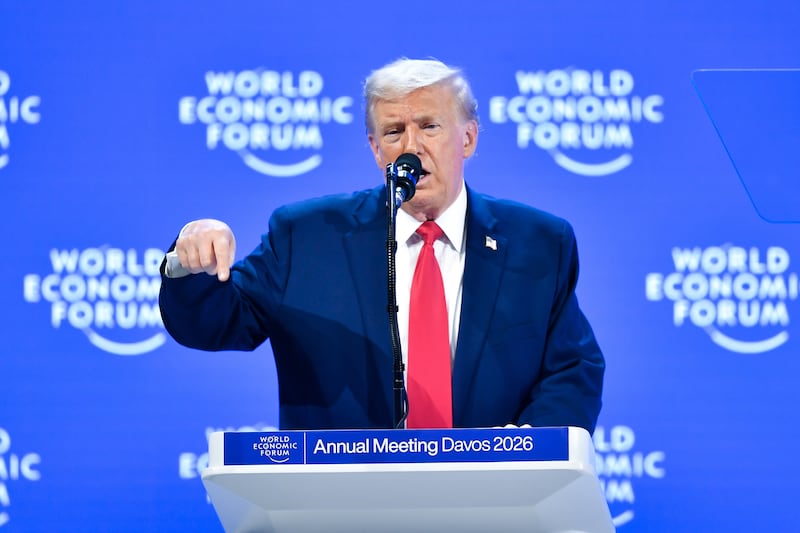
“We’ll have something in two weeks,” he told reporters aboard Air Force One as he returned from a trip to the World Economic Forum in Davos, Switzerland, where major allies snubbed his multibillion-dollar peace grift.
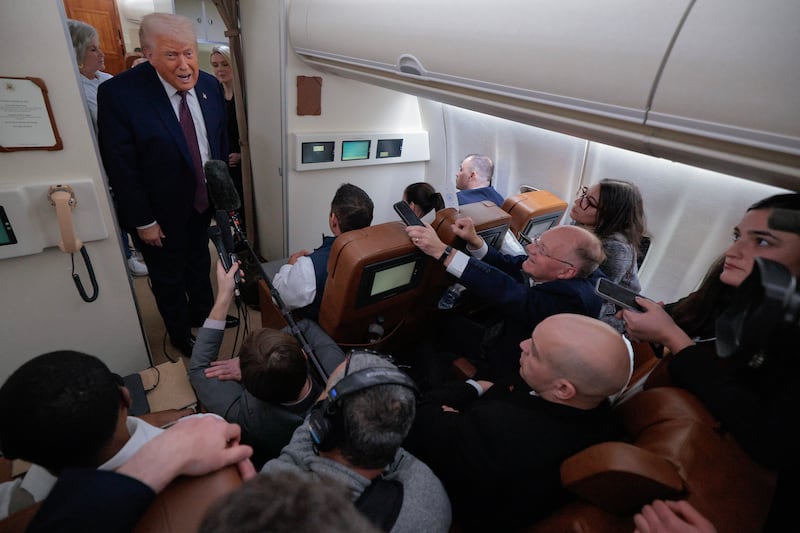
He then pivoted into familiar riffs about leverage and military might, saying: “We have a great military. I built a great military,” before insisting any agreement would be “much more generous to the United States.”
Trump also discussed his “Golden Dome” concept, saying: “That is so much better for us and for Europe, to have that piece of ice covered by the Golden Dome.”
The “Golden Dome” is a proposed multi-layer missile-defense shield, which would use a mix of space-based sensors and interceptors, along with ground systems, to detect and shoot down long-range missiles aimed at the U.S.

White House spokeswoman Anna Kelly told the Daily Beast: “If this deal goes through, and President Trump is very hopeful it will, the United States will be achieving all of its strategic goals with respect to Greenland, at very little cost, forever.”
“President Trump is proving once again he’s the Dealmaker in Chief,” Kelly added. “As details are finalized by all parties involved, they will be released accordingly.”
Before heading to Davos, Trump had spent days escalating his Greenland campaign—conveniently overshadowing continuing calls for the full release of the Epstein files. “The World is not secure unless we have Complete and Total Control of Greenland,” he said in a message to the prime minister of Norway.
Trump paired the push with threats of tariffs on multiple European countries, starting on Feb. 1, if the U.S. was not “allowed to buy” the Arctic territory.
His rhetoric even stretched to an explicit threat to use military force to gain control of Greenland, to frustrate possible territorial demands from Russia and China instead.
The “two-week” response is a classic Trump move. Cornered by a straightforward question, he bought time with a deadline he has repeatedly set, even during his first term—but repeatedly failed to hit.
In early 2017, Trump teased a “phenomenal” tax announcement within “the next two or three weeks,” as the White House struggled to pin down specifics. That spring, he said he would decide “in about two weeks” whether the U.S. would stay in the Paris climate agreement.
In July 2020, he announced he’d be “signing a health care plan within two weeks”—another of his multiple vows that never produced the promised replacement. The same month, Trump assured voters he would have “a statement on the minimum wage in the next two weeks.”

The “two weeks” dodge has returned in his second term, particularly with on-off tariff threats, and has now become a thing. Last June, reporters confronted White House press secretary Karoline Leavitt over Trump’s serial “two-week deadline” habit, with one journalist telling her, “He’s used this phrase ‘about two weeks’ several times.”
That month, TV host Jimmy Kimmel mocked Trump’s habit of stapling “two weeks” onto promises that then drift into the void, telling viewers: “It’s always two weeks.”