
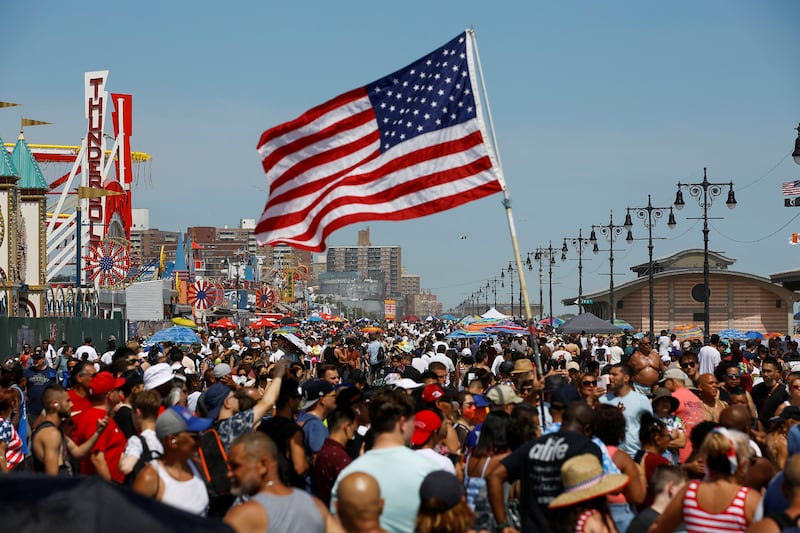
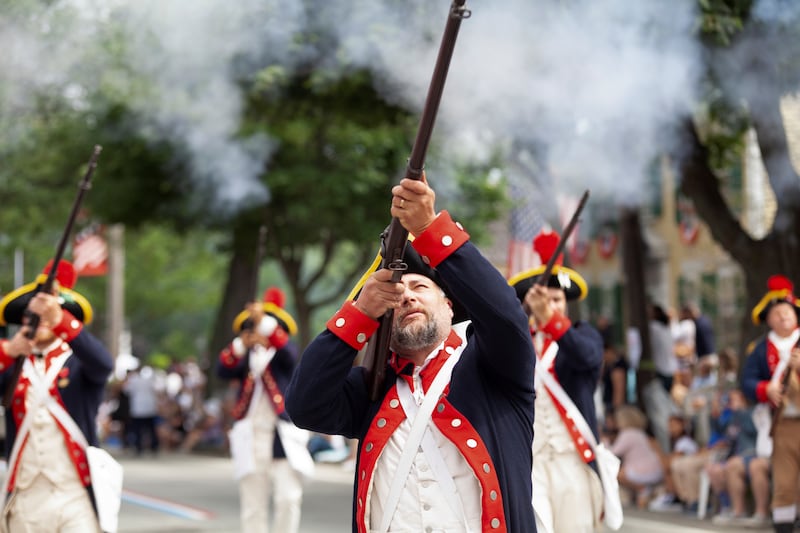
Though our country’s 250th birthday is now fast approaching, plenty of Americans aren’t feeling particularly celebratory. But as a historian of the American Revolution, I know that the founding generation would want us to party—and party hard. Not simply to celebrate them, but because few occasions in the late eighteenth century didn’t call for a drink.
Those who lived through the Revolutionary Era consumed far more alcohol—whether cider, beer, wine, rum, or any number of cocktail concoctions—than we do today. They tippled at the end of a workday, or in the middle during harvest season; after birthing a baby, ordaining a new minister, training with the militia, or feting a friend’s arrival to town.

One of the colonists’ favorite reasons to drink, however, was to honor the anniversaries of successful protests against the British Crown. In 1769, over 150 men gathered at a tavern just outside Boston to commemorate the repeal of the Stamp Act three years earlier. It was a merry time, with attendees toasting over forty times, singing songs together, and taking part in a bountiful feast.
Amidst this fun, the attendees’ hometown was experiencing unprecedented upheaval. The year before, Crown officials had sent two thousand British troops to occupy Boston, a town of about 15,000 people, after several violent protests against taxes, including a memorable one when customs officials accused future Founding Father John Hancock of smuggling wine. He wasn’t the only leader with a vinous passion. George Washington and Benjamin Franklin stocked their cellars with hundreds of bottles, and Thomas Jefferson called wine “a necessary of life.”
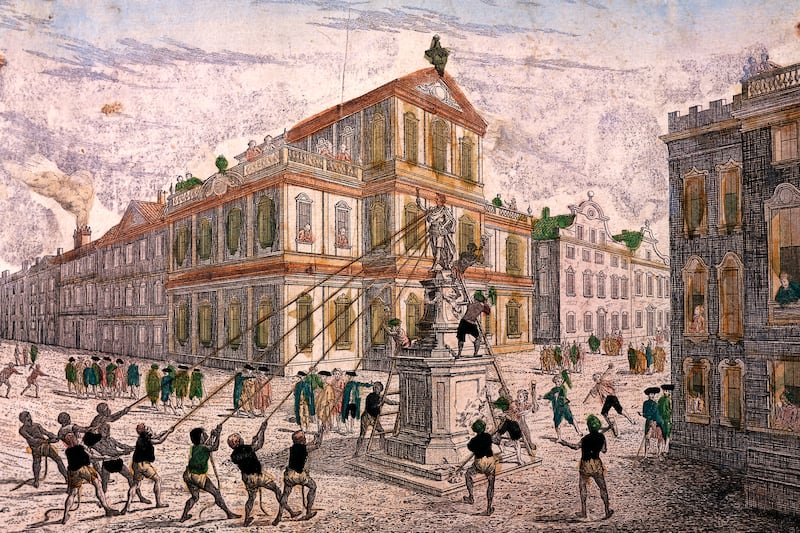
Similarly, in 1778, during a grinding phase of the Revolutionary War, when the morale of the Continental Army and civilians was very low, some 270 people gathered at a Philadelphia tavern and threw an epic bash. After nearly nine months of occupation, British troops had recently departed the city, and Patriots wanted to mark the occasion. The partygoers consumed a staggering amount—at least two bottles of wine for every guest, not including the punch and other mixed drinks many downed. Things got rowdy enough that the group was later charged for several broken wine glasses and decanters, as well as a busted inkstand.

To be clear: by throwing such parties, those in Boston and Philadelphia were not saying the job was done. The war for independence would rage for several more years. But Patriots felt it was important to acknowledge their efforts and celebrate their wins, however small.
This sestercentennial—try and say that after copious cups of rum punch—similarly gives us a chance to pause. To recall our common identity, recognize our protests against policies we disagree with, and express appreciation for the creative, diverse, and hopeful people who inhabit this country.
We tend to think of national celebrations as endorsements, as if marking the anniversary of the United States requires ignoring its failures. But acknowledging historic events does not sanction them, nor does it erase past injustices. It also does not mean that you are complacent. Of course you wish leaders and institutions had done more over the last 250 years, just as you hope for more today. So did Americans in 1776.
Raising a glass when there is more work to be done connects you to Patriots from the past. Let’s drink to that, and to continuing their pursuit.