This piece is excerpted from its original home on Substack. Get more of Michael Wolff’s unfiltered analysis by subscribing to HOWL.
We all need to very quickly have an opinion about AI, because it is going to change everything— for better or worse—although pretty much nobody you know and trust can actually explain how.
Therefore, we are reliant on people we don’t know and don’t trust.
This is an ideal situation for people trying to achieve industry and global hegemony. They control the language, the issues, and the ultimate stakes of the controversy—in fact, they get to define the nature of the controversy.
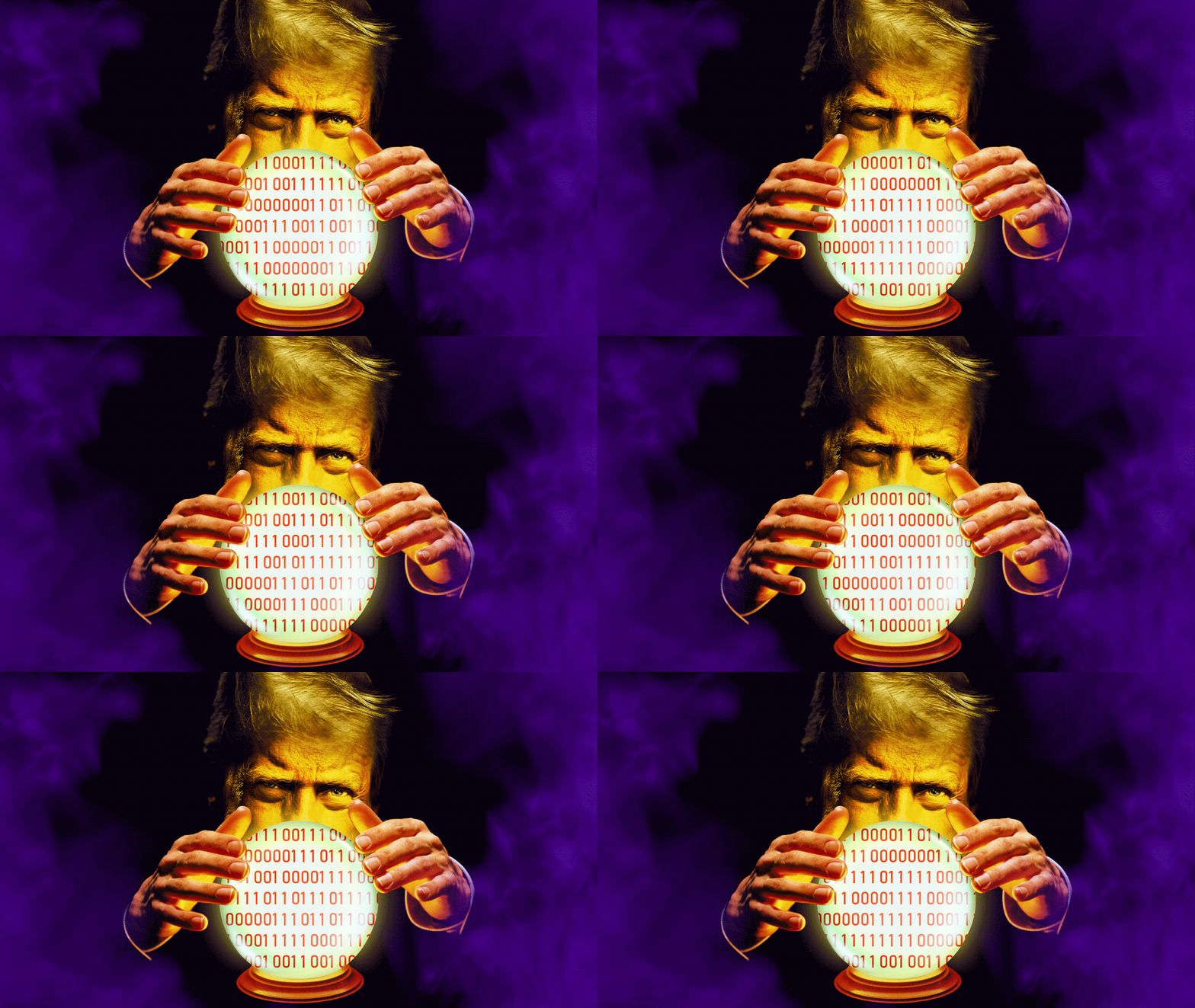
AI might destroy humanity. OK. About this, we need to trust the theoretical assertions of the phenomenally inarticulate and personally peculiar people who run the industry, who have positioned themselves as the smartest people on earth, and who, it is certainly worth noting, are so rich they have long since lost any connection to the generalized humanity AI might destroy.
There is, they say, a 10% chance—or possibly a 30% chance—that AI will cause the extinction of the world. Could that possibly be true?

In this view, AI is advancing so quickly that today’s AI models will be able to create exponentially more superior AI models, altogether disintermediating human hands. Such AI models will then be able to set their own tasks and define their own missions—possibly the end of humanity. Or at least the end of the internet. (But wouldn’t that just put us back to the 1980s?) This is apparently called, opaquely, “recursive self-improvement.” The explanation anthropomorphizes AI models into actors who assign jobs to each other, plot strategies, and conceive grand plans like animals in a Disney movie.
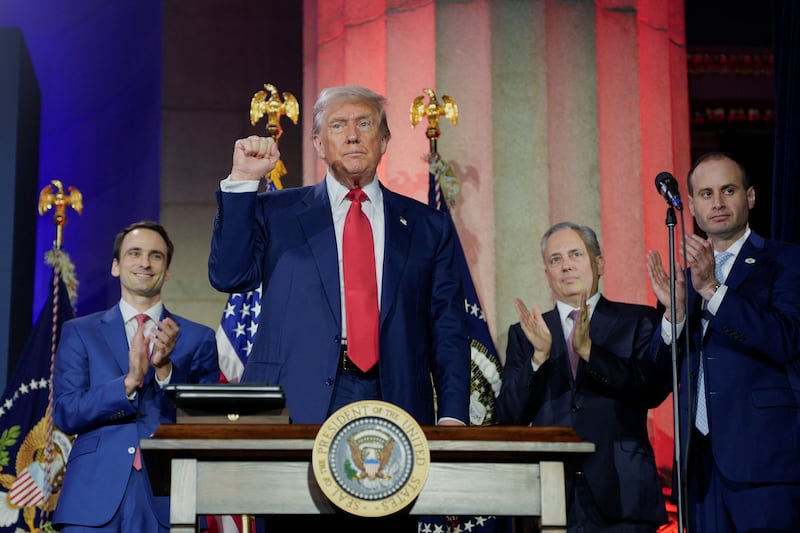
You can see why Donald Trump thinks this is hogwash. But what are the chances that Donald Trump knows enough about AI to offer any sort of helpful view?
Trump, the world’s most famous know-nothing ignoramus, represents the view that AI is the greatest thing since sliced bread, and that what’s good for AI is good for the world—and for Donald Trump.
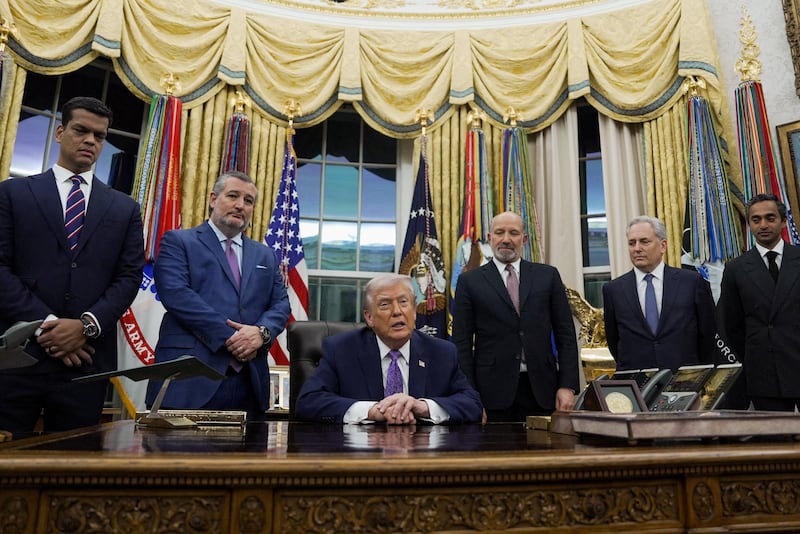
You don’t, it turns out, have to know a lot about AI to profit from it—especially if you help control the rules that apply to it—and the Trump family, to no surprise, has carved out for itself a personal advantage in the wild growth of AI technology.

The hoi polloi resistance to AI has taken the form of a widespread objection to data centers. It is the physical manifestation, rather than the particular software applications, of AI that has aroused national anger. As well it might: overnight, million-square-feet windowless buildings have spread across the American landscape. They are largely untended by human beings, with God knows what going on inside. The tech industry and the politicians who support it seemed floored that people might have concerns about mysterious structures of otherworldly size suddenly appearing on the outskirts of their towns.
But without these buildings, the AI industry can’t grow at the pace that will be needed to sustain the current value investors have placed on it, a snag which could lead to an industry-wide correction or even collapse. That would be a good reason for AI leaders in trillion-dollar companies to suddenly look for a righteous reason to constrain growth. The stock market likes a good story. Responsible leadership in the face of overwhelming demand is a much better story than regulation or rebellion in the marketplace.
What is being acknowledged by most everyone but Donald Trump and his lackeys, then, is that the tech future is always equivocal.
Don’t miss a single take. Click through and subscribe to Michael Wolff’s HOWL on Substack to get more commentary on the pivotal intersections of media, tech, power, and politics.