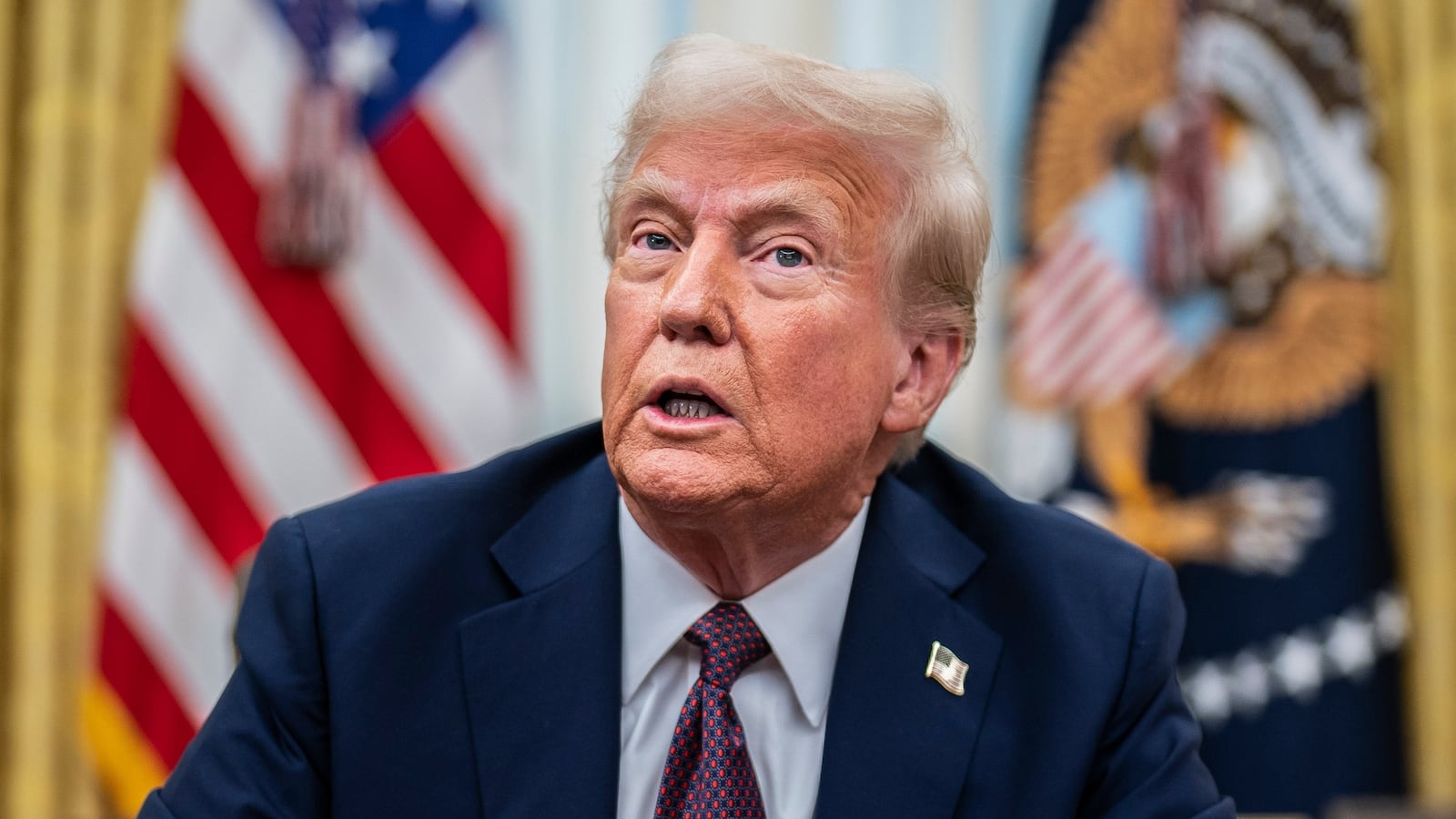
A top Department of Justice official wanted to recuse himself from work related to Donald Trump’s $1.8 billion “anti-weaponization” slush fund so he could apply for the grift himself, according to a report.
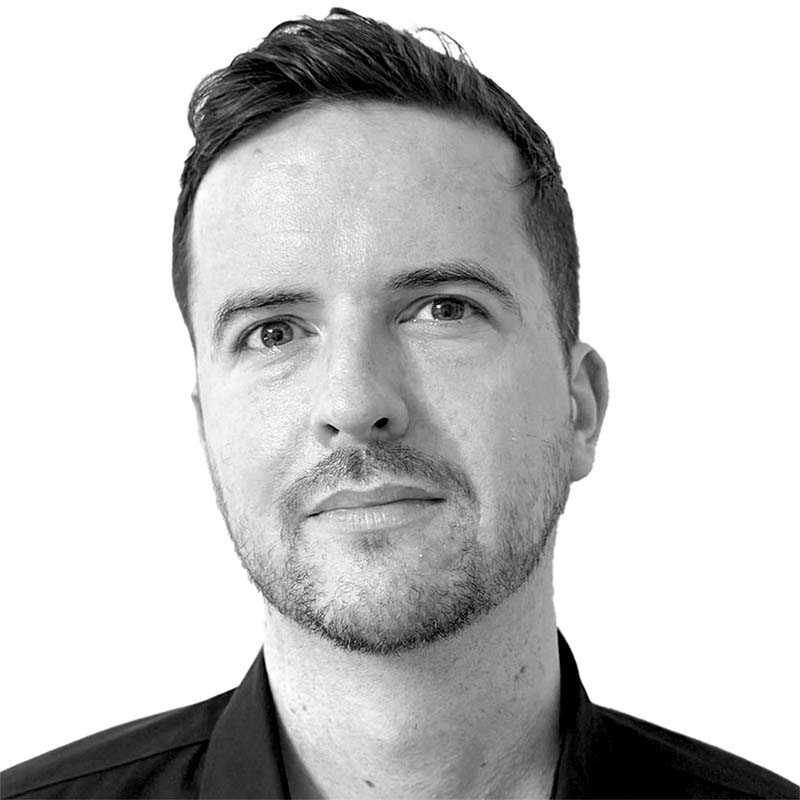
Patrick Davis, an assistant attorney general for legislative affairs, whose role involved defending the fund to Congress, told the federal agency about his plans to apply for the compensation scheme because it could amount to a conflict of interest, sources told Politico.
Davis was hoping he was eligible for the “weaponization” scheme because his phone and email records were subpoenaed as part of the “Russiagate” investigation into allegations that Donald Trump’s team colluded with Moscow to interfere in the 2016 election.
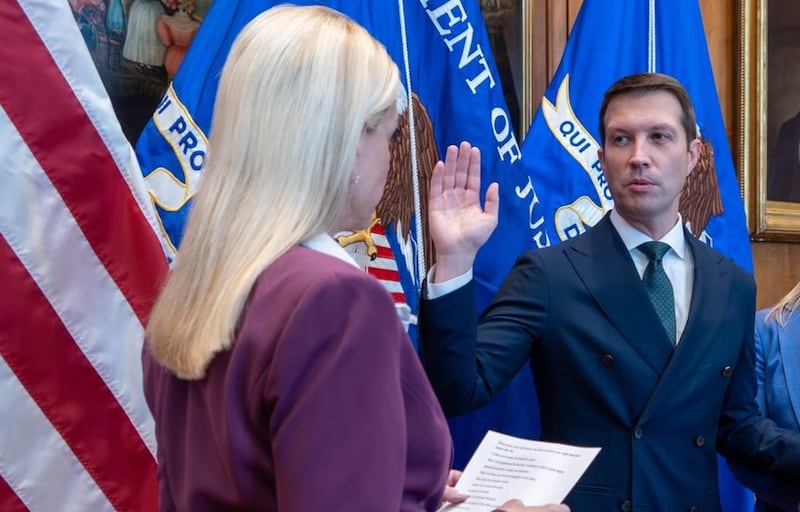
At the time, Davis was a congressional staffer working as an investigative counsel on the Judiciary Committee under Sen. Chuck Grassley of Iowa.
Davis’ plans to apply for the slush fund concerned others at the DOJ, in part because he was tasked with defending the controversial taxpayer-funded scheme to lawmakers.
“[Davis] has relationships with the senators, and it was a very tough time for him to back out,” an unnamed administration official told Politico. “In a very fraught moment, with legislative affairs and stuff with the Hill, DOJ needed to have the head of legislative affairs involved.”

The Department of Justice announced the $1.8 billion slush fund to compensate Trump allies who claim they were wrongfully persecuted by the Biden and Obama administrations, including those who attacked police officers during the Jan. 6 attack on the Capitol.
The scheme was announced in exchange for Trump dropping a $10 billion lawsuit against the Internal Revenue Service—which taxpayers would ultimately have been on the hook for—alleging that the agency failed to take steps to prevent the leak of his tax returns.
The slush fund received such bipartisan condemnation that the DOJ backtracked and announced on June 1 that it would no longer go through with it.
It is unclear whether Davis would have been successful had he applied to the fund, or how much money he would have been entitled to.
In 2024, it was revealed that Davis was one of several congressional aides whose records were covertly obtained as part of the broader Russiagate probe.

“It felt like a violation, not simply on a personal level, but more importantly of the separation of powers given the nature of our oversight work,” Davis told The New York Times in April 2024.
In a statement, a DOJ spokesperson told Politico that “out of an abundance of caution, Davis temporarily recused himself on a precautionary basis and after internal consultation, it was decided that recusal was not necessary for a number of reasons.”
“As reported years ago, AAG Davis’s personal phone and email records were targeted while he was a congressional attorney investigating the Russiagate hoax,” the spokesperson added.
The Daily Beast has contacted Davis’ office and the Department of Justice for comment.