Rob Reiner was one of Donald Trump’s longest-running and harshest critics, calling him “the single most unqualified human being to ever assume the presidency of the United States” and “mentally unfit.”
When Reiner and his wife, Michele, were murdered in December 2025 (allegedly by their son Nick), the president showed his true colors by slamming the celebrated filmmaker and comedian as “a tortured and struggling, but once very talented movie director and comedy star” who suffered from a “massive, unyielding, and incurable affliction with a mind-crippling disease known as TRUMP DERANGEMENT SYNDROME.”
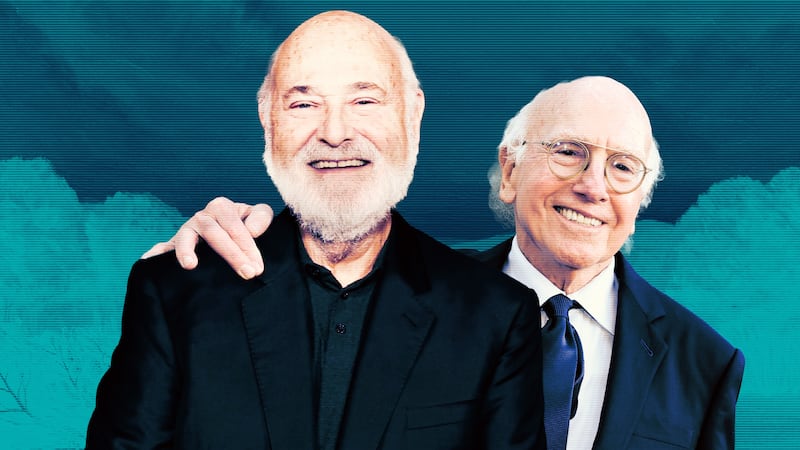

Nonetheless, in their war of words, it’s Reiner who gets the last laugh—courtesy of Larry David.
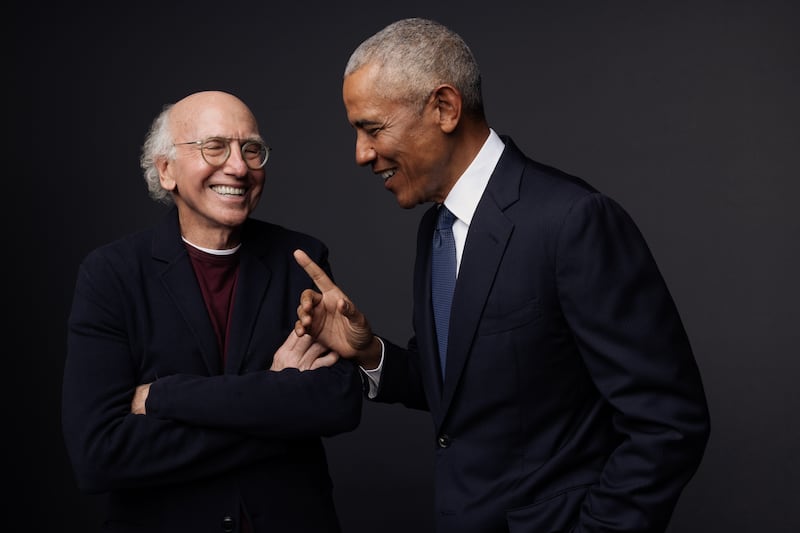
On this week’s episode of Life, Larry and the Pursuit of Unhappiness, David’s Barack Obama-produced sketch-comedy series timed to America’s 250th birthday, the Curb Your Enthusiasm creator grants the All in the Family funnyman and When Harry Met Sally auteur one more chance to stick it to Trump via a scene that takes direct aim at the commander-in-chief’s litany of failings and crimes.
Ostensibly Reiner’s final screen appearance, it’s a veritable shot from beyond the grave—aided not only by David but also by another of Trump’s great pop-culture adversaries, Jimmy Kimmel.
As David’s longtime collaborator, Jeff Schaffer, who directed the episode, told the Daily Beast’s Obsessed podcast in an episode set to stream next week, “I love that in this weird way, Rob gets the last word.” And if his message “spoils a sad octogenarian’s weekend, so be it.”
It also helps underscore the lifelong friendship between David and Reiner, who was an original producer on Seinfeld and has been credited for helping “save” the show from cancellation in its early days. Reiner later appeared as himself on Curb Your Enthusiasm, and David was spotted going into the Reiners’ home after news broke of their horrific double murder.
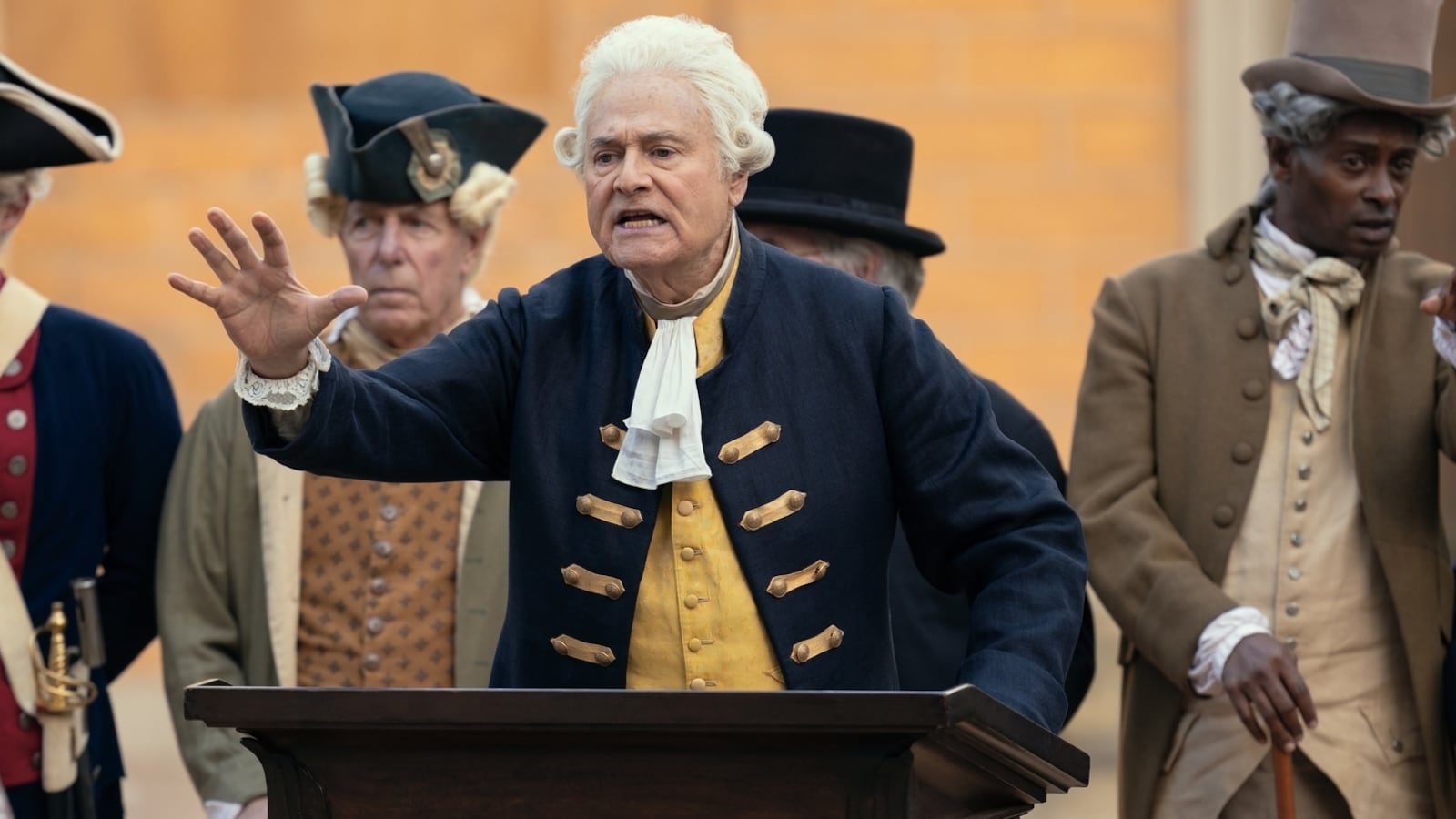
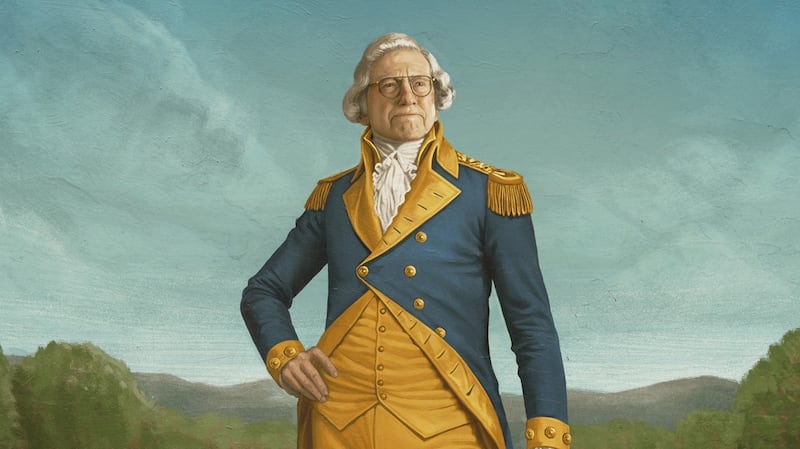
The new sketch features Reiner as George Washington, who addresses a crowd to announce he will not seek a third presidential term. According to narrator Samuel L. Jackson’s preface, Washington did this because “his commitment was to democracy instead of power” and, also, because he feared that if people voted according to political-party loyalty instead of in the common interests of the nation, it would lead to the rise of “cunning, ambitious, and unprincipled men.”

That very concern is the subject of this witty sketch, as Washington’s announcement inspires David’s spectator character to ask what would happen if a future president didn’t follow his lead and ran for a third term, to which Reiner’s Washington replies that Congress would be the bulwark against such an offense.
Alas, David’s character is unconvinced, querying, “What if there’s some a--hole in office—some narcissistic pr--k—who doesn’t follow the Constitution?”
This “imaginary” scenario doesn’t alarm Reiner’s Washington, who comforts onlookers by stating that Congress and the Supreme Court would prevent such Oval Office disobedience.
David, however, is undeterred, saying, “What if the Supreme Court is a bunch of yes men and Congress is a bunch of p---ies who care more about party than country?”
Reiner’s bewigged president can’t fathom this fancifulness, yet he suggests that there should always be a peaceful transfer of power—allowing David to crack wise that anyone who would do otherwise is a “sociopath. A man like that could even foment an insurrection rather than just admit that he lost!”
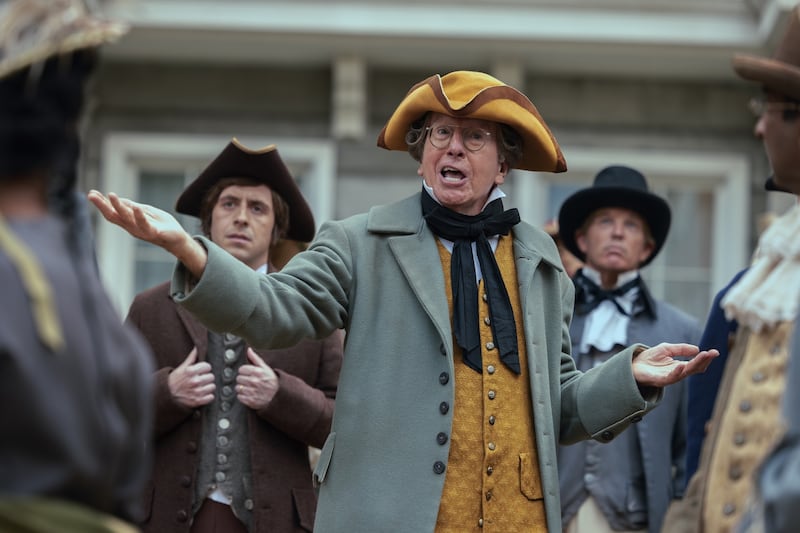

As if Life, Larry and the Pursuit of Unhappiness’ target wasn’t 1000 percent obvious by this point, David proceeds to go wholeheartedly after Trump, opining that in this nightmare “hypothetical” reality, a dastardly American leader could use the office to enrich himself and his family, attack universities and the free press to silence dissent, and terrorize and kill citizens with the military in order to distract attention away from the fact that he’s friends with “a pedophile!”
This elicits a hearty scoff from Kimmel, who’s incredulous at the idea that the president would waste time attacking anyone who dares make fun of him—“like a big baby.”
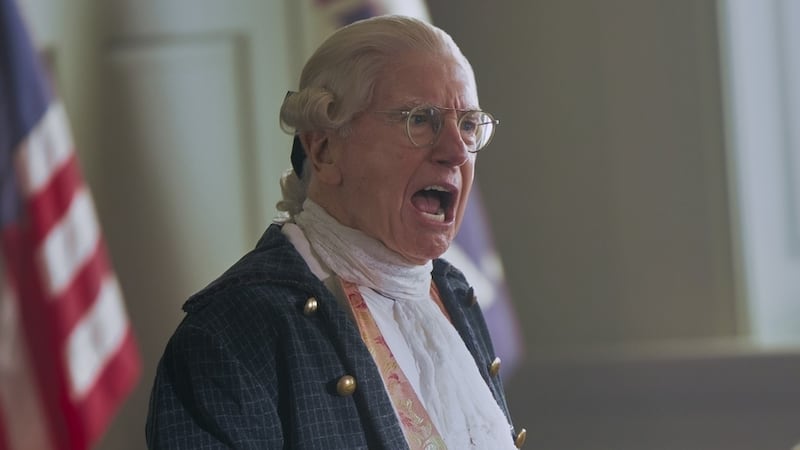
Nonetheless, with Reiner acting equally skeptical, David makes his critical case crystal clear, saying that an individual like this would be an “insecure, lying a--hole who would even cheat at golf… A deeply corrupt con man. A pathological liar who preys upon people’s prejudices.”
Moreover, he suggests, the public might support him because it’s a collection of “dupes,” at which point a fight breaks out between attendees that echoes our current, hostile cultural-political divide.

Though one can envision Reiner himself delivering this takedown in real life, Life, Larry and the Pursuit of Happiness is all the funnier for letting him play the straight man to the end.
Still, in what are likely his closing on-screen moments, he describes our predicament in two succinct words that encapsulate his entire feelings about Trump and the damage he’s wrought: “We’re f---ed.”